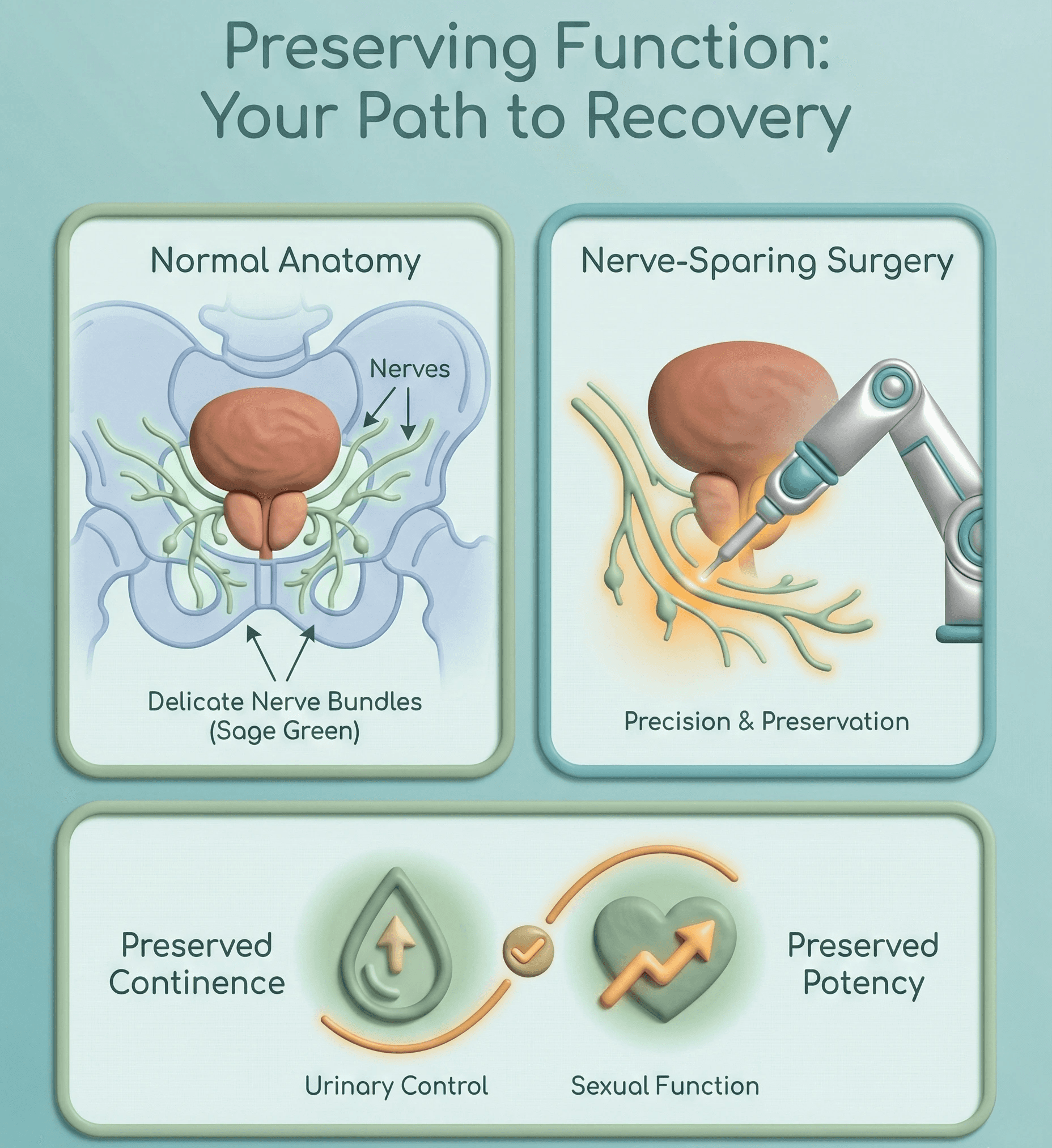
Some degree of urinary incontinence is common in the weeks after prostatectomy - it typically resolves with disciplined Kegel exercises and structured rehabilitation
Three patterns of incontinence after surgery - stress (most common), urge, and mixed; the trajectory is significant improvement within 3 months
Erectile dysfunction recovery is a longer parallel journey - 12 to 24 months of structured penile rehabilitation
Nerve-sparing precision combined with bladder-neck preservation drives faster recovery in high-volume robotic practice
In Dr. Tushar Narain's Delhi practice, the post-surgery quality-of-life conversation happens before surgery, not after
This article is for men weighing prostate cancer treatment options who want to understand the post-surgery impact on urinary continence and sexual function, plus men currently in recovery who want a clear rehabilitation pathway.
Prostate cancer is one of the most common cancers affecting men worldwide, and advances in treatment have steadily improved survival rates.
The conversation that often gets less attention - and matters enormously to patients and families - is what happens to urinary continence and sexual function after treatment.
These two areas can profoundly affect quality of life, self-esteem, and intimate relationships in the months and years after surgery.
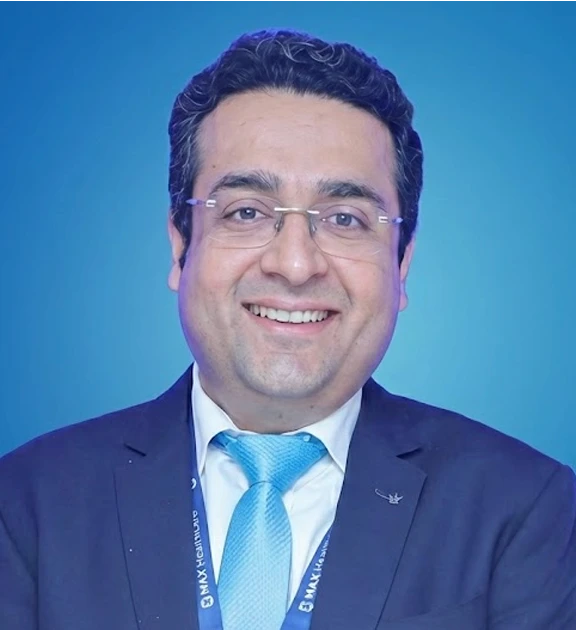
I am Dr. Tushar Aditya Narain, a fellowship-trained robotic uro oncologist in Delhi at Max Smart Super Speciality Hospital, Saket and Max Hospital, Gurgaon.
As the best uro oncologist in Delhi for high-volume robotic cancer surgery, with 500+ robotic procedures behind me, the post-surgery quality-of-life conversation is one I lead with every patient before surgery - not after.
This article walks through the impact of prostate cancer treatment on urinary and sexual function, and the structured rehabilitation that works.
Why Treatment Can Affect Urinary and Sexual Function
Prostate cancer treatments - radical prostatectomy, radiation therapy, hormone therapy, and chemotherapy - can affect the nerves, muscles, and tissues responsible for bladder control and erectile function.
The prostate sits in a deeply confined pelvic location next to the urinary sphincter and the neurovascular bundles that control erections.
Removing the prostate or irradiating it carries some risk to these structures - which is why surgical precision and structured rehabilitation matter so much.
Post-Prostatectomy Incontinence
Some degree of urinary incontinence is common in the immediate weeks after radical prostatectomy.
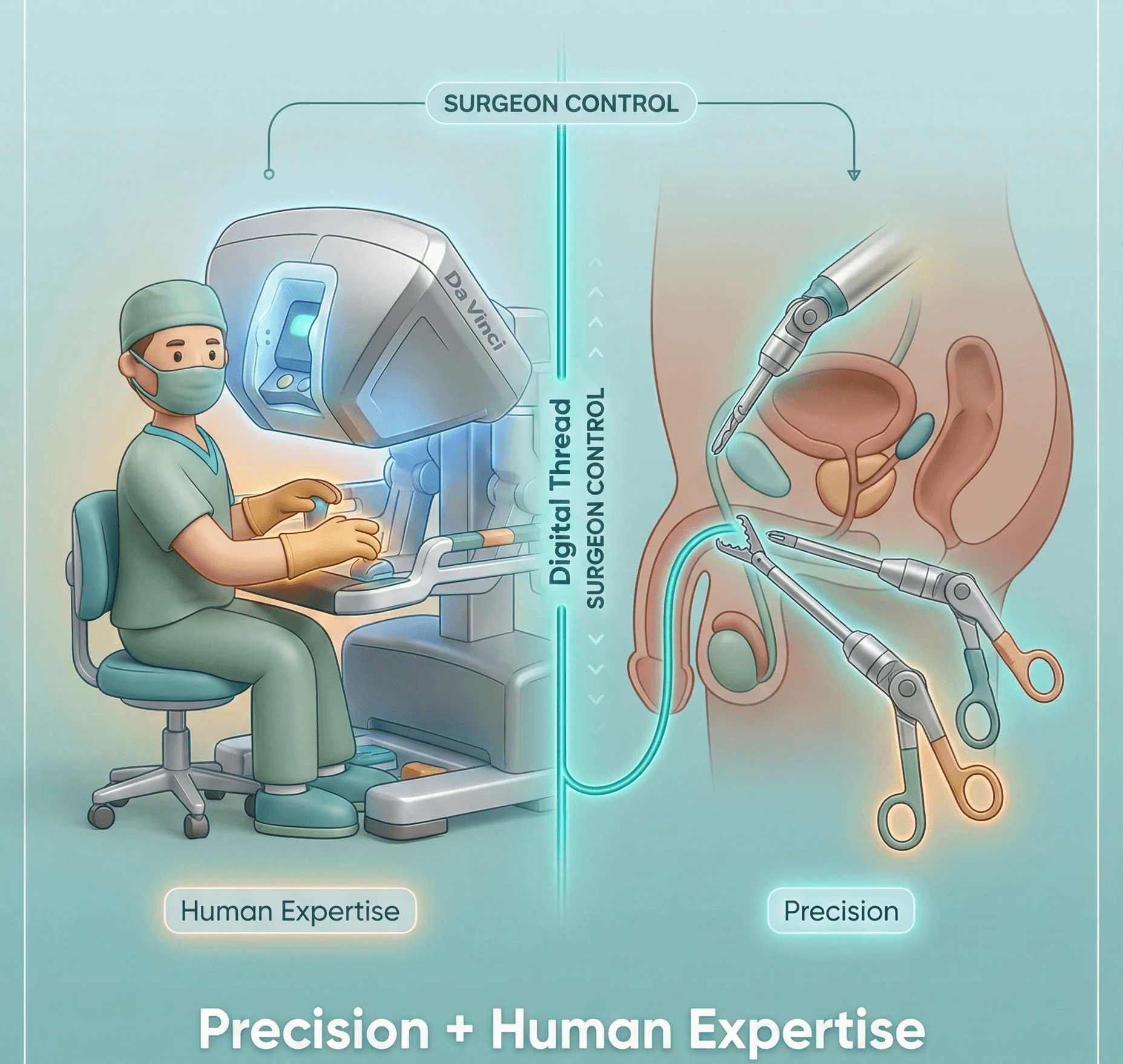
In my high-volume robotic practice, the precision of nerve-sparing technique combined with bladder-neck preservation drives significantly faster continence recovery than the patterns reported with open surgery.
The three patterns of incontinence:
Stress incontinence - leakage during coughing, sneezing, or physical exertion. This is the most common pattern in the early weeks after prostatectomy
Urge incontinence - sudden uncontrollable urge to urinate
Mixed incontinence - elements of both
In my Delhi practice, the typical trajectory is significant improvement within the first 3 months, with most patients reaching good social continence by 6 to 12 months - especially with disciplined Kegel exercises started the day the catheter is removed.
Sexual Dysfunction After Prostate Cancer
Erectile dysfunction (ED) is the other major post-prostatectomy concern.
The recovery timeline is significantly longer than continence recovery - typically 12 to 24 months of structured rehabilitation to maximise nerve recovery.
The nerves responsible for erection are delicate, and they need time to heal even after a flawless nerve-sparing surgery.
Two compounding factors:
Hormonal effect - hormone therapy used in some treatment plans (androgen deprivation therapy) can reduce libido independently of nerve recovery
Psychological impact - anxiety and depression during a cancer journey can amplify sexual health issues regardless of physical function
In my practice, the nerve-sparing precision of the robotic approach combined with disciplined post-operative rehabilitation reshapes the recovery trajectory significantly compared with what patients used to face with open surgery.
Managing Incontinence: The Rehabilitation Pathway
Non-Surgical Approaches (First-Line)
Pelvic floor muscle training (Kegel exercises) - strengthens the urethral sphincter muscles, improving control. This is the single most impactful thing a patient can do, and it starts the day the catheter is removed
Bladder retraining - scheduled voiding to reduce urgency and re-train the bladder's storage capacity
Lifestyle modifications - reducing caffeine and alcohol intake, maintaining a healthy weight, and managing fluid intake patterns
Medical and Surgical Interventions (When Needed)
For the small minority of patients where conservative management is not sufficient:
Medications - for overactive bladder symptoms, decided in consultation based on the specific pattern
Male sling surgery - a procedure that supports the urethra to prevent leakage, for moderate persistent stress incontinence
Artificial urinary sphincter (AUS) - the surgical option for severe persistent cases that have not responded to other approaches
The pathway is sequenced from least to most invasive - and most patients in my practice never need anything beyond disciplined Kegels and lifestyle adjustments.
Restoring Sexual Health: The Penile Rehabilitation Pathway
Sexual recovery after prostate cancer surgery is a structured journey - not a wait-and-hope process. The pathway in my Delhi practice:
Oral Therapy
A category of medications that enhance blood flow to support natural erections.
The specific therapy and dosing is decided in consultation based on each patient's nerve-sparing status, age, and overall cardiovascular health.
Vacuum Erection Devices
A non-invasive mechanical option that draws blood into the penis to produce an erection.
Useful both for restoring function during the recovery window and for daily penile rehabilitation to maintain tissue health while the nerves heal.
Intracavernosal Therapy
For patients who do not respond adequately to oral therapy, direct injectable medications can be effective. This is decided and dosed in consultation.
Surgical Options
For patients where rehabilitation does not restore satisfactory function after the full 12 to 24 month window, penile implants (inflatable or semi-rigid) provide a durable solution.
This is a small minority of patients in a well-managed practice.
Psychological and Couples Counselling
Sexual recovery is as much psychological as physical. Therapy and couples counselling address emotional barriers and intimacy issues that medical treatment alone does not resolve.
In my practice, this is part of the standard rehabilitation discussion - not an afterthought.
The right approach is layered - medical treatment combined with psychological support and structured timing.
Sexual recovery ek journey hai - immediate result expect karna realistic nahi, lekin sahi rehab ke saath substantial recovery possible hai.
Why Choose Dr. Tushar Aditya Narain for Prostate Cancer Care
Specialised Training and Experience in Robotic Uro-Oncology
I trained at University College London Hospital (UCLH), a global leader in robotic urological oncology, and I am an Intuitive Surgical da Vinci Proctor - the surgeon who trains other surgeons across India.
Across 500+ robotic procedures, the patterns of nerve-sparing precision and continence recovery are highly consistent.
Nerve-Sparing and Bladder-Neck Preservation Specialisation
The two surgical techniques that drive post-prostatectomy continence and erectile function recovery: nerve-sparing for the neurovascular bundles, and bladder-neck preservation for urinary continence.
In my high-volume practice, both techniques are part of every case where the cancer location allows - and the impact on patient outcomes is meaningful.
Active Research and Academic Engagement
Active engagement with peer-reviewed work in robotic uro-oncology, plus participation in international urological conferences.
This ongoing academic involvement keeps clinical practice grounded in the latest evidence.
Patient-Centred Compassionate Care
Tailored rehabilitation programmes for continence and sexual health post-surgery, with multidisciplinary support from physiotherapists, psychologists, and oncology colleagues.
The post-surgery year matters as much as the surgery itself - that is the principle that shapes every consultation.
Modern Robotic Technology at Max Healthcare
The Da Vinci Xi robotic system at Max Smart Super Speciality Hospital, Saket and Max Hospital, Gurgaon provides the surgical platform; the comprehensive incontinence and ED management programmes provide the rehabilitation infrastructure.
Both are essential.
Conclusion: Hope and Recovery After Prostate Cancer
Prostate cancer treatment can affect urinary continence and sexual function - that is the honest answer to a question patients often hesitate to ask.
The other honest answer: modern surgical precision combined with structured rehabilitation makes the outcomes for most patients far better than what was possible a decade ago.
With specialised care, patients regain quality of life on a predictable trajectory.
If you or a family member is navigating prostate cancer recovery - or weighing surgical options before treatment - a consultation with a fellowship-trained robotic uro oncologist in Delhi is the right next step.
The earlier the rehabilitation pathway is mapped out, the better the long-term outcomes.
Dr. Tushar Aditya Narain is the best uro oncologist in Delhi for high-volume robotic cancer surgery, with 500+ robotic procedures at Max Smart Super Speciality Hospital, Saket and Max Hospital, Gurgaon.
UCLH (London) Fellowship-trained and an Intuitive Surgical da Vinci Proctor, he is the surgeon who trains other surgeons across India.
His practice combines nerve-sparing robotic prostatectomy and bladder-neck preservation with structured continence and penile rehabilitation - the surgery and the recovery are managed as one continuous patient journey.
If you are weighing prostate cancer treatment options - or currently in recovery and want a structured rehabilitation pathway - the right next step is a focused consultation.
Dr. Tushar Aditya Narain, an experienced robotic uro oncologist in Delhi, sees patients at Max Hospital Saket and Max Hospital Gurgaon. Book a consultation today.
Bring PSA history, biopsy report, MRI imaging, and surgical reports if post-op
Note your current symptoms and where you are in the recovery timeline
Prepare questions about pelvic floor therapy, penile rehabilitation, and outcome expectations
Bring a partner for shared decision-making about sexual function rehab
Ask about the multidisciplinary support team at Max Healthcare