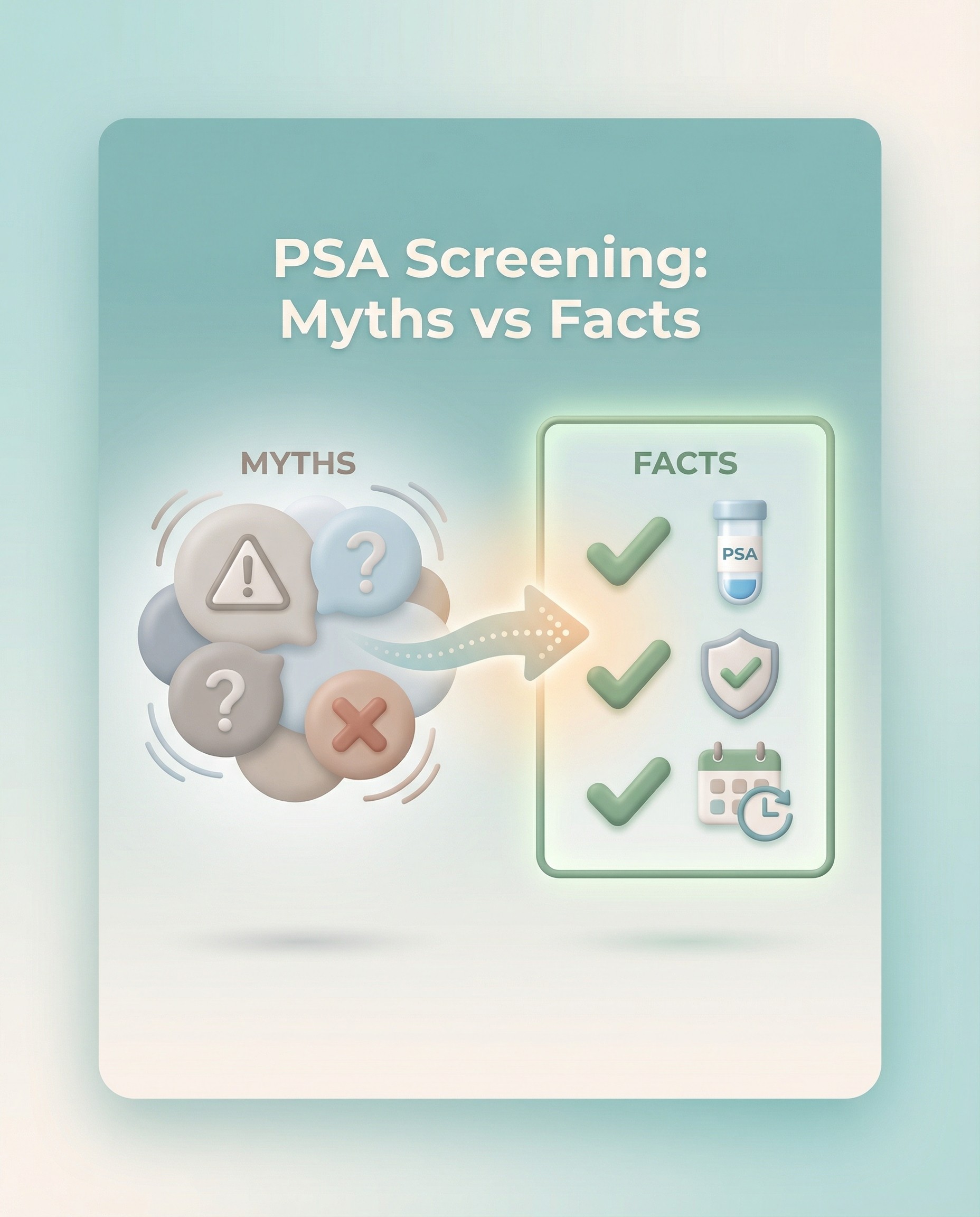
Many men avoid prostate cancer screening because of myths that overstate the discomfort or downplay the risk
PSA testing is a simple, safe blood test - not painful or dangerous
Early-stage prostate cancer often shows no symptoms, which is why screening is critical
An elevated PSA does not always mean cancer - it warrants further evaluation, not panic
A healthy lifestyle helps reduce risk but does not replace regular screening
This article is for men who are confused about prostate cancer screening, have heard myths about PSA testing, or want to make informed decisions about when and how to get screened. It is also for family members supporting their loved ones in taking proactive steps toward prostate health.

Prostate cancer is one of the most common cancers affecting men worldwide.
Early detection plays a vital role in improving outcomes - but many men avoid screening because of myths that overstate the discomfort or downplay the risk.
In my practice as the best uro oncologist in Delhi for high-volume robotic cancer surgery, I see this every week at Max Hospital Saket and Max Hospital Gurgaon - patients who delayed screening for years because of something they read online or heard at a tea-shop conversation.
This guide addresses the six myths I hear most often, and replaces each with the plain medical fact.
Myth 1: "Prostate Cancer Only Affects Older Men"
Many men believe that prostate cancer is only a concern after the age of 60. While risk does increase with age, men in their 40s and 50s are not immune.
Fact
Prostate cancer can develop in men as young as 40, especially if there is a family history. In my Delhi practice, family history is the single most-asked-about risk factor - and rightly so.
If your father or brother has had prostate cancer, your own screening conversation should start in your 40s, not your 60s.
Myth 2: "PSA Testing is Painful or Dangerous"
Some men avoid PSA (Prostate-Specific Antigen) testing because they fear pain or complications.
Fact
PSA testing is a simple blood test that measures PSA levels in the blood.
It is safe, quick, and gives me - as your Prostate Cancer Robotic Surgeon at Max Hospital - the earliest possible warning of any change.
Bas blood sample dena hota hai - jaise normal blood test mein. If the PSA result needs follow-up, we plan that in consultation; we do not jump to surgery on a single number.
Myth 3: "If I Feel Fine, I Don't Need Screening"
Many men assume that absence of symptoms means everything is fine.
Fact
Early-stage prostate cancer often shows no noticeable symptoms.
By the time symptoms appear - difficulty urinating, blood in urine, pelvic pain - the cancer may have progressed beyond the curative window.
This is the most important myth to break, and the single reason I encourage every man over 50 to have a baseline PSA on record.
Myth 4: "PSA Testing Always Leads to Unnecessary Treatment"
Some men fear that an elevated PSA will automatically lead to surgery or aggressive treatment.
Fact
An elevated PSA does not always indicate cancer. Conditions like benign prostatic hyperplasia (BPH) or prostatitis can also raise PSA levels.
Next Steps
In my practice, I emphasise personalised evaluation - repeat PSA testing, imaging (typically MRI), and biopsy if necessary - before recommending any treatment.
Most elevated PSAs do not become cancer diagnoses, and most cancer diagnoses do not need aggressive treatment on day one.
Active Surveillance
In some cases, especially for low-risk cancers, monitoring the condition without immediate treatment is a safe option. Active surveillance is a defined clinical pathway - not "waiting and worrying."
Myth 5: "Screening Can Be Avoided if I Live a Healthy Lifestyle"
While diet, exercise, and lifestyle choices are important for overall health, they cannot replace screening.
Fact
Even healthy men with no symptoms can develop prostate cancer. Lifestyle reduces risk but does not eliminate it.
Recommendation
Men should combine a healthy lifestyle with routine PSA testing and DRE to ensure comprehensive prostate care. The two are complements, not substitutes.
Myth 6: "Only Men with Symptoms Need a Urologist"
Some men think a specialist is only necessary when problems arise.
Fact
Consulting a fellowship-trained Prostate Cancer Specialist in Gurgaon or Delhi early helps establish a baseline for PSA levels and prostate health.
The first consultation does not commit you to anything. It just gives you - and me - a reference point so future changes get spotted early.
Benefits of Prostate Cancer Screening
Prostate cancer screening offers several advantages:
Early Detection:
Detects cancer before symptoms appear, when the curative-treatment window is widest.
Better Treatment Options:
Early-stage cancers can often be treated less invasively, including robotic-assisted procedures with shorter hospital stays.
Peace of Mind:
Normal PSA results reduce anxiety about prostate health, and a clear baseline lets us spot future changes faster.
Personalised Care:
Enables specialists like me to monitor trends over time and tailor follow-ups - not to a generic "every man over 50" template, but to your specific risk profile.
When to Consult Dr. Tushar Aditya Narain
Prostate health is a crucial aspect of men's overall well-being, and early detection of prostate issues can meaningfully improve treatment outcomes.
Men with risk factors, elevated PSA levels, or urinary changes should consult a specialist promptly.
Waiting until symptoms become severe can limit treatment options and reduce the effectiveness of therapy.
I am a fellowship-trained Prostate Cancer Robotic Surgeon at Max Hospital, recognised among the best uro oncologists in Delhi for high-volume robotic prostatectomies.
My approach combines PSA interpretation, MRI imaging, multidisciplinary review, and - when surgery is the right path - precision robotic technique.
Sahi waqt par consultation lo, toh treatment options bhi behtar hote hain.
Why Early Consultation Matters
Accurate Diagnosis: Early consultation allows for timely PSA testing, digital rectal exams (DRE), and imaging studies. I ensure that elevated PSA levels or abnormal findings are accurately evaluated.
Personalised Treatment Plans: Every patient is unique. I tailor strategies based on age, overall health, cancer stage (if any), and patient preferences.
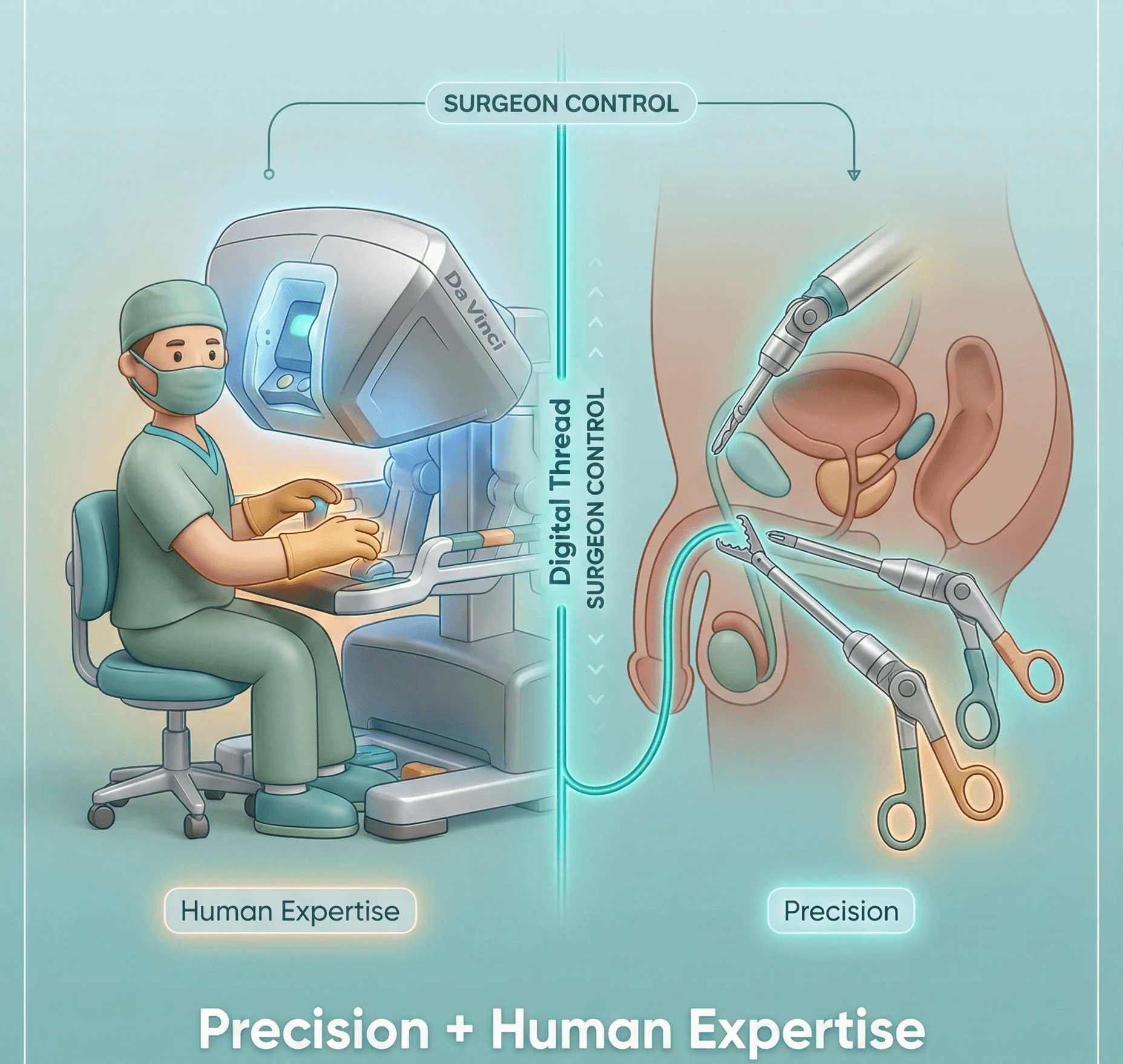
Minimally Invasive Options: As a Prostate Cancer Robotic Surgeon at Max Hospital, I use robotic-assisted procedures that reduce complications, minimise pain, and speed up recovery when surgery is the right path.
Preventive Guidance: Beyond treatment, I provide advice on lifestyle and preventive measures to maintain prostate health and reduce future risks.
Monitoring and Follow-Up: Regular follow-up appointments help track PSA trends, detect recurrence early, and adjust care plans as needed.
Signs You Should Not Ignore
Men should seek consultation if they experience any of the following:
Persistent difficulty in urination or weak urine flow
Blood in urine or semen
Pain or discomfort in the lower back, hips, or pelvis
Unexplained fatigue or weight loss
A family history of prostate or urological cancers
Even if symptoms are mild or intermittent, early consultation with a Prostate Cancer Specialist in Gurgaon or Delhi makes a difference in long-term outcomes.
Comprehensive Care Approach
Patients in my Delhi practice benefit from:
Advanced PSA Interpretation:
Accurate assessment of PSA trends, age-specific thresholds, and risk stratification.
Robotic-Assisted Minimally Invasive Procedures:
State-of-the-art robotic surgery for prostate cancer and other urological conditions when surgery is the appropriate step, with precision and reduced recovery time.
Personalised Treatment Plans:
Individualised approaches that consider both medical and lifestyle factors.
Patient and Family Support:
Counselling, preventive strategies, and lifestyle guidance that support overall health.
Multidisciplinary Care:
Collaboration with radiologists, oncologists, and pathologists for complete cancer management at Max Healthcare.
Conclusion
Prostate cancer screening is a critical component of men's health. Myths should not prevent men from taking proactive steps.
The fact pattern is simple: PSA testing is safe, early-stage cancer is silent, an elevated PSA is not a death sentence, and lifestyle does not replace screening.
If you fall into any risk category - over 50, family history, urinary changes - the right move is a consultation with a fellowship-trained robotic uro oncologist in Delhi.
Dr. Tushar Aditya Narain is the best uro oncologist in Delhi for high-volume robotic prostate cancer surgery, with 500+ robotic prostatectomies at Max Smart Super Speciality Hospital, Saket and Max Hospital, Gurgaon.
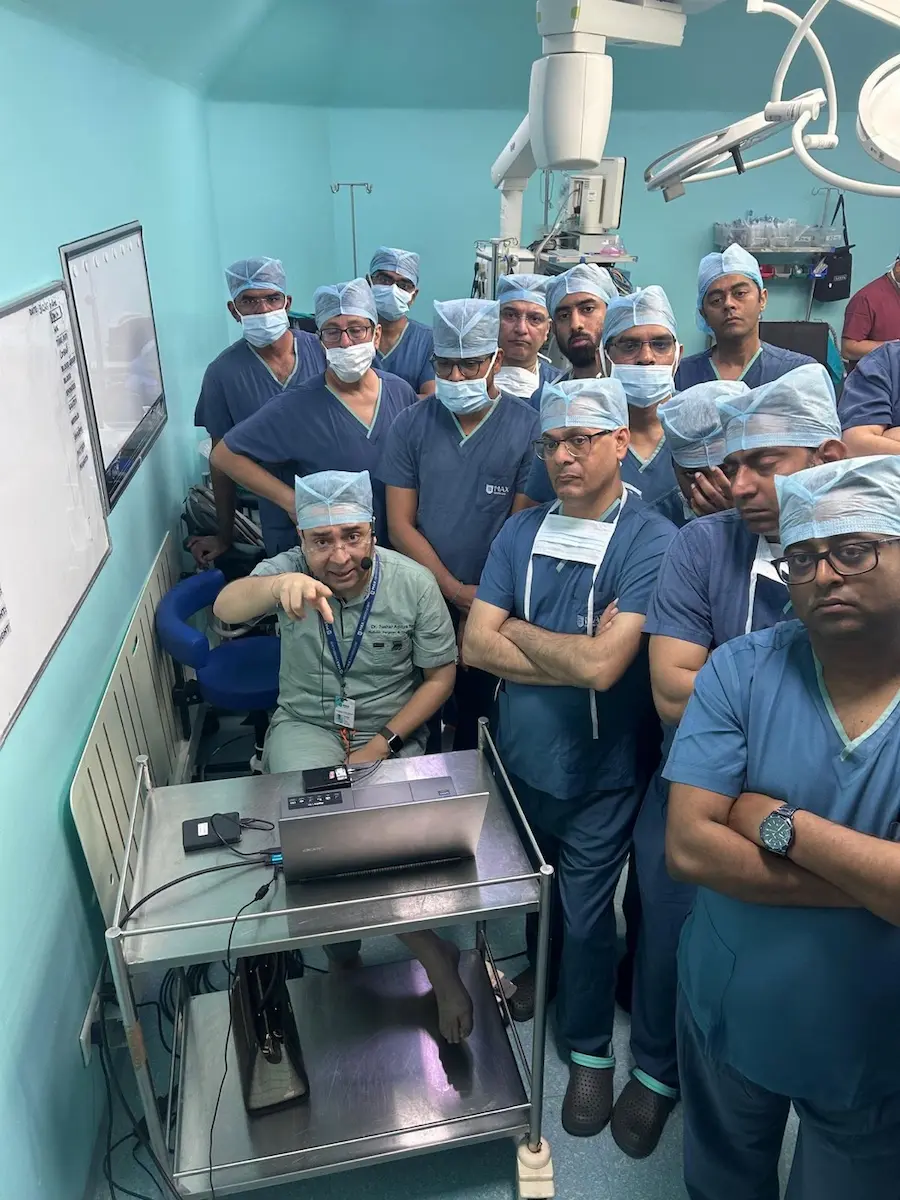
UCLH (London) Fellowship-trained and an Intuitive Surgical da Vinci Proctor, he is the surgeon who trains other surgeons across India.
Patients consistently report clear explanations of PSA results, predictable next-step decisions, and a calm care team that walks them through screening without panic or rushed treatment.
If your PSA report is elevated or you are weighing whether to start regular screening, the right next step is a conversation - not a decision in isolation.
Dr. Tushar Aditya Narain, an experienced robotic uro oncologist in Delhi, sees patients at Max Hospital Saket and Max Hospital Gurgaon for PSA interpretation, screening counsel, and second opinions. Book a consultation today to map your screening or treatment plan.
Bring your PSA report and any prior imaging (MRI, ultrasound) if you have them
Note family history of prostate or breast cancer
Prepare questions about repeat PSA, MRI, biopsy, and active surveillance
Bring a family member or partner for shared decision-making
Ask about the personalised path - not every elevated PSA needs aggressive treatment