1
Phase 1: PLANNING & ADMISSION
Logistics & Insurance
We handle the paperwork, TPA, and approvals so you can focus on family.
You have questions. We have a plan. See exactly what happens, who supports you, and how we guide you home - from your first call to full recovery.
You have questions. We have a plan. See exactly what happens, who supports you, and how we guide you home - from your first call to full recovery.
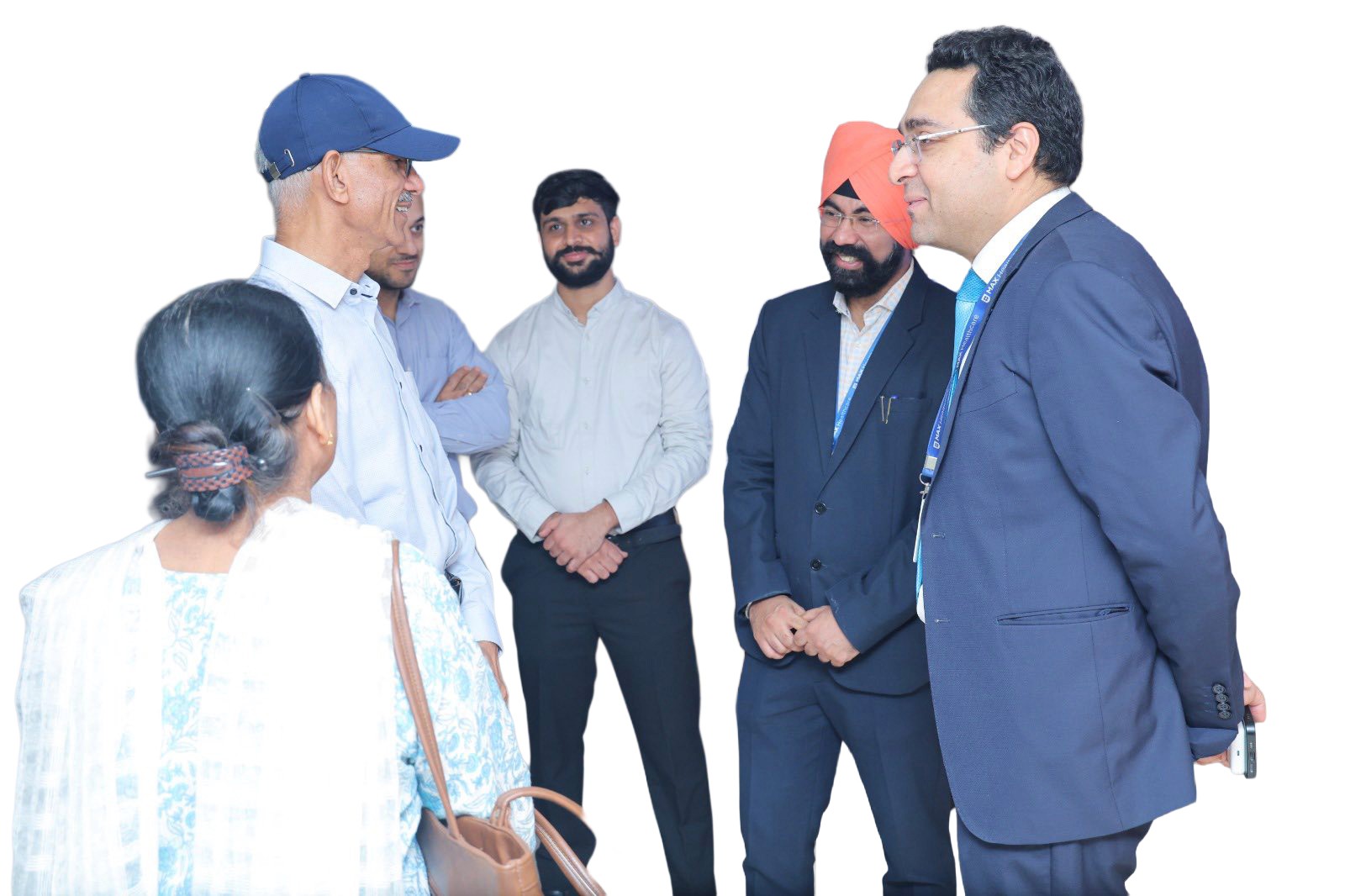
Cancer feels chaotic. Your care plan shouldn't. Here is exactly how we guide you from diagnosis to full recovery - handling the logistics, safety, and healing for you.
We handle the paperwork, TPA, and approvals so you can focus on family.
Safety protocols and robot calibration before you enter the OT.
Minimally invasive removal of cancer with maximum organ preservation.
Rapid discharge, catheter care, and 24/7 access to your clinical guide.
Cancer feels chaotic. Your care plan shouldn't. Here is exactly how we guide you from diagnosis to full recovery - handling the logistics, safety, and healing for you.
We handle the paperwork, TPA, and approvals so you can focus on family.
Safety protocols and robot calibration before you enter the OT.
Minimally invasive removal of cancer with maximum organ preservation.
Rapid discharge, catheter care, and 24/7 access to your clinical guide.
Hospital paperwork can be overwhelming. To protect your peace of mind, we have split the workload.
Hospital paperwork can be overwhelming. To protect your peace of mind, we have split the workload.

Please WhatsApp a photo of your biopsy report & insurance ID card to us. We take it from there.

We check your policy for hidden "Room Rent Caps" to ensure you get the maximum possible claim.

Select a date that works best for your family’s support plan. We will align the hospital resources.
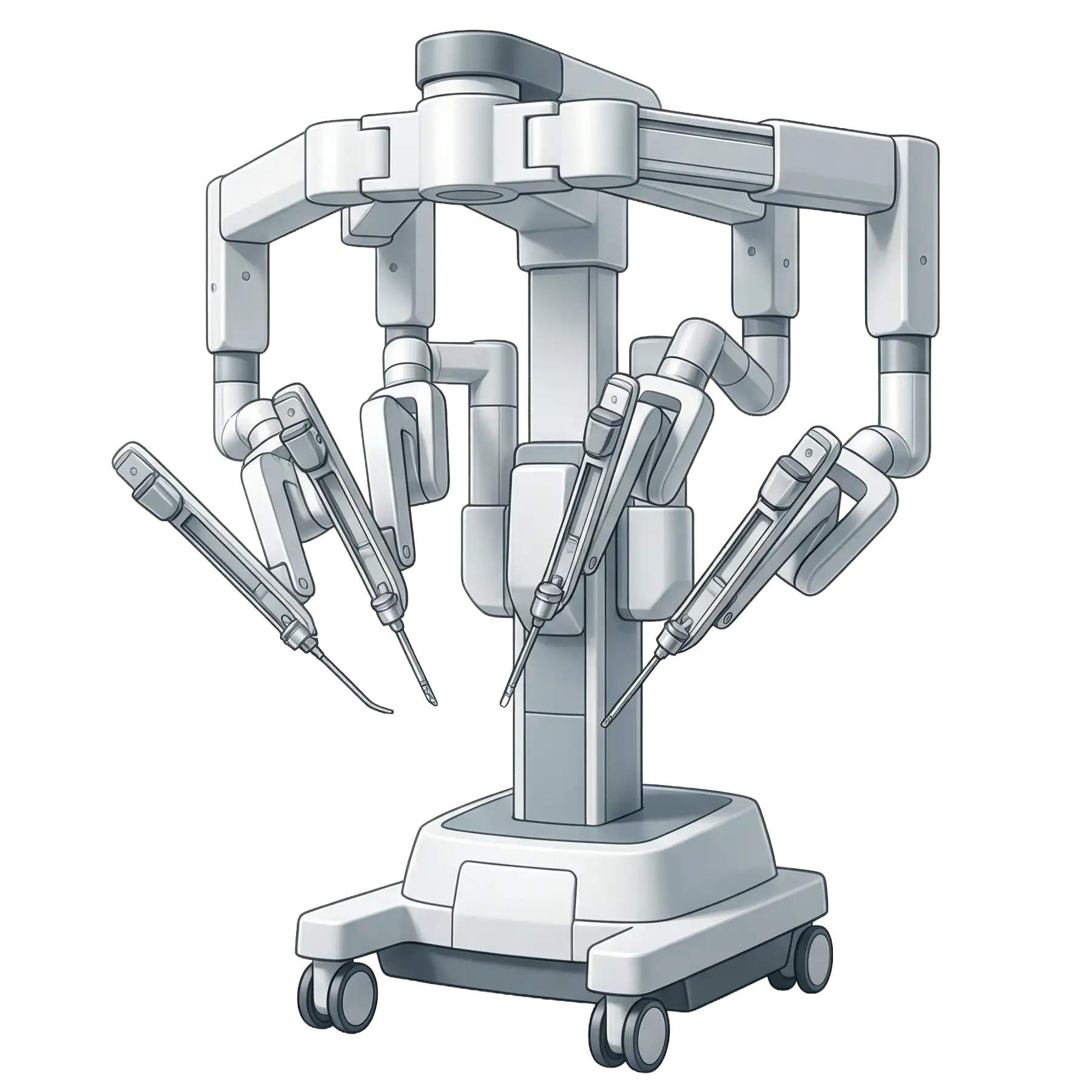
We secure the Operation Theatre, book the Robot, and align the Anesthesia team for your safety.

Come to the hospital with your physical ID proof. No waiting in lines; your file will be ready.

We process your admission file and insurance approval before you leave home. You just walk in.
Book a video consultation anytime, from anywhere
Get clarity on
Why does the final bill sometimes differ from the initial estimate?
We want to be completely honest: The estimate covers a standard 3-day stay and surgery time. The bill only changes if: 1) You choose a Room Upgrade (which increases doctor fees), 2) You need extra days for recovery, or 3) We use specialized robotic instruments for complex cases. Manpreet will give you a 'Safe Range' in writing so you are mentally prepared for any small variations.
If I upgrade to a Suite/Single Room, does it increase other charges?
What are 'Non-Payable' items (Consumables)?
How much do I need to pay at the time of admission?
Get clarity on
Is Robotic Surgery covered by my Insurance?
Yes. Most modern policies (including CGHS, ECHS, and Corporate Group Insurance) cover Robotic Surgery. However, some older policies have a 'Sub-Limit' (a cap on how much they pay for the robot). Manpreet will read your policy fine print to check for this specific clause before you book.
What happens if the TPA (Insurance) denies Cashless approval?
Do you accept CGHS, ECHS, or Government Panels?
My policy has a Co-Pay. What does that mean?
Get clarity on
Can a family member stay with me in the hospital?
Yes. We know family support heals you faster. Single Rooms/Suites: One attendant can stay overnight (a couch/bed is provided). Twin Sharing: Family can visit during visiting hours, but overnight stay depends on hospital policy and the gender of the other patient. Manpreet will arrange the Attendant Pass for your primary caregiver
Why does the Discharge Process take 4-6 hours?
I have a biopsy from another lab. Do I need to repeat it?
I live outside Delhi. Where should my family stay?
Please WhatsApp a photo of your biopsy report & insurance ID card to us. We take it from there.
We check your policy for hidden "Room Rent Caps" to ensure you get the maximum possible claim.
Select a date that works best for your family’s support plan. We will align the hospital resources.
We secure the Operation Theatre, book the Robot, and align the Anesthesia team for your safety.
Come to the hospital with your physical ID proof. No waiting in lines; your file will be ready.
We process your admission file and insurance approval before you leave home. You just walk in.
Book a video consultation anytime, from anywhere
Get clarity on
Why does the final bill sometimes differ from the initial estimate?
We want to be completely honest: The estimate covers a standard 3-day stay and surgery time. The bill only changes if: 1) You choose a Room Upgrade (which increases doctor fees), 2) You need extra days for recovery, or 3) We use specialized robotic instruments for complex cases. Manpreet will give you a 'Safe Range' in writing so you are mentally prepared for any small variations.
If I upgrade to a Suite/Single Room, does it increase other charges?
What are 'Non-Payable' items (Consumables)?
How much do I need to pay at the time of admission?
Get clarity on
Is Robotic Surgery covered by my Insurance?
Yes. Most modern policies (including CGHS, ECHS, and Corporate Group Insurance) cover Robotic Surgery. However, some older policies have a 'Sub-Limit' (a cap on how much they pay for the robot). Manpreet will read your policy fine print to check for this specific clause before you book.
What happens if the TPA (Insurance) denies Cashless approval?
Do you accept CGHS, ECHS, or Government Panels?
My policy has a Co-Pay. What does that mean?
Get clarity on
Can a family member stay with me in the hospital?
Yes. We know family support heals you faster. Single Rooms/Suites: One attendant can stay overnight (a couch/bed is provided). Twin Sharing: Family can visit during visiting hours, but overnight stay depends on hospital policy and the gender of the other patient. Manpreet will arrange the Attendant Pass for your primary caregiver
Why does the Discharge Process take 4-6 hours?
I have a biopsy from another lab. Do I need to repeat it?
I live outside Delhi. Where should my family stay?
Please WhatsApp a photo of your biopsy report & insurance ID card to us. We take it from there.
We check your policy for hidden "Room Rent Caps" to ensure you get the maximum possible claim.
Select a date that works best for your family’s support plan. We will align the hospital resources.
We secure the Operation Theatre, book the Robot, and align the Anesthesia team for your safety.
Come to the hospital with your physical ID proof. No waiting in lines; your file will be ready.
We process your admission file and insurance approval before you leave home. You just walk in.
Book a video consultation anytime, from anywhere
Get clarity on
Why does the final bill sometimes differ from the initial estimate?
We want to be completely honest: The estimate covers a standard 3-day stay and surgery time. The bill only changes if: 1) You choose a Room Upgrade (which increases doctor fees), 2) You need extra days for recovery, or 3) We use specialized robotic instruments for complex cases. Manpreet will give you a 'Safe Range' in writing so you are mentally prepared for any small variations.
If I upgrade to a Suite/Single Room, does it increase other charges?
What are 'Non-Payable' items (Consumables)?
How much do I need to pay at the time of admission?
Get clarity on
Is Robotic Surgery covered by my Insurance?
Yes. Most modern policies (including CGHS, ECHS, and Corporate Group Insurance) cover Robotic Surgery. However, some older policies have a 'Sub-Limit' (a cap on how much they pay for the robot). Manpreet will read your policy fine print to check for this specific clause before you book.
What happens if the TPA (Insurance) denies Cashless approval?
Do you accept CGHS, ECHS, or Government Panels?
My policy has a Co-Pay. What does that mean?
Get clarity on
Can a family member stay with me in the hospital?
Yes. We know family support heals you faster. Single Rooms/Suites: One attendant can stay overnight (a couch/bed is provided). Twin Sharing: Family can visit during visiting hours, but overnight stay depends on hospital policy and the gender of the other patient. Manpreet will arrange the Attendant Pass for your primary caregiver
Why does the Discharge Process take 4-6 hours?
I have a biopsy from another lab. Do I need to repeat it?
I live outside Delhi. Where should my family stay?
We value your time and money. Use this guide to decide how to connect with us.
We value your time and money. Use this guide to decide how to connect with us.
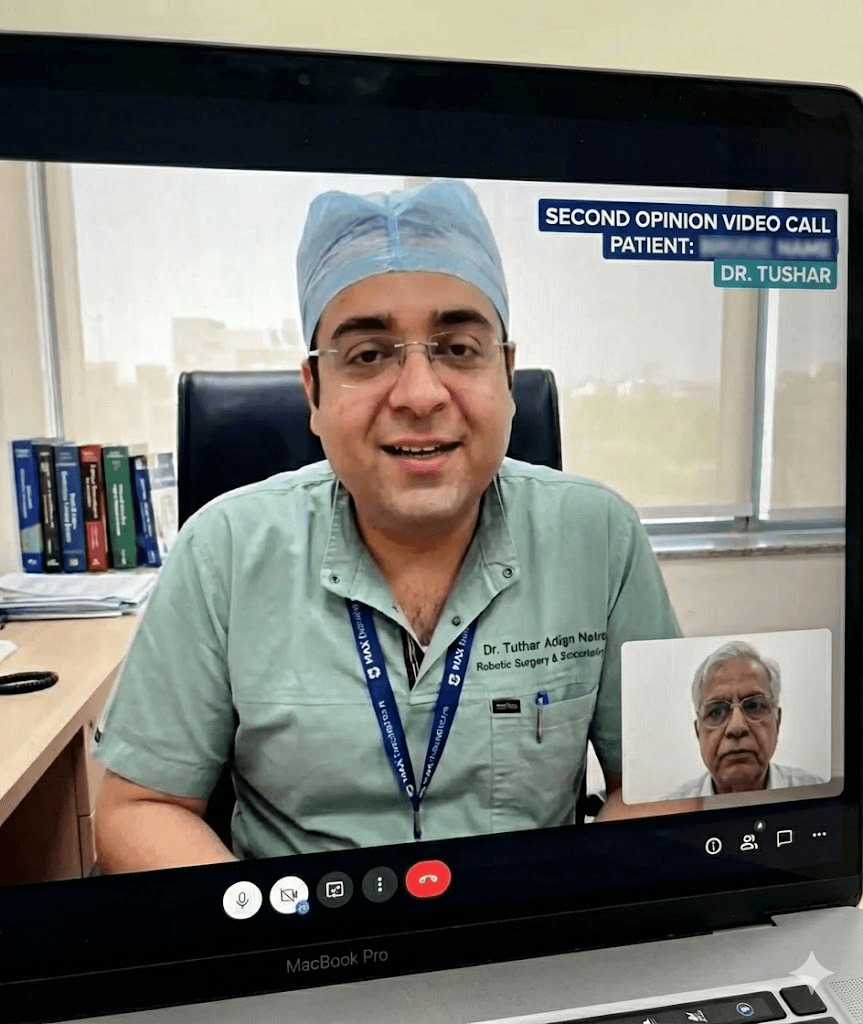
You have a Biopsy report but no final treatment plan.
You are seeking a Second Opinion on an existing plan.
You live outside Delhi/NCR (International or Outstation).
You have a Biopsy report but no final treatment plan.
You are seeking a Second Opinion on an existing plan.
You live outside Delhi/NCR (International or Outstation).
You have a Biopsy report but no final treatment plan.
You are seeking a Second Opinion on an existing plan.
You live outside Delhi/NCR (International or Outstation).
The Benefit: Dr. Tushar can review scans and plan the next steps without requiring you to travel and book accommodation immediately.
Patient has a high fever, or blood in urine.
Upon surgery date confirmation for checks
For pre-surgery checks upon surgery confirmation
Patient has a high fever, or blood in urine.
Upon surgery date confirmation for checks
For pre-surgery checks upon surgery confirmation
Patient has a high fever, or blood in urine.
Upon surgery date confirmation for checks
For pre-surgery checks upon surgery confirmation
The Benefit: Immediate physical intervention and admission if required.
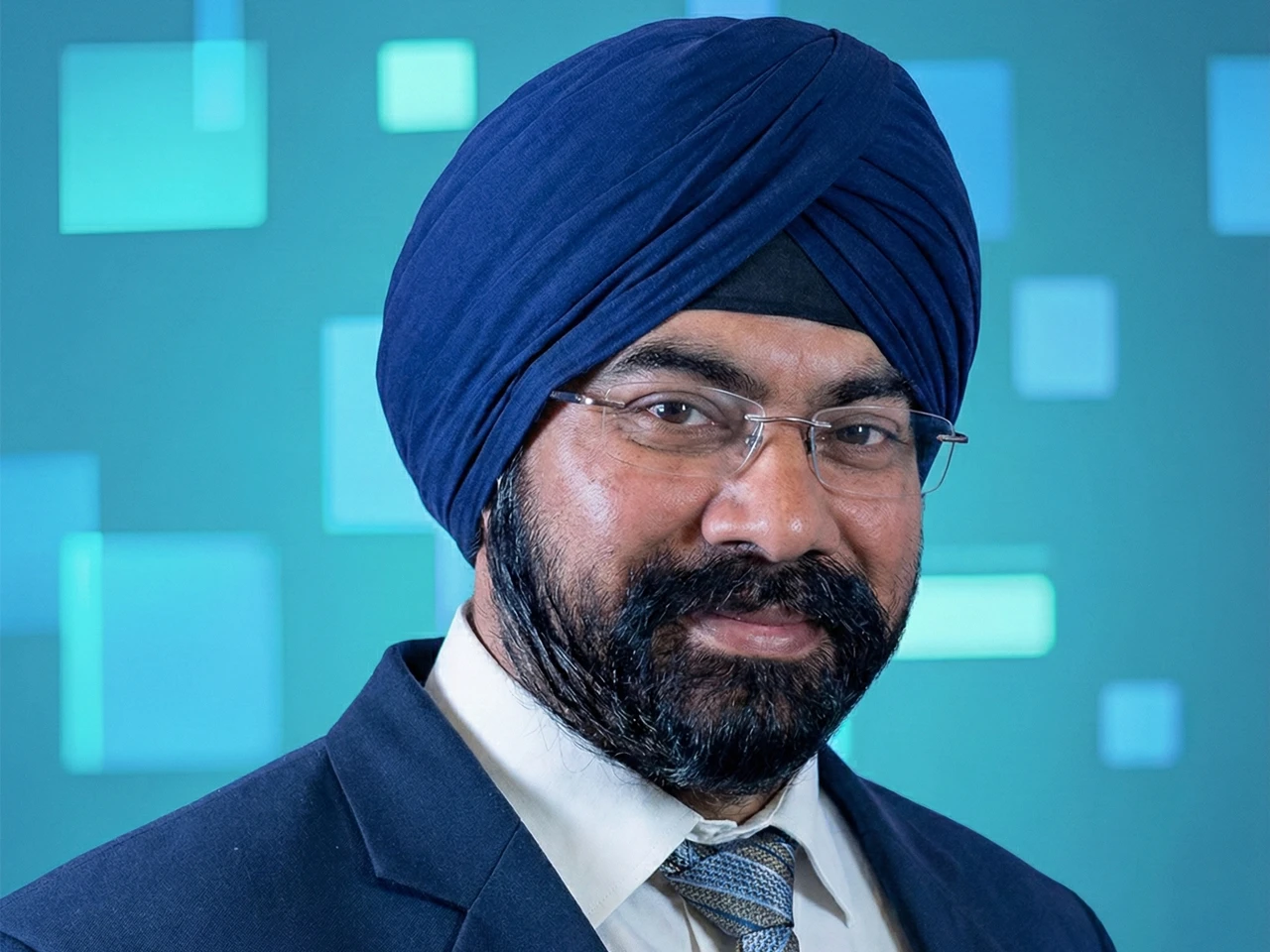
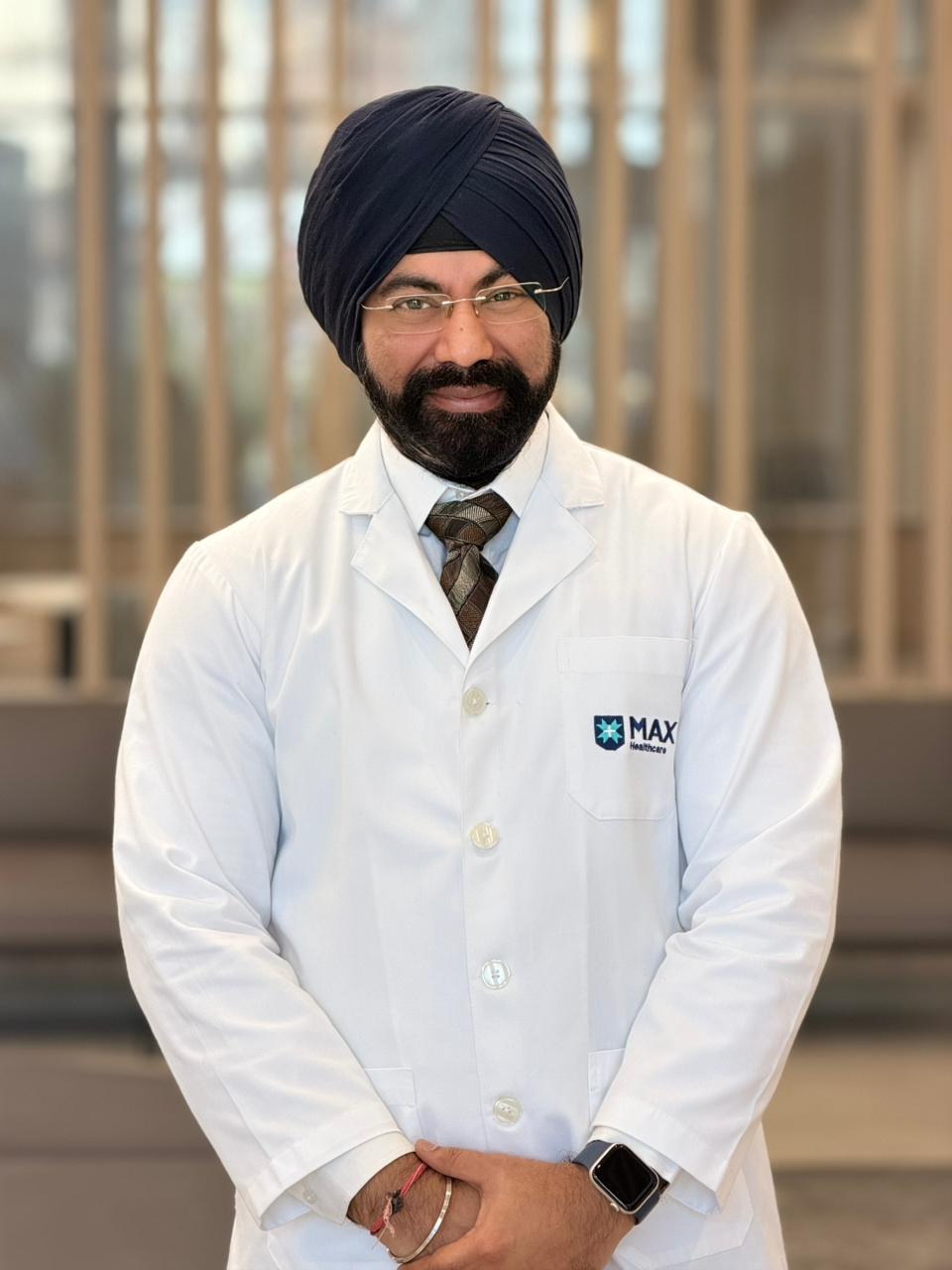
Manpreet Singh
"My job is to handle the files so you can focus on your family. I fight the insurance companies, manage the TPA approvals, and organize the admission dates. If you are confused about a cost, a document, or a date - just message me. I am here to make the boring stuff simple for you."
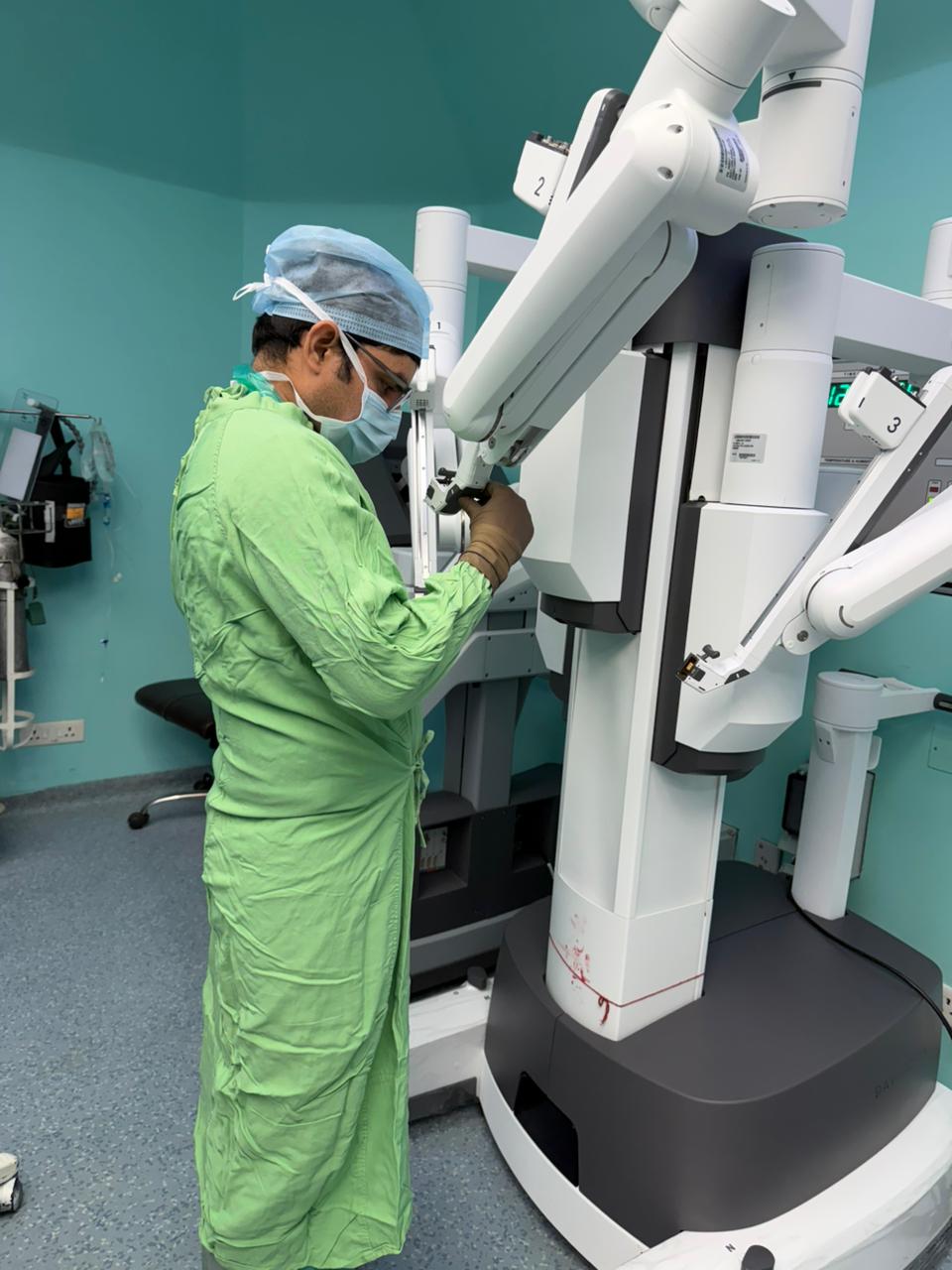
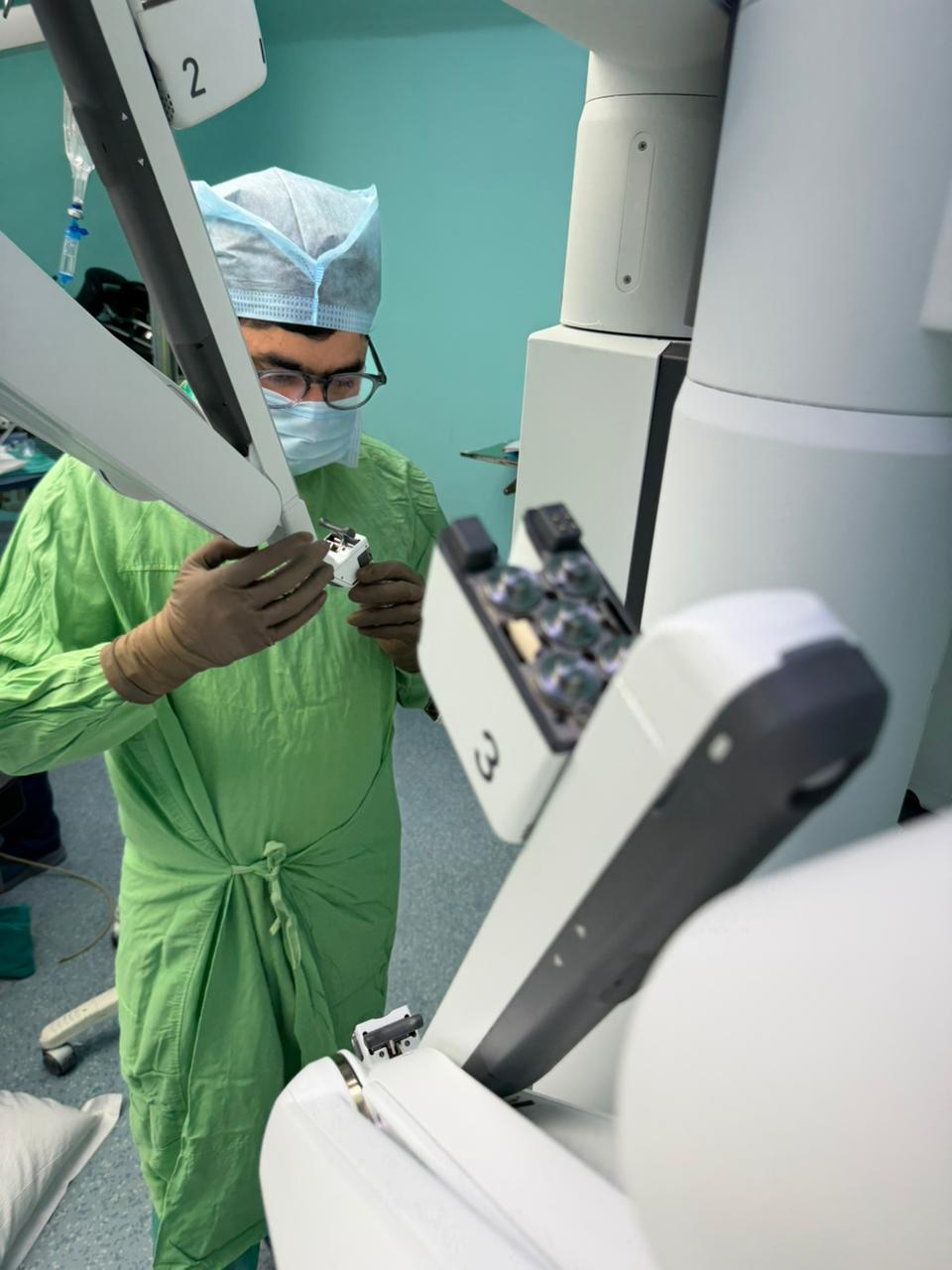
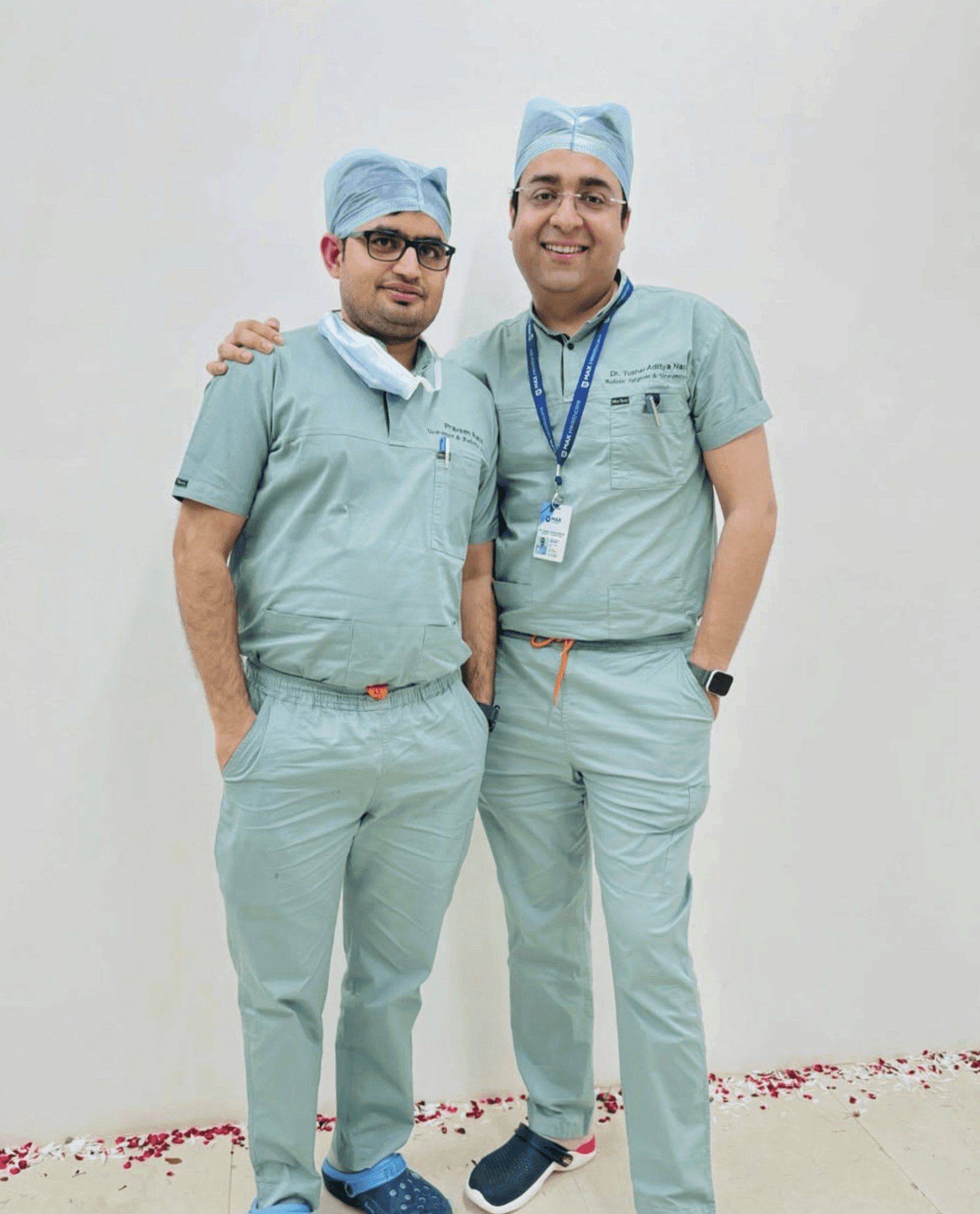
Surgery is 90% preparation. Before Dr. Tushar even enters the room, Pravin (our Robotic Physician Assistant) performs a rigorous 50-point calibration of the Da Vinci system. We treat every surgery like a space mission: rigorous checklists, redundant safety systems, and zero margin for error.
Surgery is 90% preparation. Before Dr. Tushar even enters the room, Pravin (our Robotic Physician Assistant) performs a rigorous 50-point calibration of the Da Vinci system. We treat every surgery like a space mission: rigorous checklists, redundant safety systems, and zero margin for error.
When?
60 Minutes Before Start
What happens?
Before the patient enters, Pravin (Robotic PA) performs a 50-point electronic safety check on the Da Vinci Xi Robot.
Praveen's note
"We verify every camera, arm, and instrument 3 times. We do not start until the system is 100% perfect."
When?
30 Minutes Before Start
What happens?
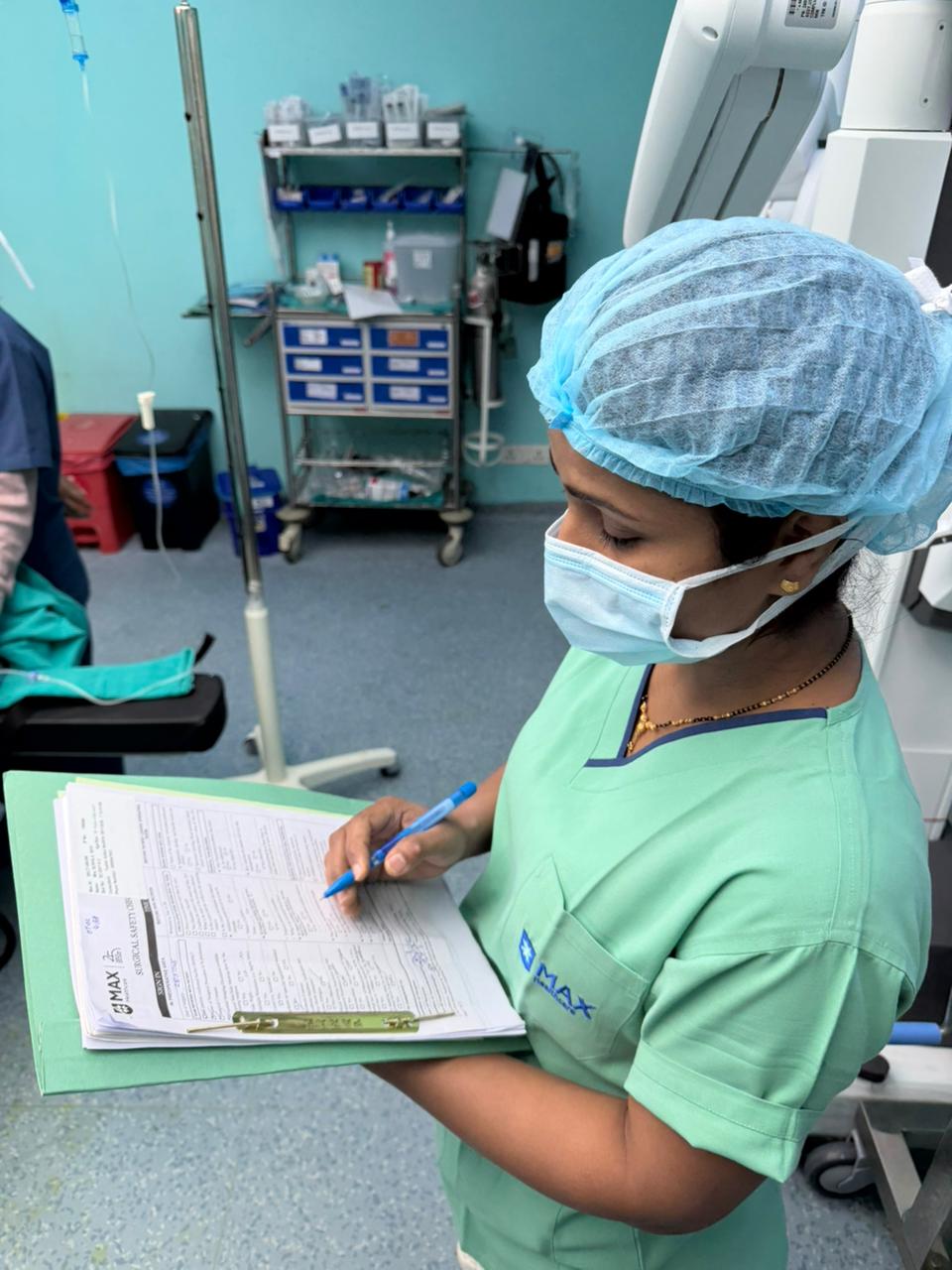
Our Anesthetist gives a gentle sedative. You fall asleep in seconds.
Praveen's note
"You will feel no pain and hear no noise. Our anesthesia team watches your heart and breathing on a monitor every single second while you sleep."
When?
Surgery Starts (Hour 0)
What happens?
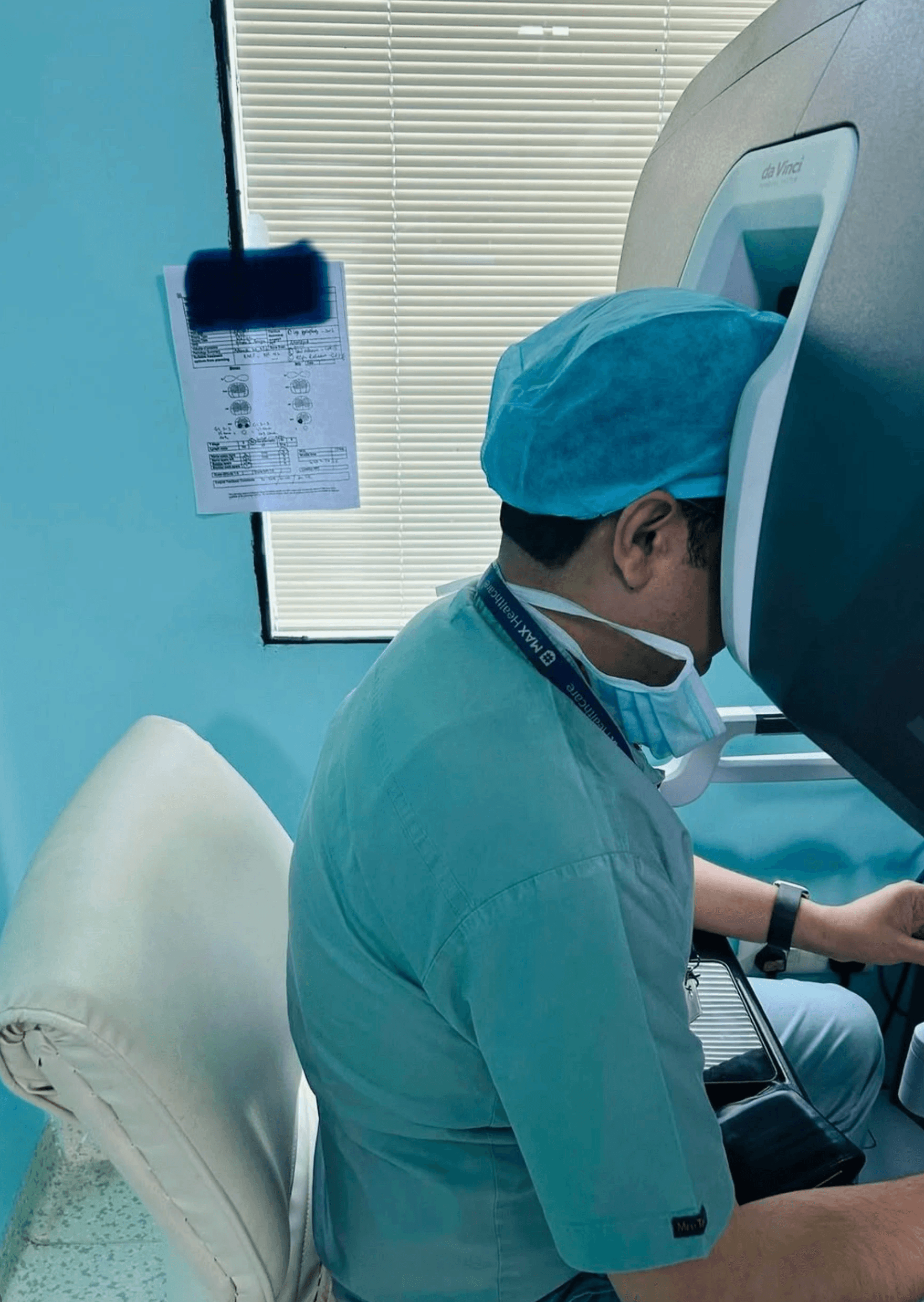
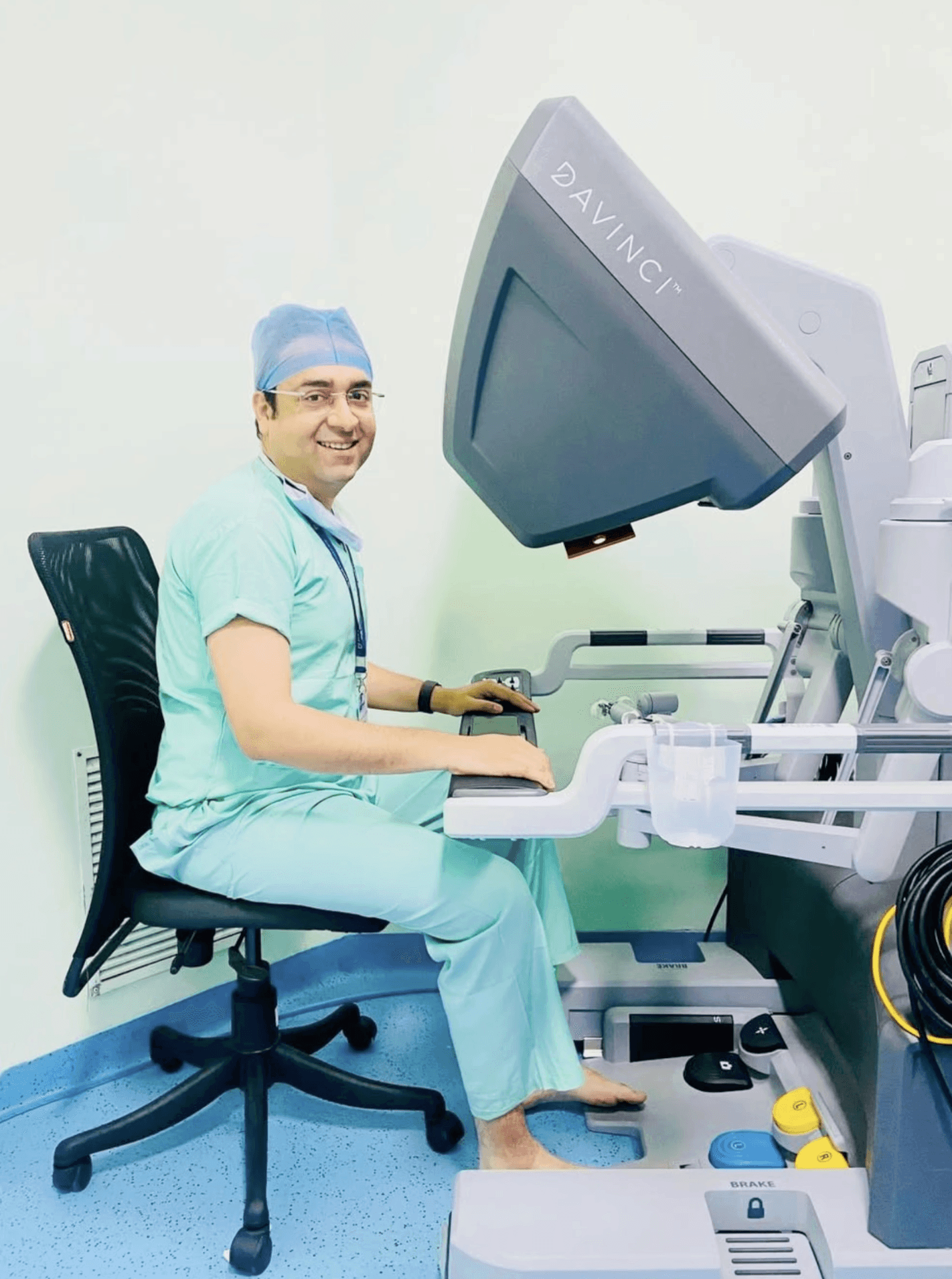
Dr. Tushar sits at the Surgeon Console. He controls the robotic instruments to remove the cancer.
Praveen's note
"The robot does not move on its own. It copies Dr. Tushar's hand movements with millimetre precision, filtering out any tremors for total safety."
When?
Approx. 90 Minutes In
What happens?
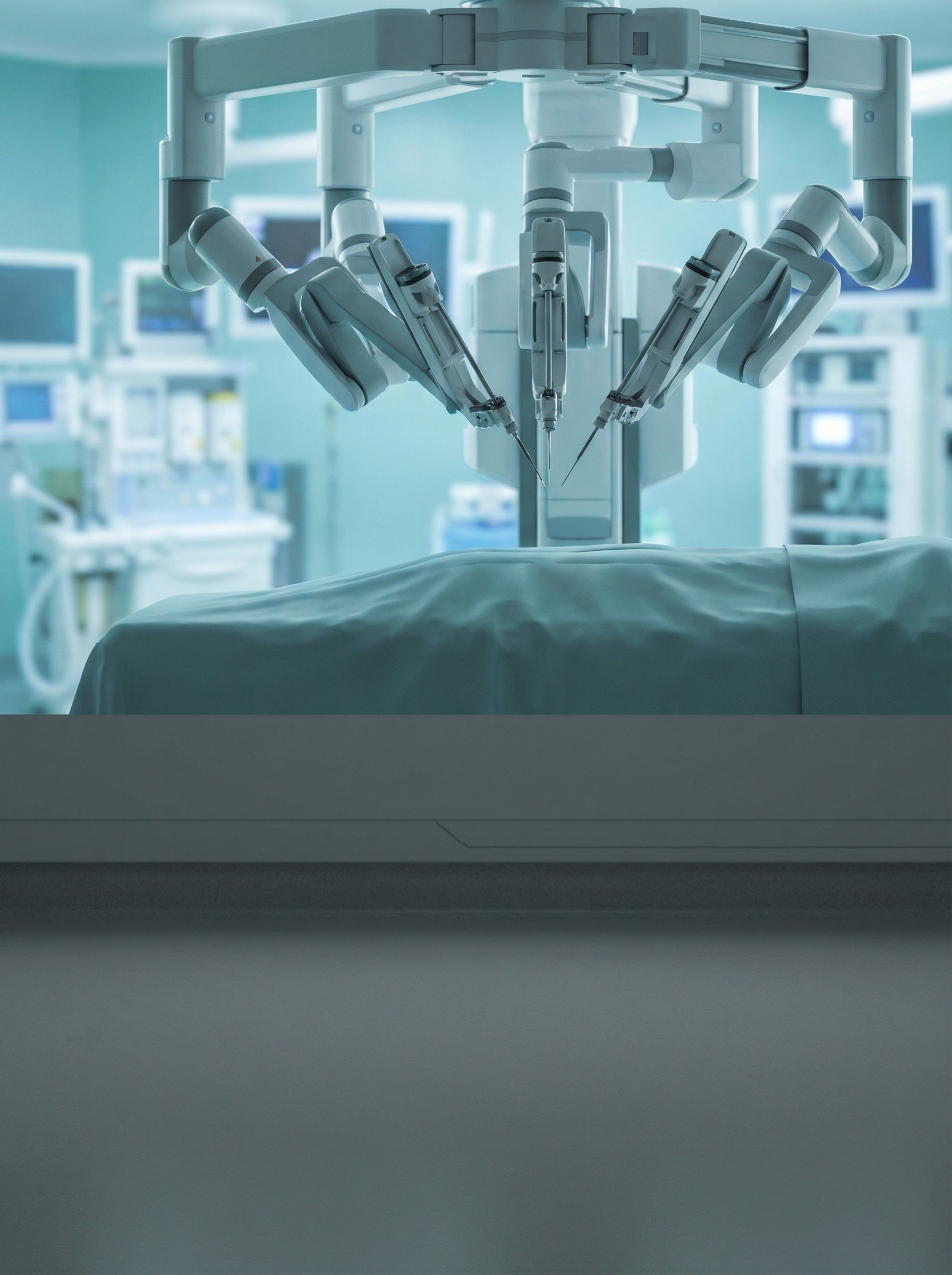
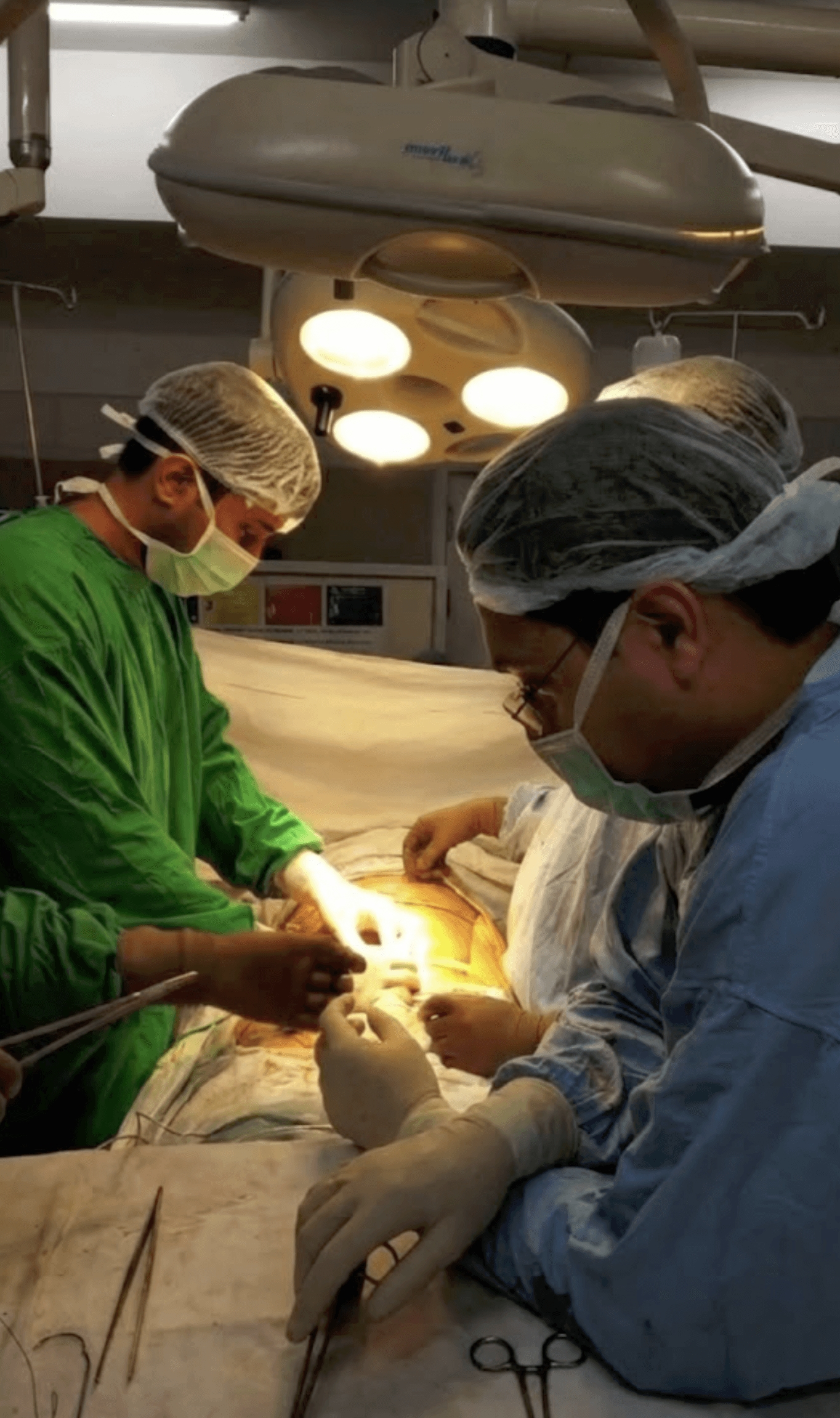
The cancer is out. Now, Dr. Tushar uses the robot to delicately stitch the tissue back together (e.g., reconnecting the urinary tube).
Praveen's note
"This is the most critical step for your future quality of life (urine control). The 10x magnification allows us to stitch tissues that are as thin as paper."
When?
Surgery Ends (Approx. 3 Hours)
What happens?
Anesthesia is stopped. You wake up gently in the Recovery Room. Manish calls your family immediately.
Praveen's note
"You are never left alone. You wake up to a nurse by your side, and your family gets the 'Surgery Successful' update before you even leave the OT."
Get clarity on
Does the robot perform the surgery on its own?
No. The robot cannot think or move without Dr. Tushar. It is a Master-Slave System—meaning it only copies Dr. Tushar's hand movements in real-time. If his hands stop, the robot stops instantly. Think of it as a high-tech tool that gives the surgeon enhanced precision - it is not an autonomous machine.
What happens if there is a power cut or the robot fails?
Is Robotic Surgery different from Laparoscopy (Keyhole)?
Is the robot sterile? Can it give me an infection?
Get clarity on
Why did you say 4 holes, but I might have 5 or 6?
Our rule is Safety First, Cosmetics Second. We typically use 4 keyhole ports (8mm each). However, Dr. Tushar may add an extra 5mm 'Assistant Port' for Pravin to help with suction or clipping if the tumor is complex. We will never compromise your cancer cure just to save one tiny mark.
Will I need a blood transfusion?
Will I need strong painkillers (morphine) at home?
Will the scars be big or permanent?
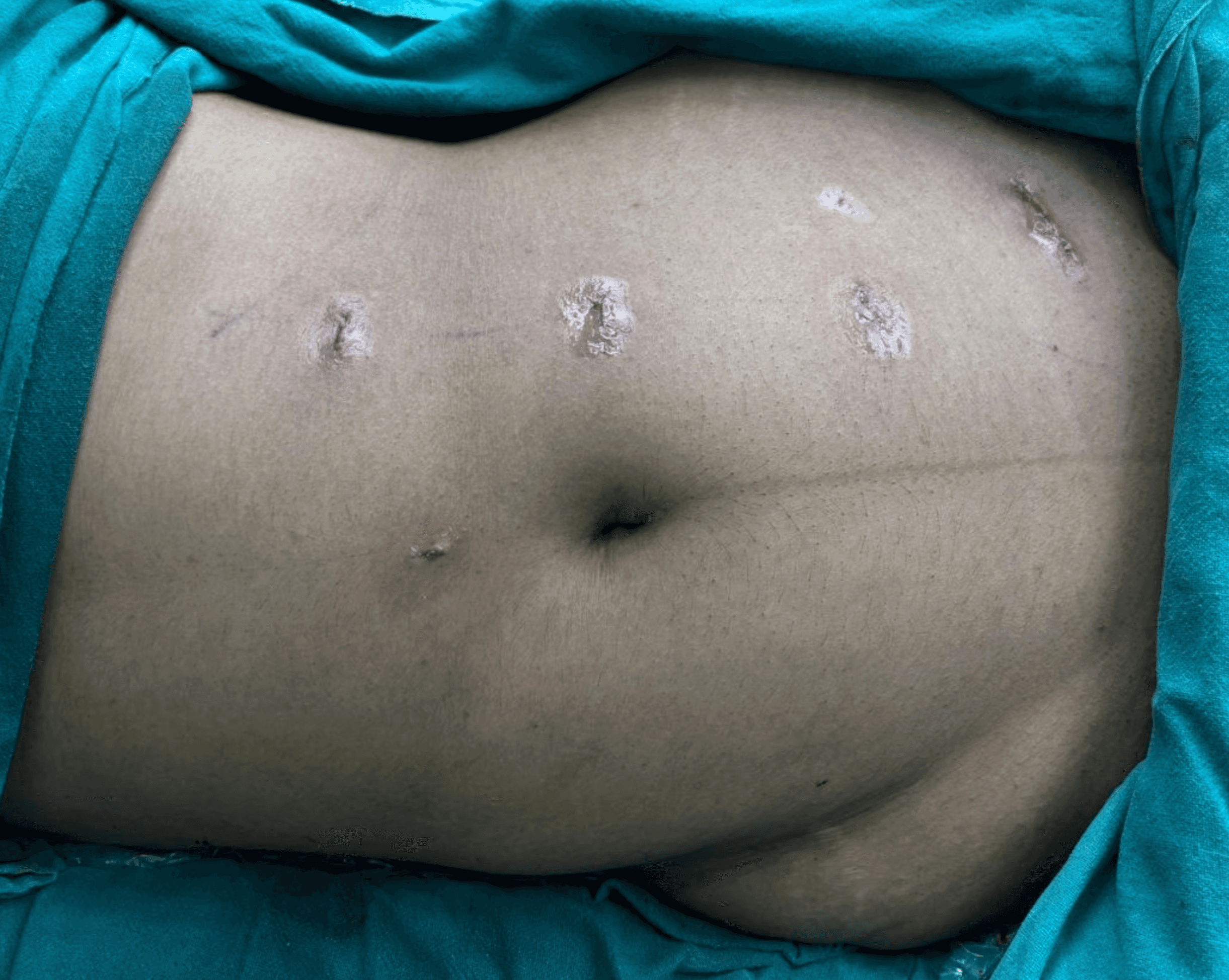
The incisions are tiny (8mm to 12mm), roughly the size of a fingertip. We close them with dissolvable sutures and waterproof glue, so there are no stitches to cut later. Within 6 months, these marks typically fade to faint lines that are barely noticeable.
This photo has been taken immediately post surgery and shows the dissolvable sutures and transparent dressing.
Get clarity on
Will I be awake or hear anything?
Never. You will be under General Anesthesia. You will drift into a deep sleep before the robot is even docked. You will hear nothing, feel nothing, and remember nothing until you wake up in the recovery room with a nurse by your side.
Is anesthesia safe for heart patients or the elderly?
Will I have a tube in my throat when I wake up?
Will I feel nausea or vomit after waking up?
When?
60 Minutes Before Start
What happens?
Before the patient enters, Pravin (Robotic PA) performs a 50-point electronic safety check on the Da Vinci Xi Robot.
Praveen's note
"We verify every camera, arm, and instrument 3 times. We do not start until the system is 100% perfect."
When?
30 Minutes Before Start
What happens?
Our Anesthetist gives a gentle sedative. You fall asleep in seconds.
Praveen's note
"You will feel no pain and hear no noise. Our anesthesia team watches your heart and breathing on a monitor every single second while you sleep."
When?
Surgery Starts (Hour 0)
What happens?
Dr. Tushar sits at the Surgeon Console. He controls the robotic instruments to remove the cancer.
Praveen's note
"The robot does not move on its own. It copies Dr. Tushar's hand movements with millimetre precision, filtering out any tremors for total safety."
When?
Approx. 90 Minutes In
What happens?
The cancer is out. Now, Dr. Tushar uses the robot to delicately stitch the tissue back together (e.g., reconnecting the urinary tube).
Praveen's note
"This is the most critical step for your future quality of life (urine control). The 10x magnification allows us to stitch tissues that are as thin as paper."
When?
Surgery Ends (Approx. 3 Hours)
What happens?
Anesthesia is stopped. You wake up gently in the Recovery Room. Manish calls your family immediately.
Praveen's note
"You are never left alone. You wake up to a nurse by your side, and your family gets the 'Surgery Successful' update before you even leave the OT."
Get clarity on
Does the robot perform the surgery on its own?
No. The robot cannot think or move without Dr. Tushar. It is a Master-Slave System—meaning it only copies Dr. Tushar's hand movements in real-time. If his hands stop, the robot stops instantly. Think of it as a high-tech tool that gives the surgeon enhanced precision - it is not an autonomous machine.
What happens if there is a power cut or the robot fails?
Is Robotic Surgery different from Laparoscopy (Keyhole)?
Is the robot sterile? Can it give me an infection?
Get clarity on
Why did you say 4 holes, but I might have 5 or 6?
Our rule is Safety First, Cosmetics Second. We typically use 4 keyhole ports (8mm each). However, Dr. Tushar may add an extra 5mm 'Assistant Port' for Pravin to help with suction or clipping if the tumor is complex. We will never compromise your cancer cure just to save one tiny mark.
Will I need a blood transfusion?
Will I need strong painkillers (morphine) at home?
Will the scars be big or permanent?
The incisions are tiny (8mm to 12mm), roughly the size of a fingertip. We close them with dissolvable sutures and waterproof glue, so there are no stitches to cut later. Within 6 months, these marks typically fade to faint lines that are barely noticeable.
This photo has been taken immediately post surgery and shows the dissolvable sutures and transparent dressing.
Get clarity on
Will I be awake or hear anything?
Never. You will be under General Anesthesia. You will drift into a deep sleep before the robot is even docked. You will hear nothing, feel nothing, and remember nothing until you wake up in the recovery room with a nurse by your side.
Is anesthesia safe for heart patients or the elderly?
Will I have a tube in my throat when I wake up?
Will I feel nausea or vomit after waking up?
When?
60 Minutes Before Start
What happens?
Before the patient enters, Pravin (Robotic PA) performs a 50-point electronic safety check on the Da Vinci Xi Robot.
Praveen's note
"We verify every camera, arm, and instrument 3 times. We do not start until the system is 100% perfect."
When?
30 Minutes Before Start
What happens?
Our Anesthetist gives a gentle sedative. You fall asleep in seconds.
Praveen's note
"You will feel no pain and hear no noise. Our anesthesia team watches your heart and breathing on a monitor every single second while you sleep."
When?
Surgery Starts (Hour 0)
What happens?
Dr. Tushar sits at the Surgeon Console. He controls the robotic instruments to remove the cancer.
Praveen's note
"The robot does not move on its own. It copies Dr. Tushar's hand movements with millimetre precision, filtering out any tremors for total safety."
When?
Approx. 90 Minutes In
What happens?
The cancer is out. Now, Dr. Tushar uses the robot to delicately stitch the tissue back together (e.g., reconnecting the urinary tube).
Praveen's note
"This is the most critical step for your future quality of life (urine control). The 10x magnification allows us to stitch tissues that are as thin as paper."
When?
Surgery Ends (Approx. 3 Hours)
What happens?
Anesthesia is stopped. You wake up gently in the Recovery Room. Manish calls your family immediately.
Praveen's note
"You are never left alone. You wake up to a nurse by your side, and your family gets the 'Surgery Successful' update before you even leave the OT."
Get clarity on
Does the robot perform the surgery on its own?
No. The robot cannot think or move without Dr. Tushar. It is a Master-Slave System—meaning it only copies Dr. Tushar's hand movements in real-time. If his hands stop, the robot stops instantly. Think of it as a high-tech tool that gives the surgeon enhanced precision - it is not an autonomous machine.
What happens if there is a power cut or the robot fails?
Is Robotic Surgery different from Laparoscopy (Keyhole)?
Is the robot sterile? Can it give me an infection?
Get clarity on
Why did you say 4 holes, but I might have 5 or 6?
Our rule is Safety First, Cosmetics Second. We typically use 4 keyhole ports (8mm each). However, Dr. Tushar may add an extra 5mm 'Assistant Port' for Pravin to help with suction or clipping if the tumor is complex. We will never compromise your cancer cure just to save one tiny mark.
Will I need a blood transfusion?
Will I need strong painkillers (morphine) at home?
Will the scars be big or permanent?
The incisions are tiny (8mm to 12mm), roughly the size of a fingertip. We close them with dissolvable sutures and waterproof glue, so there are no stitches to cut later. Within 6 months, these marks typically fade to faint lines that are barely noticeable.
This photo has been taken immediately post surgery and shows the dissolvable sutures and transparent dressing.
Get clarity on
Will I be awake or hear anything?
Never. You will be under General Anesthesia. You will drift into a deep sleep before the robot is even docked. You will hear nothing, feel nothing, and remember nothing until you wake up in the recovery room with a nurse by your side.
Is anesthesia safe for heart patients or the elderly?
Will I have a tube in my throat when I wake up?
Will I feel nausea or vomit after waking up?
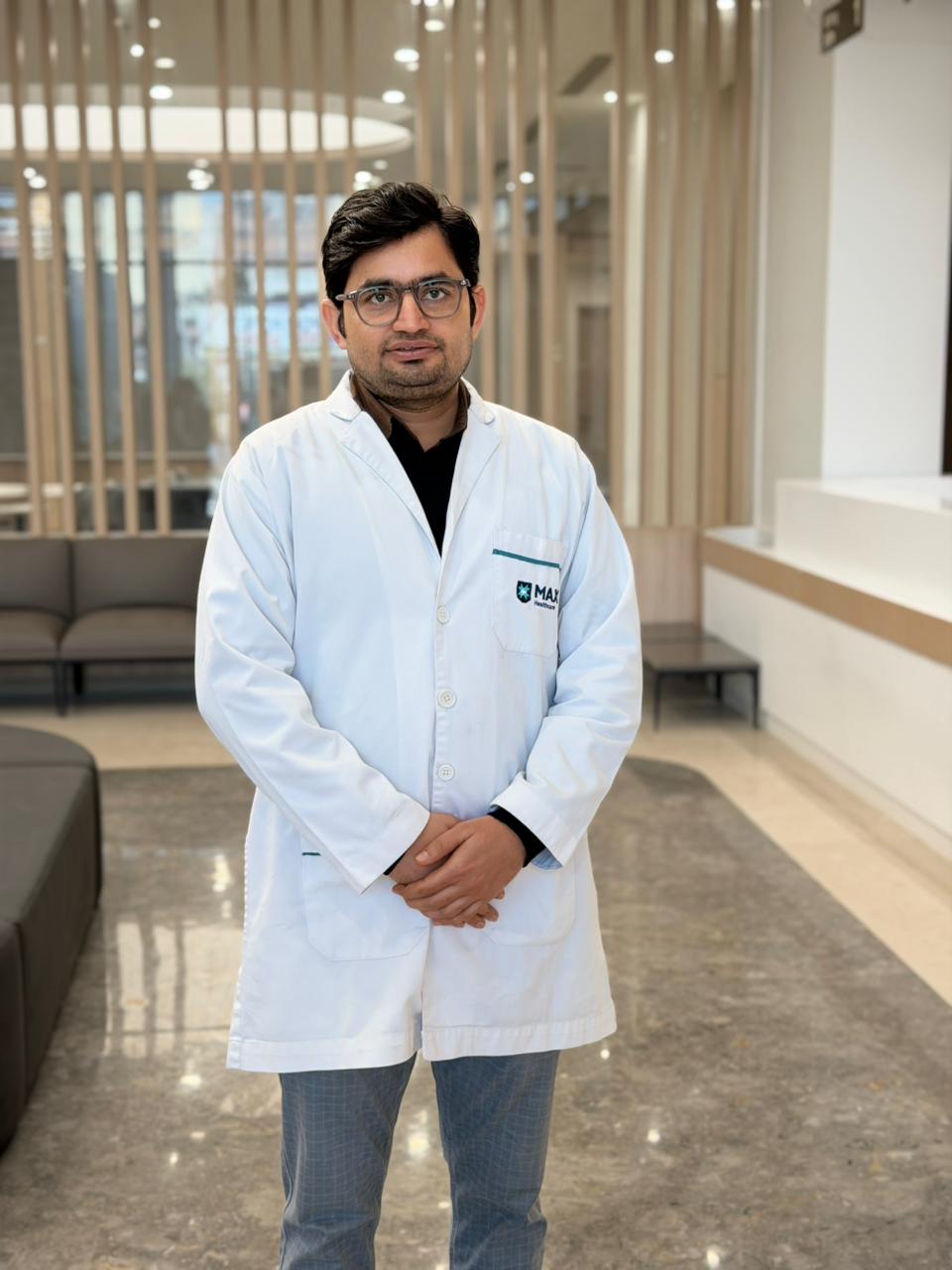
Praveen Rathi
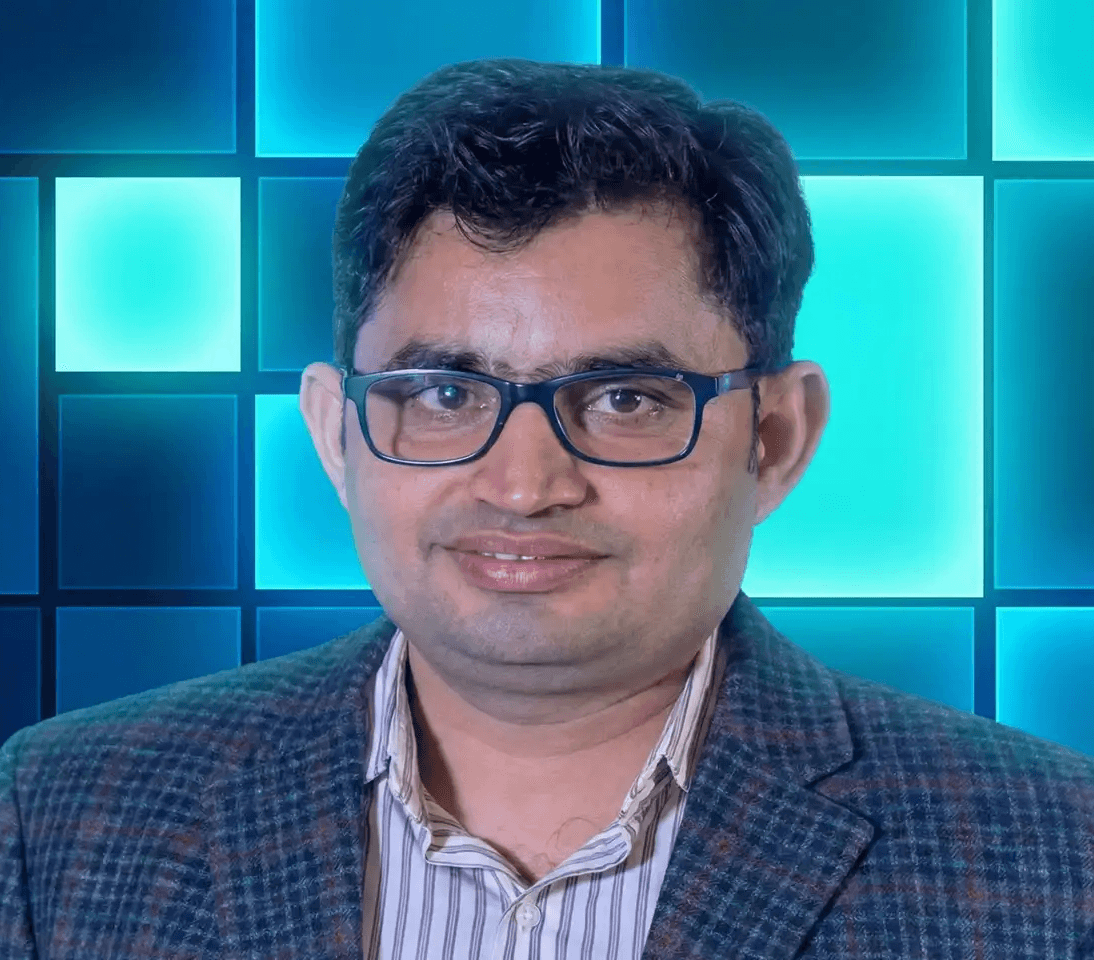
"A safe surgery starts long before you enter the room. I personally run a 50-point calibration check on the robot every morning. I am the bridge between the machine and your safety."
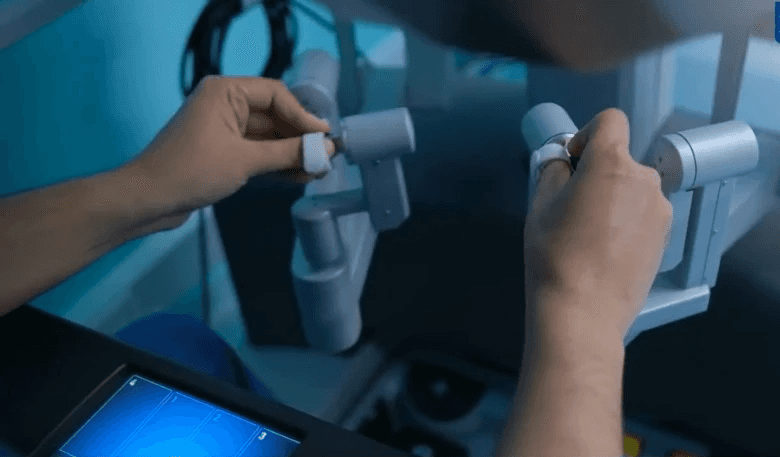
While you sleep safely, Dr. Tushar is at work. Using the console, he enters a microscopic world where he can see cancer cells that the naked eye would miss.
While you sleep safely, Dr. Tushar is at work. Using the console, he enters a microscopic world where he can see cancer cells that the naked eye would miss.
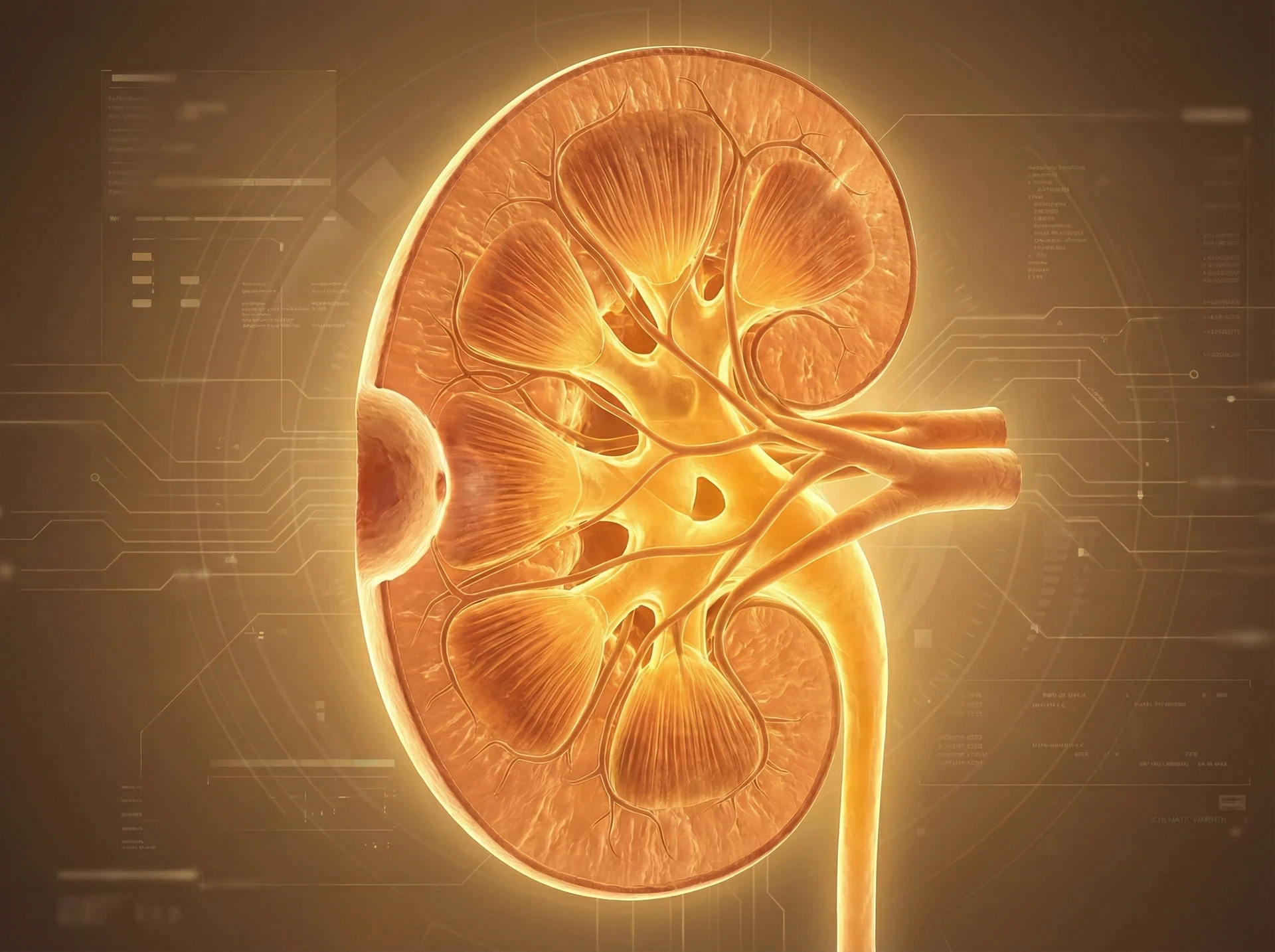
The Promise
Removing the cancer completely is our single most important goal.
The Technique
Precision Excision & Margin Check.
The Execution
• Using 10x magnification, Dr. Tushar identifies the microscopic boundary between the tumor and healthy tissue.
• He removes the cancer with a 'Negative Margin' (a safety buffer) to ensure no cells are left behind.
Your Win
Gives you the highest probability of a permanent cure and reduces the risk of cancer coming back.
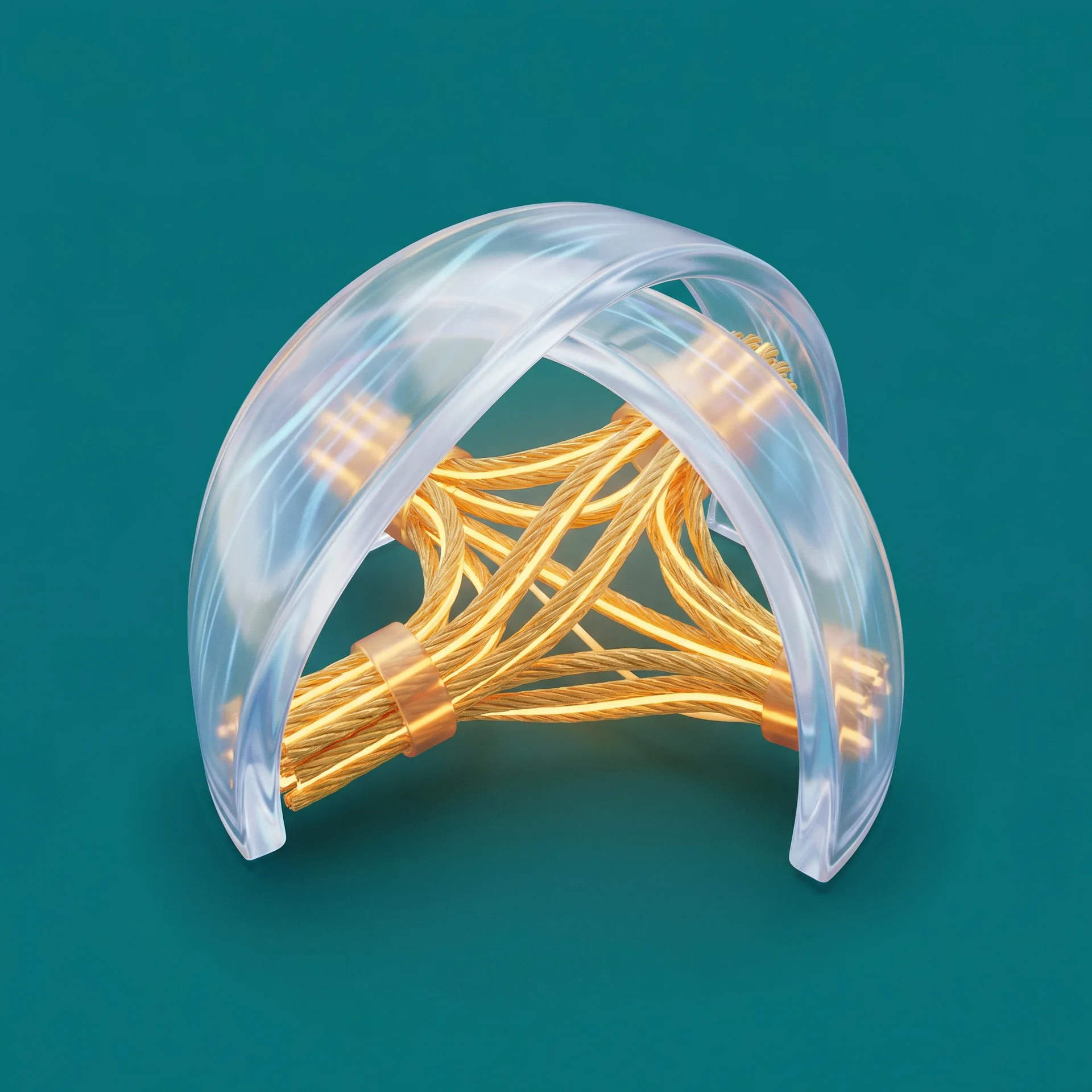
The Promise
Preserving your natural ability to control urine and sexual function.
The Technique
The "Veil" Sparing Technique.
The Execution
• The nerves that control erections and holding urine are as thin as a hair.
• Instead of cutting near them, Dr. Tushar gently 'peels' the tissue away like a veil, leaving the nerve bundles untouched and intact.
Your Win
This is the difference between lifelong diapers/impotence and returning to a normal, active life.
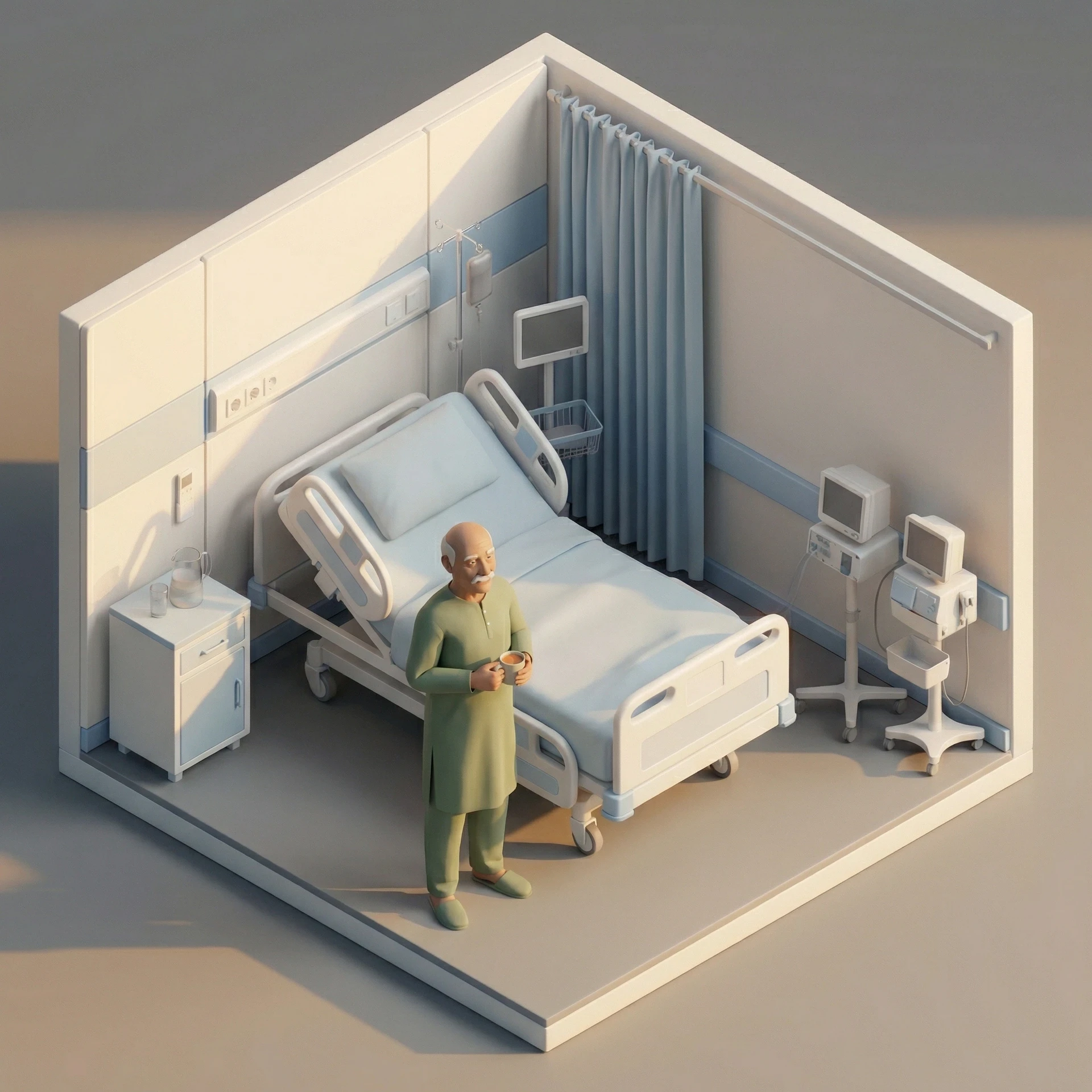
The Promise
Reconnecting your anatomy for a water-tight, rapid recovery.
The Technique
Water-Tight Anastomosis.
The Execution
• Once the cancer is removed, Dr. Tushar reconnects the bladder to the urinary tube (urethra).
• He uses a continuous, running suture technique to create a secure, watertight seal.
Your Win
Ensures rapid internal healing, prevents painful urine leaks, and allows us to remove your catheter days earlier.
The Promise
Removing the cancer completely is our single most important goal.
The Technique
Precision Excision & Margin Check.
The Execution
• Using 10x magnification, Dr. Tushar identifies the microscopic boundary between the tumor and healthy tissue.
• He removes the cancer with a 'Negative Margin' (a safety buffer) to ensure no cells are left behind.
Your Win
Gives you the highest probability of a permanent cure and reduces the risk of cancer coming back.
The Promise
Preserving your natural ability to control urine and sexual function.
The Technique
The "Veil" Sparing Technique.
The Execution
• The nerves that control erections and holding urine are as thin as a hair.
• Instead of cutting near them, Dr. Tushar gently 'peels' the tissue away like a veil, leaving the nerve bundles untouched and intact.
Your Win
This is the difference between lifelong diapers/impotence and returning to a normal, active life.
The Promise
Reconnecting your anatomy for a water-tight, rapid recovery.
The Technique
Water-Tight Anastomosis.
The Execution
• Once the cancer is removed, Dr. Tushar reconnects the bladder to the urinary tube (urethra).
• He uses a continuous, running suture technique to create a secure, watertight seal.
Your Win
Ensures rapid internal healing, prevents painful urine leaks, and allows us to remove your catheter days earlier.
The Promise
Removing the cancer completely is our single most important goal.
The Technique
Precision Excision & Margin Check.
The Execution
• Using 10x magnification, Dr. Tushar identifies the microscopic boundary between the tumor and healthy tissue.
• He removes the cancer with a 'Negative Margin' (a safety buffer) to ensure no cells are left behind.
Your Win
Gives you the highest probability of a permanent cure and reduces the risk of cancer coming back.
The Promise
Preserving your natural ability to control urine and sexual function.
The Technique
The "Veil" Sparing Technique.
The Execution
• The nerves that control erections and holding urine are as thin as a hair.
• Instead of cutting near them, Dr. Tushar gently 'peels' the tissue away like a veil, leaving the nerve bundles untouched and intact.
Your Win
This is the difference between lifelong diapers/impotence and returning to a normal, active life.
The Promise
Reconnecting your anatomy for a water-tight, rapid recovery.
The Technique
Water-Tight Anastomosis.
The Execution
• Once the cancer is removed, Dr. Tushar reconnects the bladder to the urinary tube (urethra).
• He uses a continuous, running suture technique to create a secure, watertight seal.
Your Win
Ensures rapid internal healing, prevents painful urine leaks, and allows us to remove your catheter days earlier.
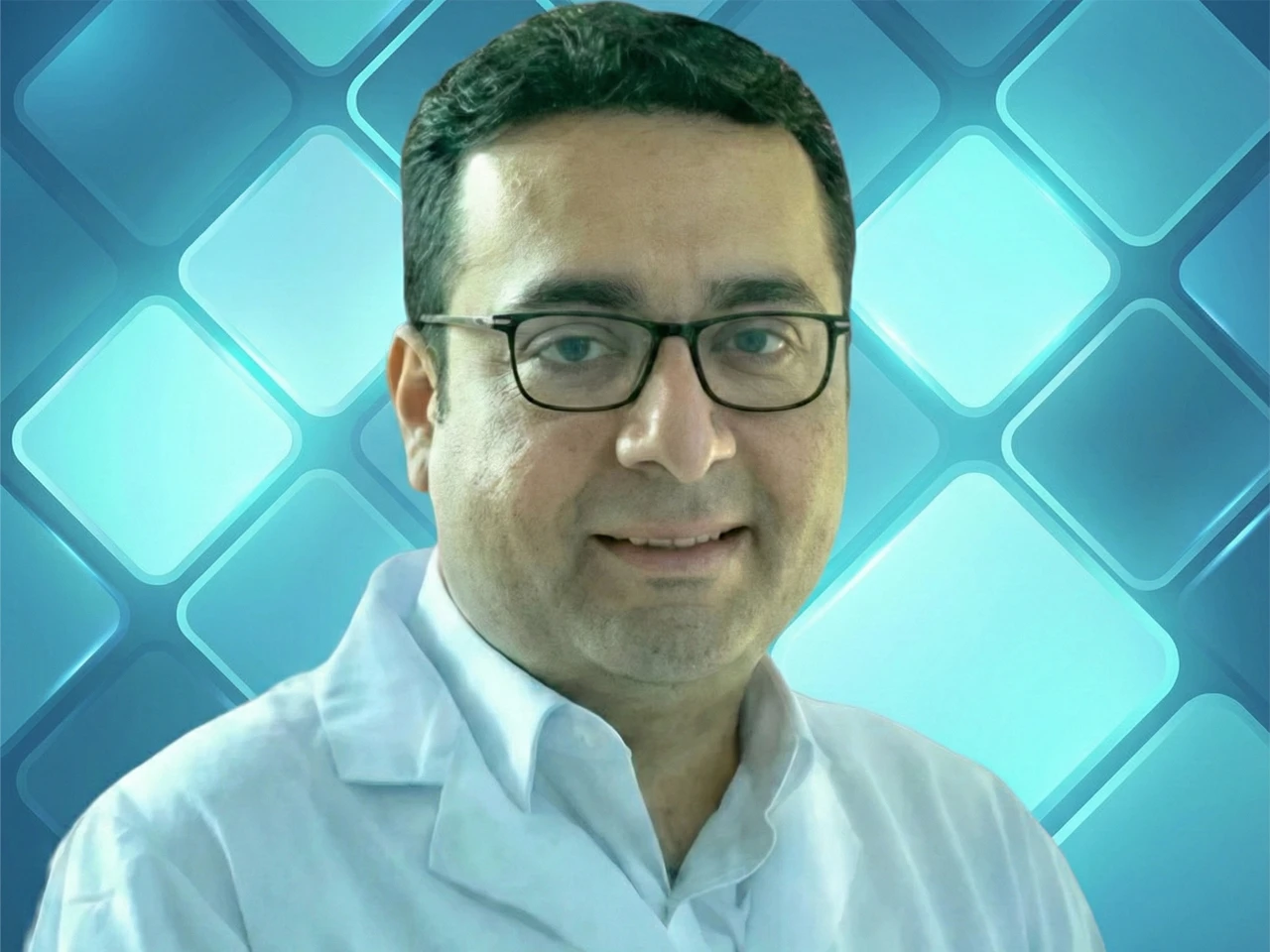
Dr. Tushar Aditya Narain
"The robot gives me 3D vision and steady hands, but it doesn't make decisions. I do. Every cut, every stitch, and every nerve saved is a deliberate choice I make to ensure you wake up cancer-free and intact."
We track your recovery with the same precision as your surgery. Here is your roadmap from the hospital bed back to your normal life
We track your recovery with the same precision as your surgery. Here is your roadmap from the hospital bed back to your normal life
Recovery doesn't happen by accident; it happens by design. Because robotic surgery is minimally invasive, your return to normalcy is weeks faster than traditional surgery. We have mapped out exactly what you can expect at every stage.
Tap the "Make Progress" button below to see your recovery meter fill up!
10%
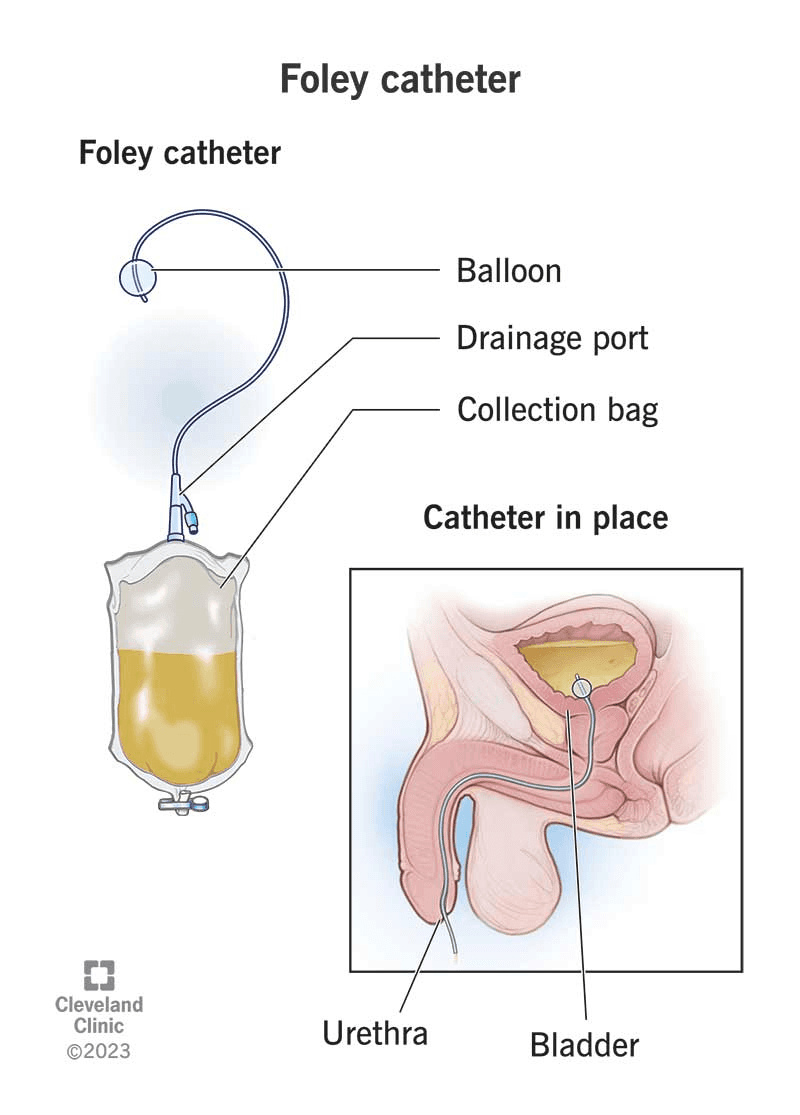
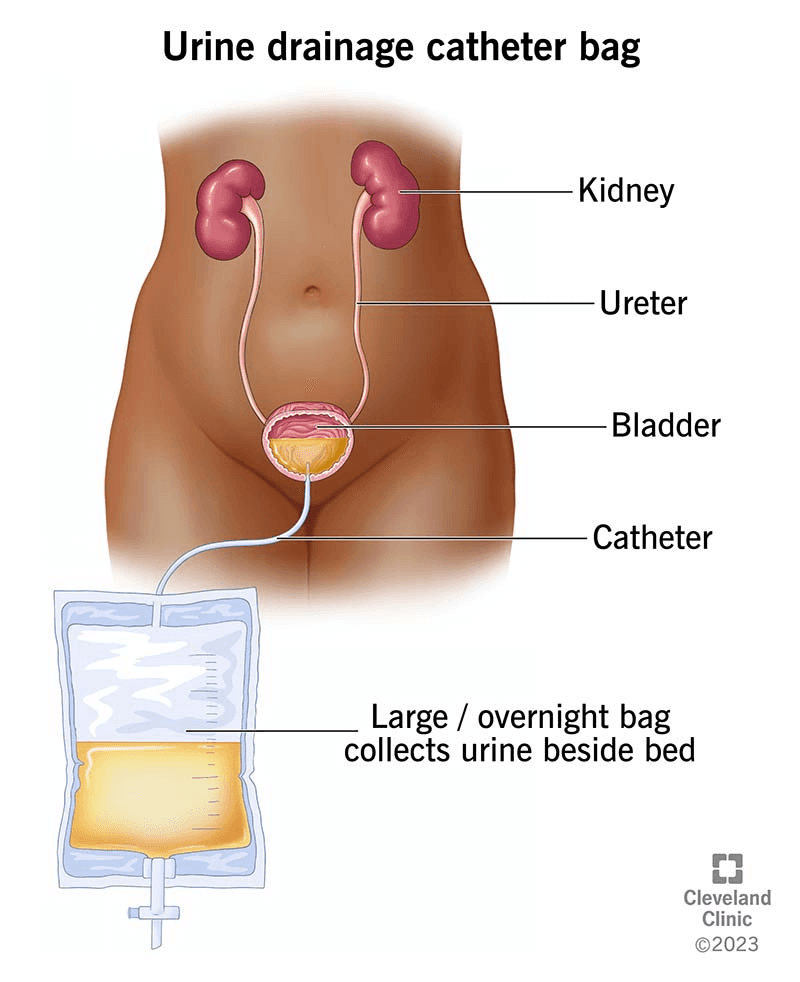
Most patients fear the catheter more than the cancer. But here is the truth: The catheter is not just a drain; it is a protective cast.
The Problem
Dr. Tushar has just stitched your bladder to your urethra with threads thinner than a hair. If urine touches these fresh stitches, they can dissolve or leak.
The Solution
The catheter acts as a waterproof tunnel. It carries urine safely out of your body without touching the healing wound.
The Benefit
This 'Splinting' ensures the connection heals water-tight in just 7 days, giving you perfect control for the rest of your life.
Manish answers "Does the catheter hurt me?"
"No, it doesn't hurt, but it feels 'weird.' You will feel a constant urge to pass urine (like a heavy bladder). This is normal - it’s just the balloon sitting inside. Do not push! The urine is draining automatically."

Did you know?
Without a catheter, healing would take 3 weeks. With the catheter, it takes only 7 days.
Seeing 'Red' in the urine bag is the #1 fear for families. But often, it is just old blood washing out. Drag the slider below to match what you see, and we will tell you exactly what to do.
Drag droplet to match bag color
Get answers to common fears - pain, leakage and fever.
SYMPTOM 1
I feel a strong urge to pee, but the pipe is in!
VERDICT
NORMAL
WHY
The catheter balloon is sitting on the floor of your bladder, tricking your brain into thinking the bladder is full. Do not push or strain. The urine is draining automatically.
SYMPTOM 2
Urine is leaking from the side of the penis/pipe.
VERDICT
CAUTION
WHY
This usually means the pipe is kinked (twisted) or blocked by a small clot. Check if the tube is straight. If it persists and you feel uncomfortable, message Maneesh.
SYMPTOM 3
Fever > 101°F with chills/shivering.
VERDICT
EMERGENCY
WHY
Fever + Shivering often indicates a urinary infection (UTI). We cannot treat this at home. Don't panic. Go to the hospital for IV antibiotics and we will help you.
Recovery doesn't happen by accident; it happens by design. Because robotic surgery is minimally invasive, your return to normalcy is weeks faster than traditional surgery. We have mapped out exactly what you can expect at every stage.
Tap the "Make Progress" button below to see your recovery meter fill up!
10%
Most patients fear the catheter more than the cancer. But here is the truth: The catheter is not just a drain; it is a protective cast.
The Problem
Dr. Tushar has just stitched your bladder to your urethra with threads thinner than a hair. If urine touches these fresh stitches, they can dissolve or leak.
The Solution
The catheter acts as a waterproof tunnel. It carries urine safely out of your body without touching the healing wound.
The Benefit
This 'Splinting' ensures the connection heals water-tight in just 7 days, giving you perfect control for the rest of your life.
Manish answers "Does the catheter hurt me?"
"No, it doesn't hurt, but it feels 'weird.' You will feel a constant urge to pass urine (like a heavy bladder). This is normal - it’s just the balloon sitting inside. Do not push! The urine is draining automatically."
Did you know?
Without a catheter, healing would take 3 weeks. With the catheter, it takes only 7 days.
Seeing 'Red' in the urine bag is the #1 fear for families. But often, it is just old blood washing out. Drag the slider below to match what you see, and we will tell you exactly what to do.
Drag droplet to match bag color
Get answers to common fears - pain, leakage and fever.
SYMPTOM 1
I feel a strong urge to pee, but the pipe is in!
VERDICT
NORMAL
WHY
The catheter balloon is sitting on the floor of your bladder, tricking your brain into thinking the bladder is full. Do not push or strain. The urine is draining automatically.
SYMPTOM 2
Urine is leaking from the side of the penis/pipe.
VERDICT
CAUTION
WHY
This usually means the pipe is kinked (twisted) or blocked by a small clot. Check if the tube is straight. If it persists and you feel uncomfortable, message Maneesh.
SYMPTOM 3
Fever > 101°F with chills/shivering.
VERDICT
EMERGENCY
WHY
Fever + Shivering often indicates a urinary infection (UTI). We cannot treat this at home. Don't panic. Go to the hospital for IV antibiotics and we will help you.
Recovery doesn't happen by accident; it happens by design. Because robotic surgery is minimally invasive, your return to normalcy is weeks faster than traditional surgery. We have mapped out exactly what you can expect at every stage.
Tap the "Make Progress" button below to see your recovery meter fill up!
10%
Most patients fear the catheter more than the cancer. But here is the truth: The catheter is not just a drain; it is a protective cast.
The Problem
Dr. Tushar has just stitched your bladder to your urethra with threads thinner than a hair. If urine touches these fresh stitches, they can dissolve or leak.
The Solution
The catheter acts as a waterproof tunnel. It carries urine safely out of your body without touching the healing wound.
The Benefit
This 'Splinting' ensures the connection heals water-tight in just 7 days, giving you perfect control for the rest of your life.
Manish answers "Does the catheter hurt me?"
"No, it doesn't hurt, but it feels 'weird.' You will feel a constant urge to pass urine (like a heavy bladder). This is normal - it’s just the balloon sitting inside. Do not push! The urine is draining automatically."
Did you know?
Without a catheter, healing would take 3 weeks. With the catheter, it takes only 7 days.
Seeing 'Red' in the urine bag is the #1 fear for families. But often, it is just old blood washing out. Drag the slider below to match what you see, and we will tell you exactly what to do.
Drag droplet to match bag color
Get answers to common fears - pain, leakage and fever.
SYMPTOM 1
I feel a strong urge to pee, but the pipe is in!
VERDICT
NORMAL
WHY
The catheter balloon is sitting on the floor of your bladder, tricking your brain into thinking the bladder is full. Do not push or strain. The urine is draining automatically.
SYMPTOM 2
Urine is leaking from the side of the penis/pipe.
VERDICT
CAUTION
WHY
This usually means the pipe is kinked (twisted) or blocked by a small clot. Check if the tube is straight. If it persists, message Maneesh.
SYMPTOM 3
Fever > 101°F with chills/shivering.
VERDICT
EMERGENCY
WHY
Fever + Shivering often indicates a urinary infection (UTI). We cannot treat this at home. Don't panic. Go to the hospital for IV antibiotics and we will help you.
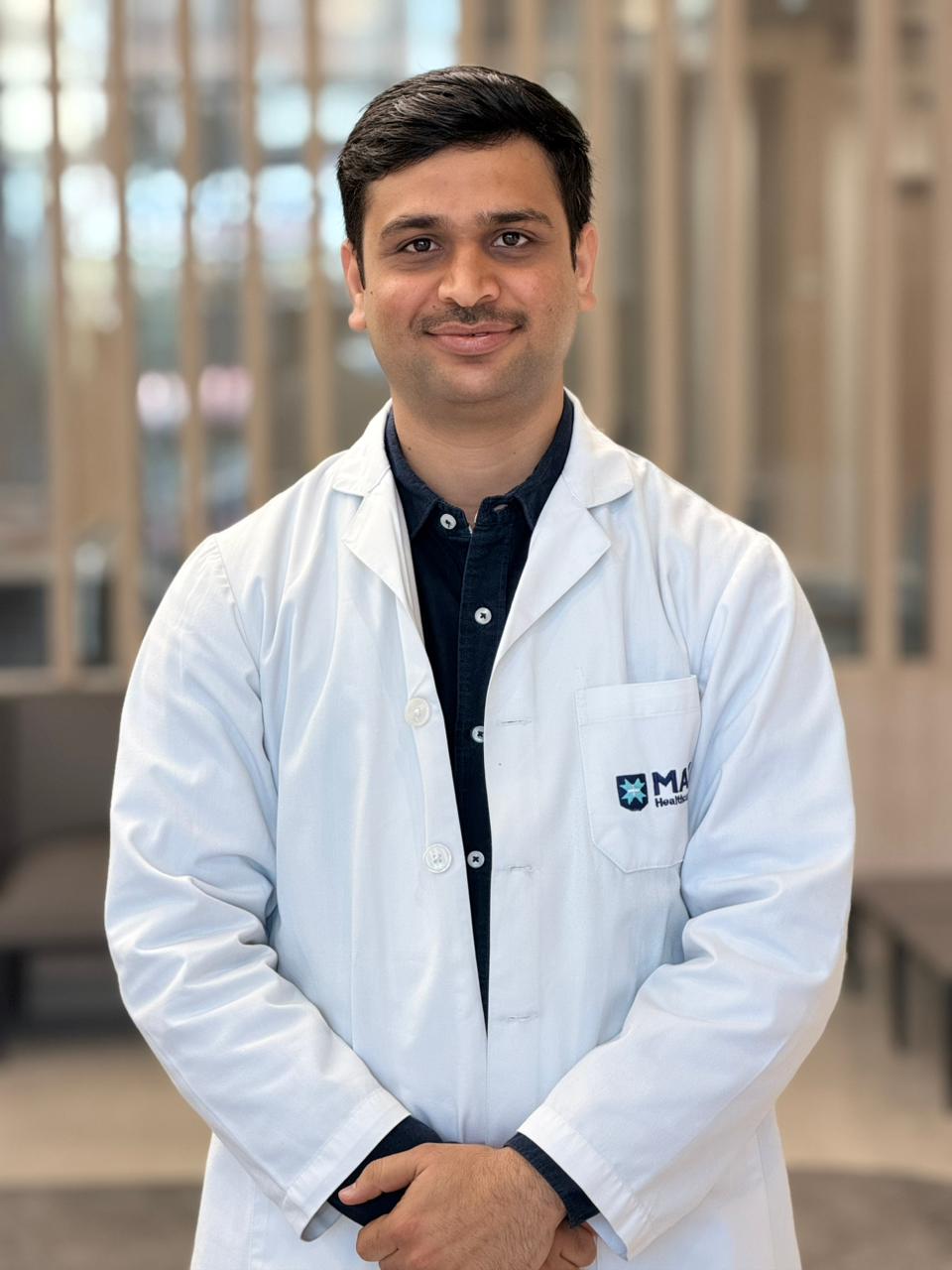
Manish Sharma
"If you are ever in doubt - especially about Red Urine or Fever - do not Google it. Message me. I would rather receive 10 'false alarm' messages than have you sit at home worrying about one real problem."
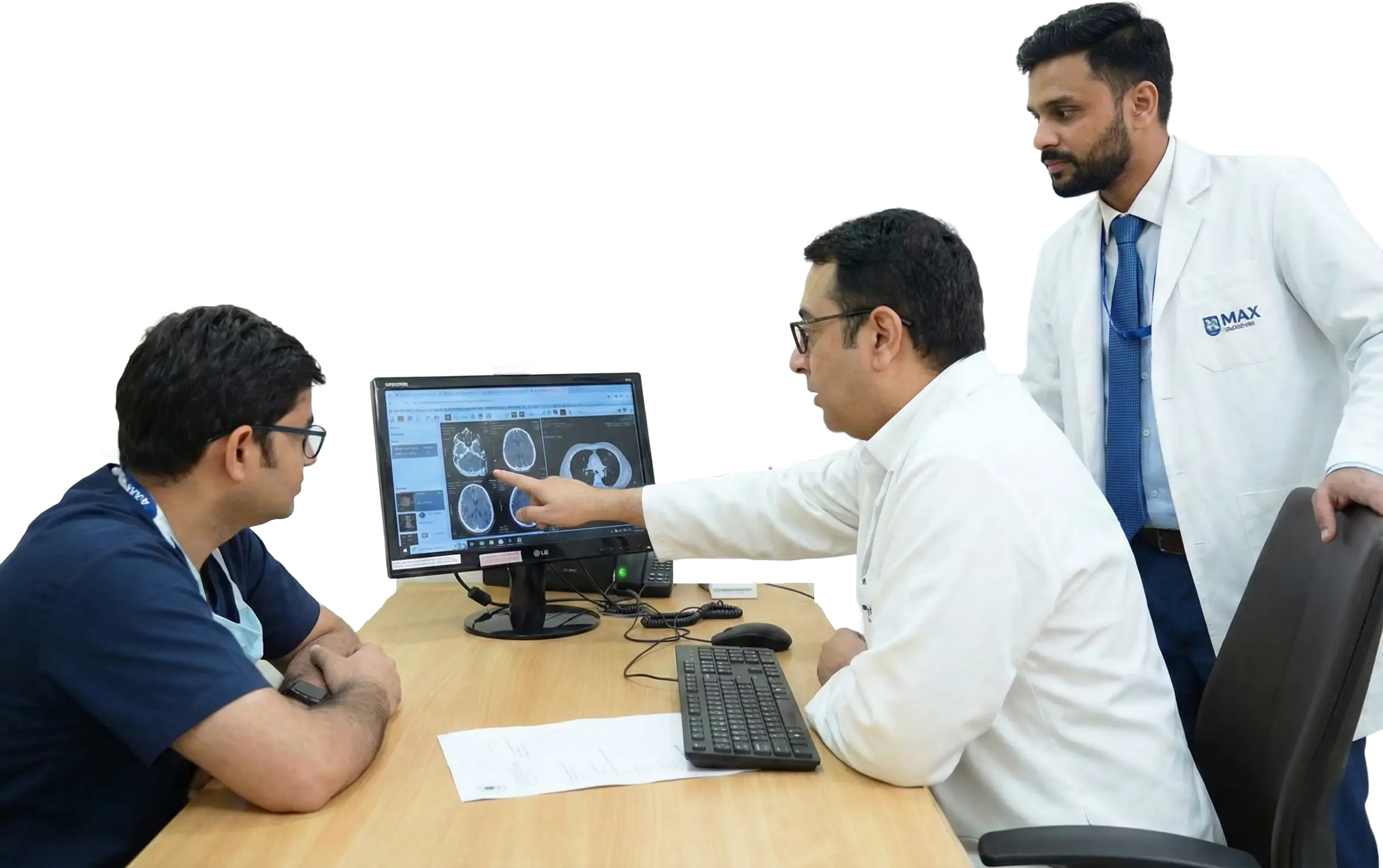
You Don't Just Get a Surgeon. You Get a System.
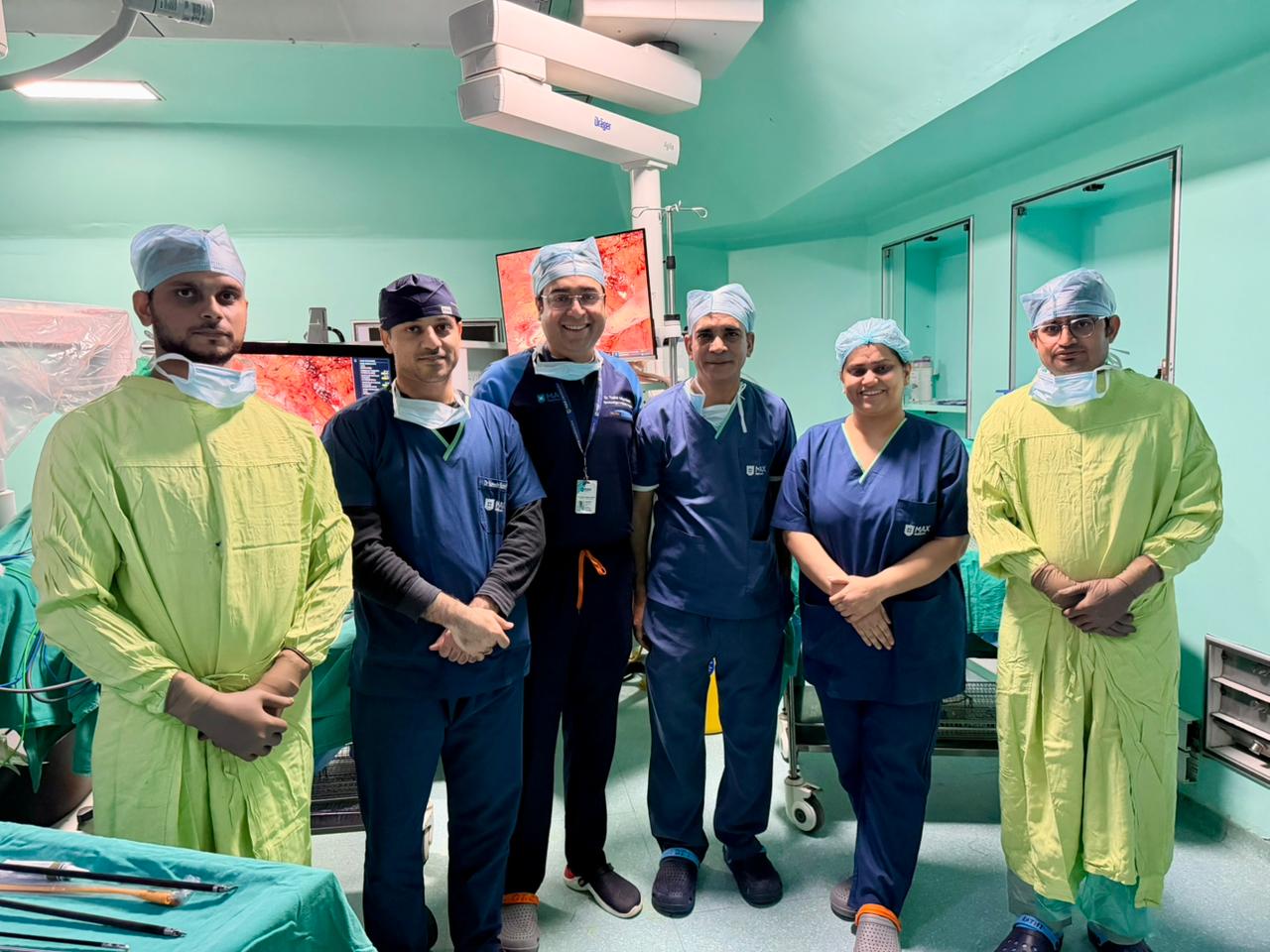
Dr. Tushar leads the surgery, but our team manages the journey. From handling paperwork to daily recovery advice, we manage the logistics so you can focus on healing.
You Don't Just Get a Surgeon. You Get a System.
Dr. Tushar leads the surgery, but our team manages the journey. From handling paperwork to daily recovery advice, we manage the logistics so you can focus on healing.
You Don't Just Get a Surgeon. You Get a System.
Dr. Tushar leads the surgery, but our team manages the journey. From handling paperwork to daily recovery advice, we manage the logistics so you can focus on healing.