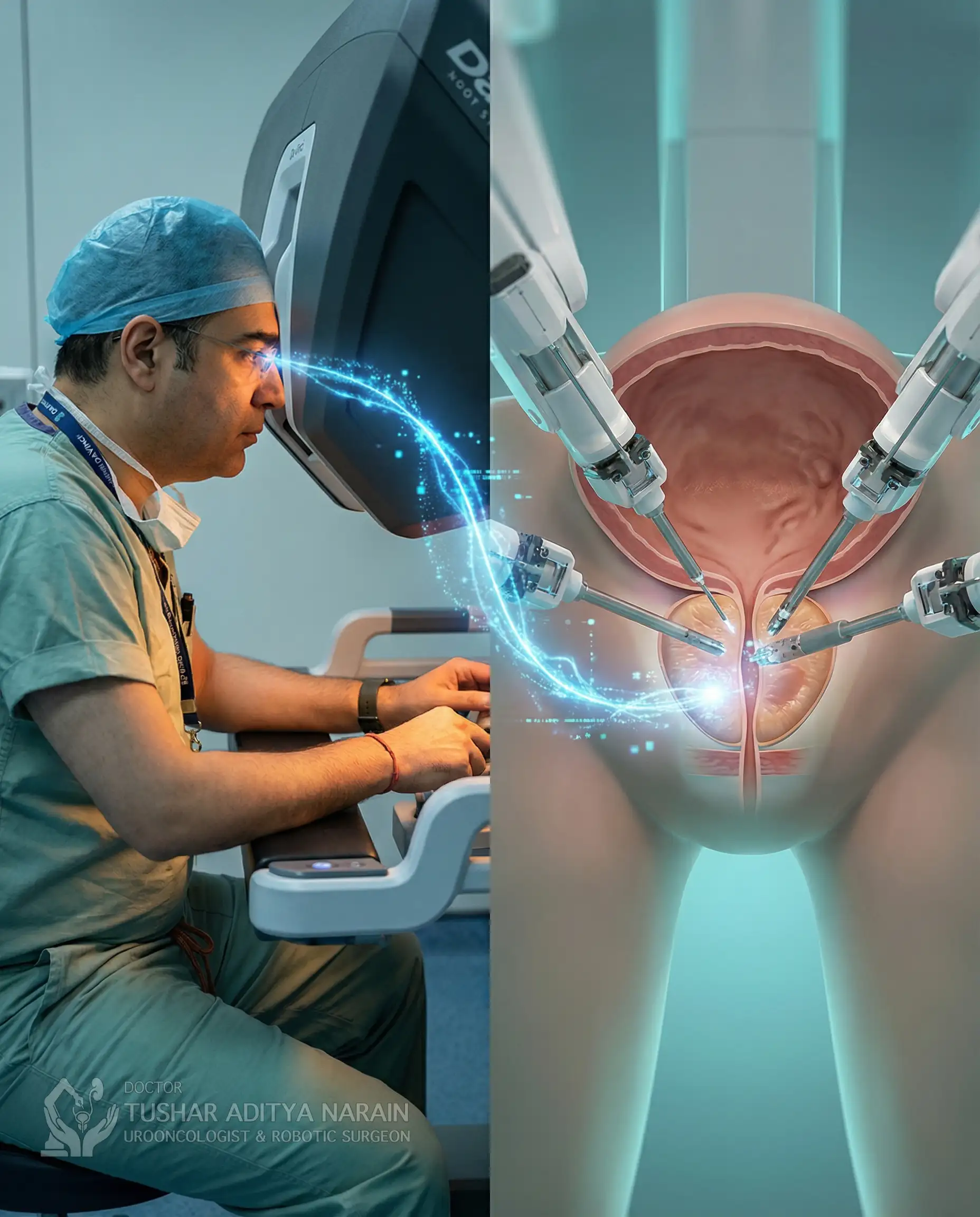

Robotic Precision: Enhanced Accuracy, Surgeon Control.

Robotic Precision: Enhanced Accuracy, Surgeon Control.

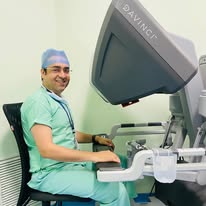
Dr. Tushar operating the robotic console while instruments perform precise surgical movements.
Standard 2D (before) vs. Robotic 3D Vision (after)
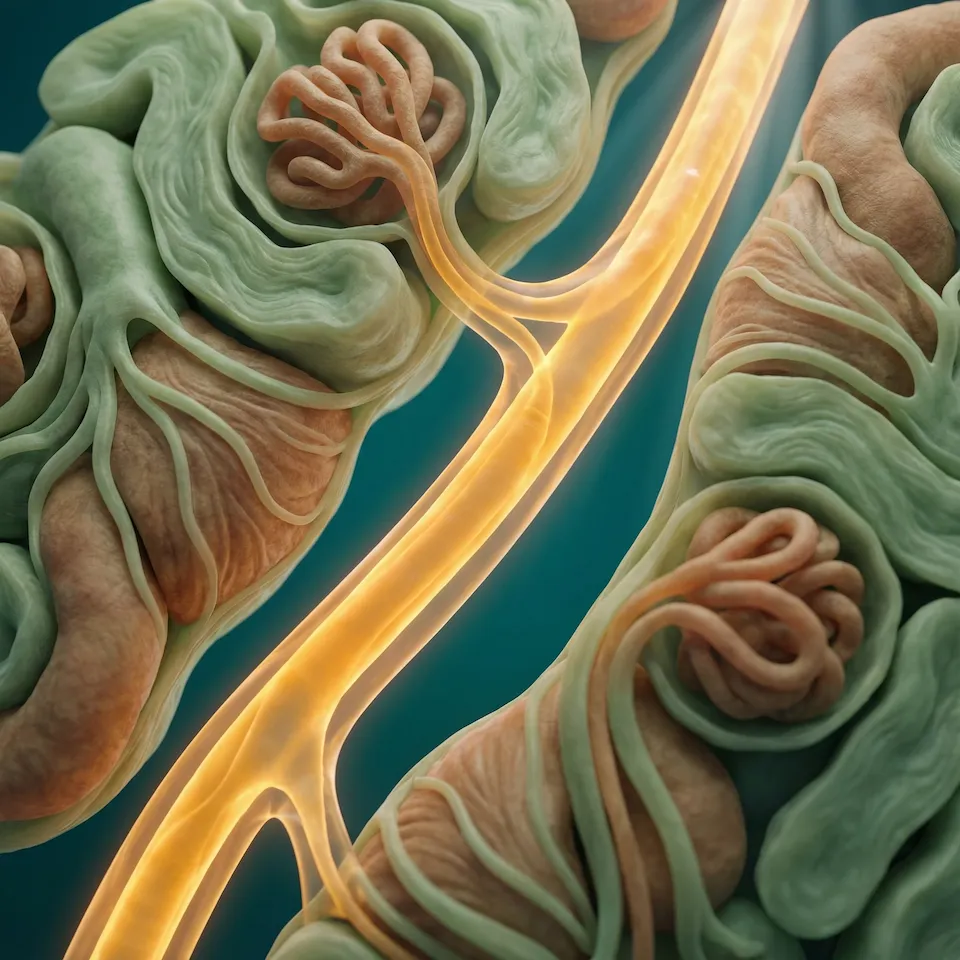
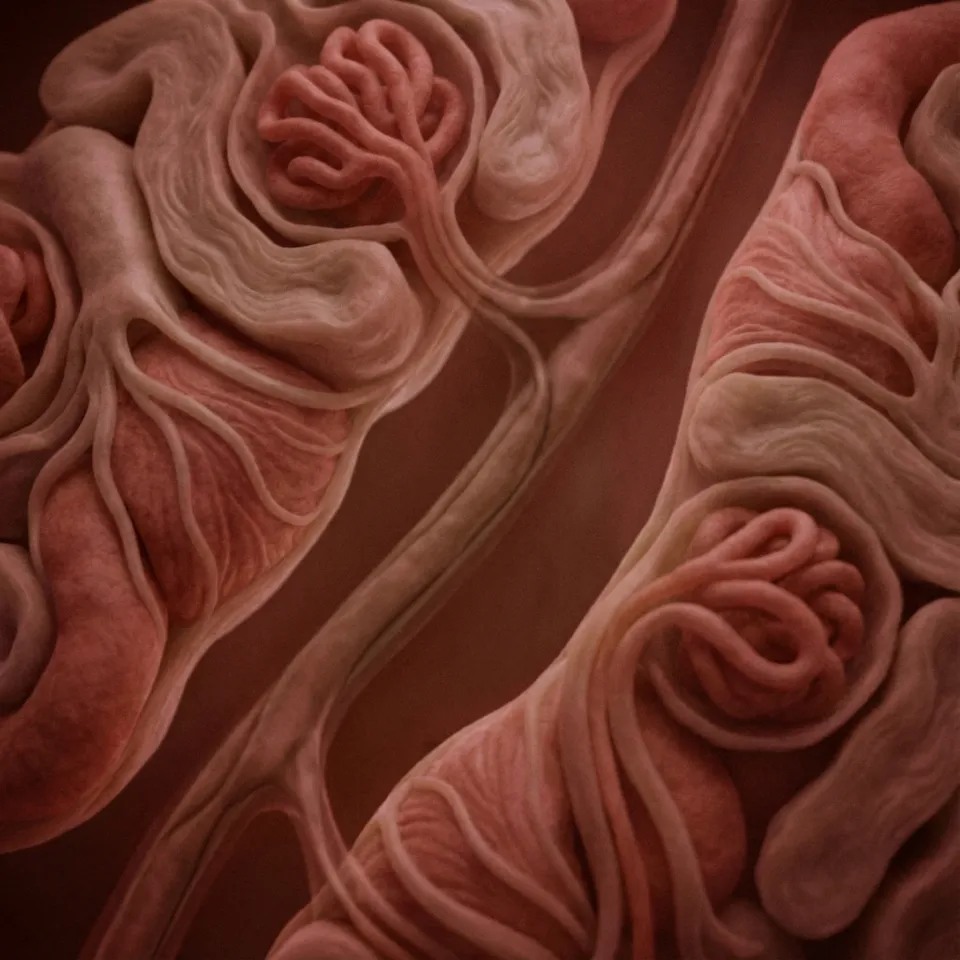
Robotic 3D high-definition view of prostate tissue: neurovascular bundle distinctly highlighted in warm amber, ensuring precise preservation.
Standard 2D laparoscopic view of prostate tissue: neurovascular bundle blends into low-contrast background, limiting nerve preservation clarity.
Before
After

Precision Beyond the Human Hand.

Standard surgery is limited by what the naked eye can see and the human wrist can do. The robotic interface removes these physical barriers, amplifying Dr. Tushar’s vision and stability. Slide through the comparisons below to see the difference.

The Hand That Never Shakes.

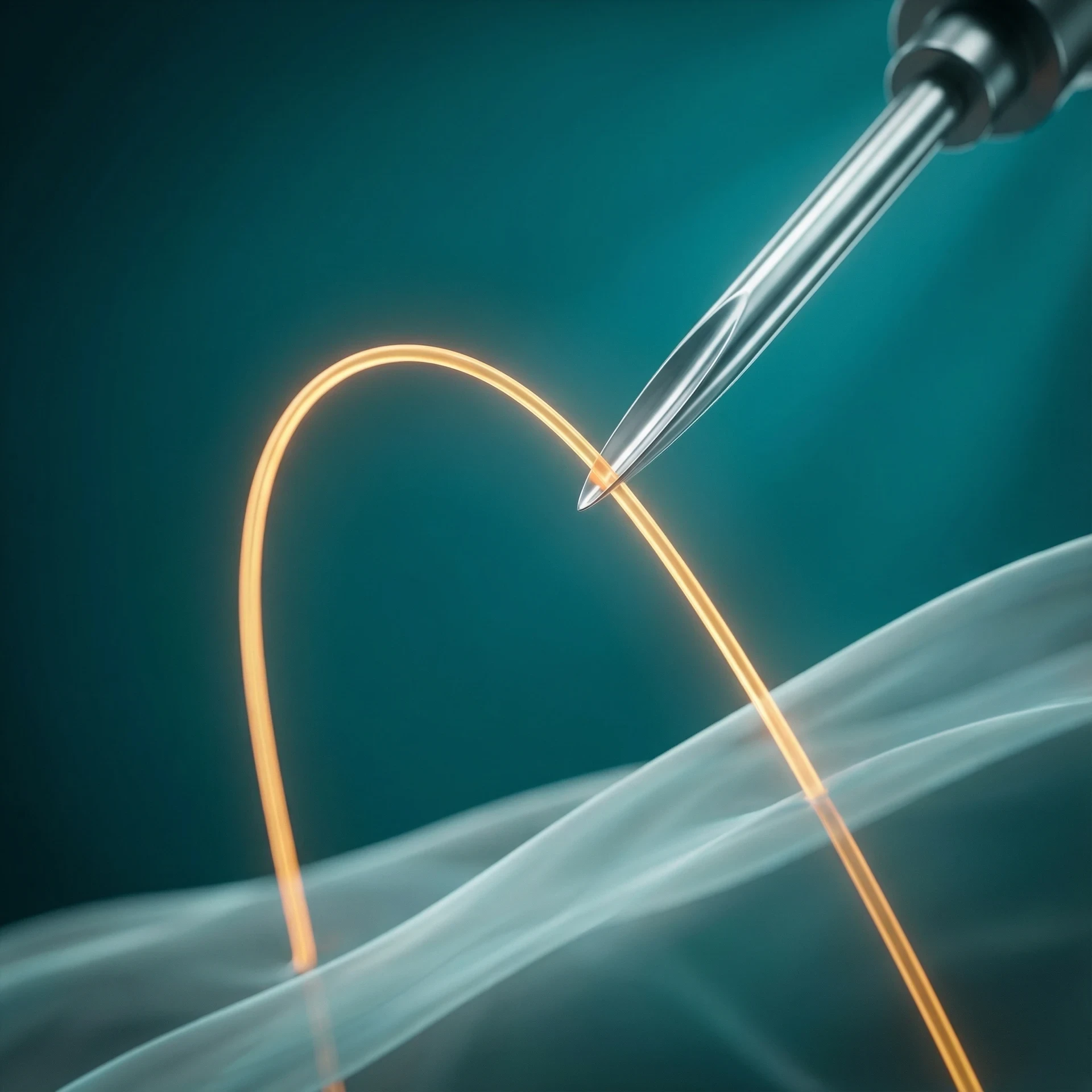
Even experienced surgeons have a natural hand tremor. The robot filters out microscopic vibrations 1,000 times per second, turning Dr. Tushar’s hand movements into rock-steady precision.

Tremor Filtration Technology

Tap to stabilize
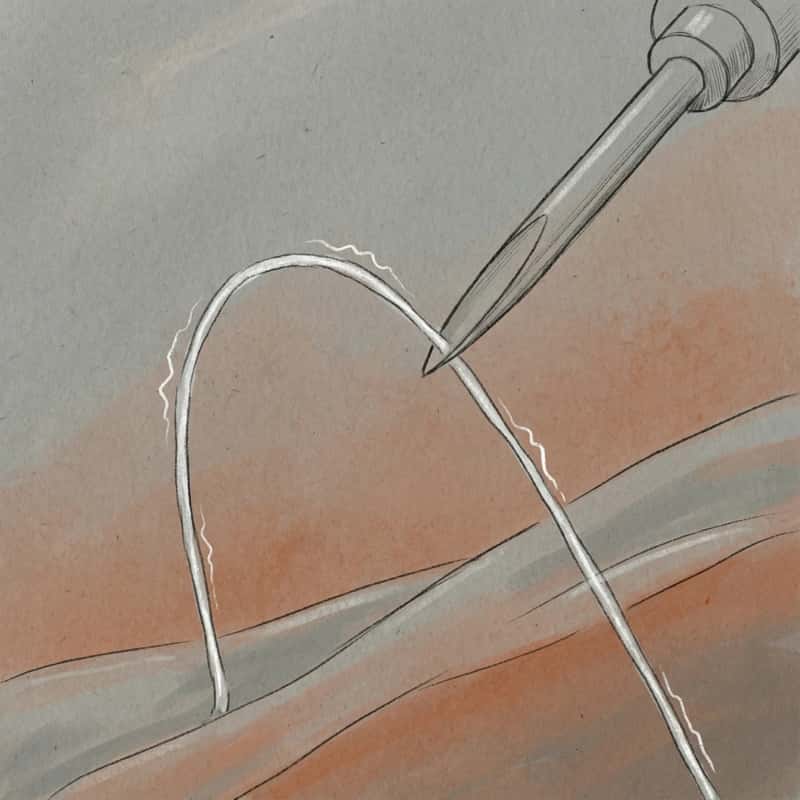
A medical illustration showing the microscopic hand tremor of a human surgeon during a delicate procedure, with vibration lines indicating natural instability.
A high-resolution rendering of a robotic surgical probe with motion scaling and tremor filtration, showing rock-steady precision as it interacts with a delicate tissue structure.
Natural Hand Motion

Interactive proof: Human vs Robotic Wrist Control
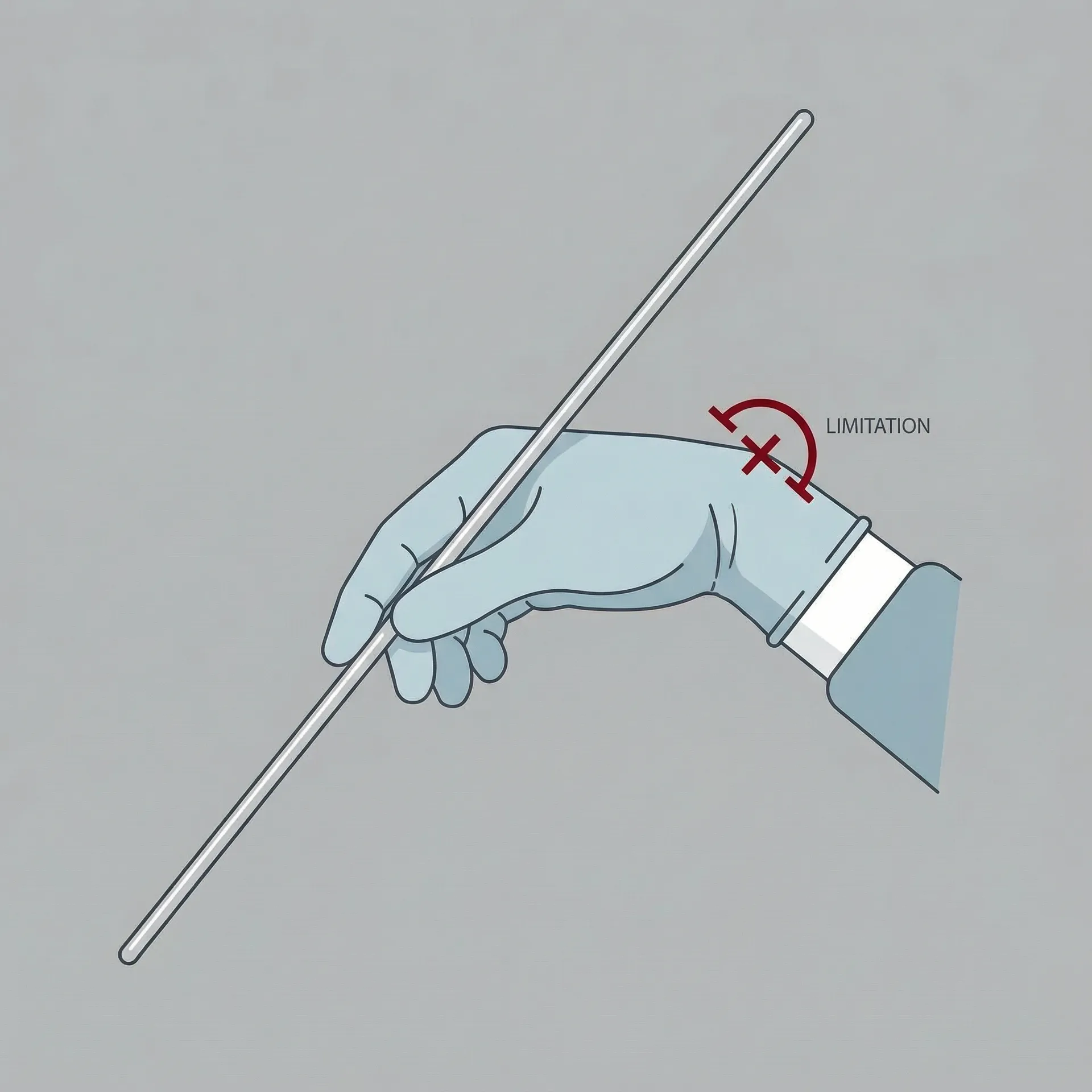
Drag the slider and see the EndoWrist advantage.
90°
180°
270°
360°
Human Wrist
An illustration showing the physical range of motion limitations of a human surgeon's wrist when using traditional surgical instruments, highlighting the constraints of manual surgery.
0°
Robotic EndoWrist
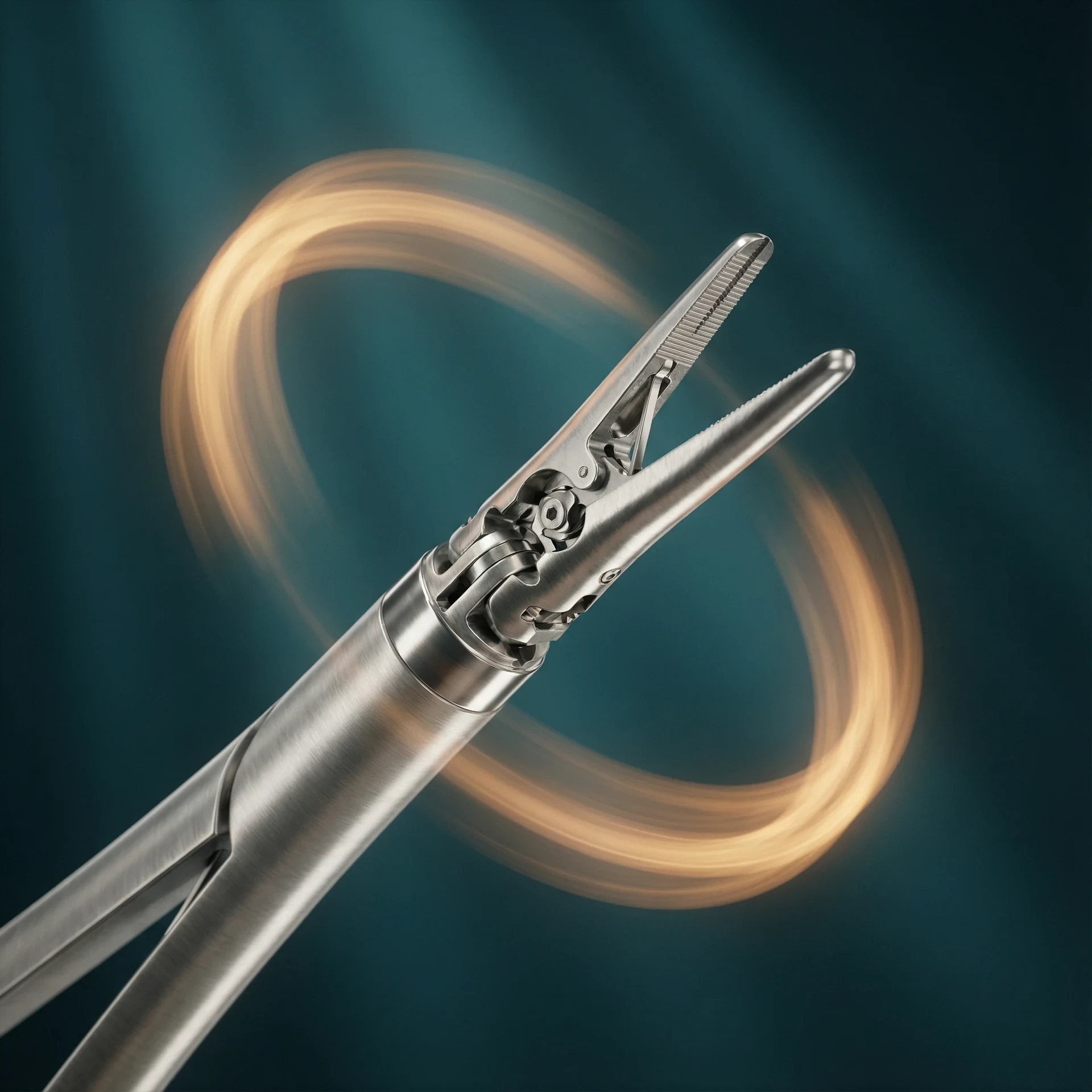
The advanced robotic EndoWrist instrument featuring 7 degrees of freedom and 360-degree rotation, allowing Dr. Tushar to perform high-precision suturing in confined spaces.
0°

Reaching Where Hands Cannot.

The human wrist has limits. The robot does not. With 7 degrees of freedom and 360° rotation, Dr. Tushar can suture delicate tissue in tight spaces without the need for large, damaging incisions.


Interact with the slider and understand this better.

Less Time in the Hospital. More Time at Home.

We know that traveling for surgery is stressful. Dr. Tushar’s robotic technique is designed to minimize physical trauma, turning a weeks-long recovery into a predictable, short-term stay. We help you plan your journey from admission to your return flight with certainty.

Get clarity on how long it takes to recover

Tap to Fast-Track Recovery

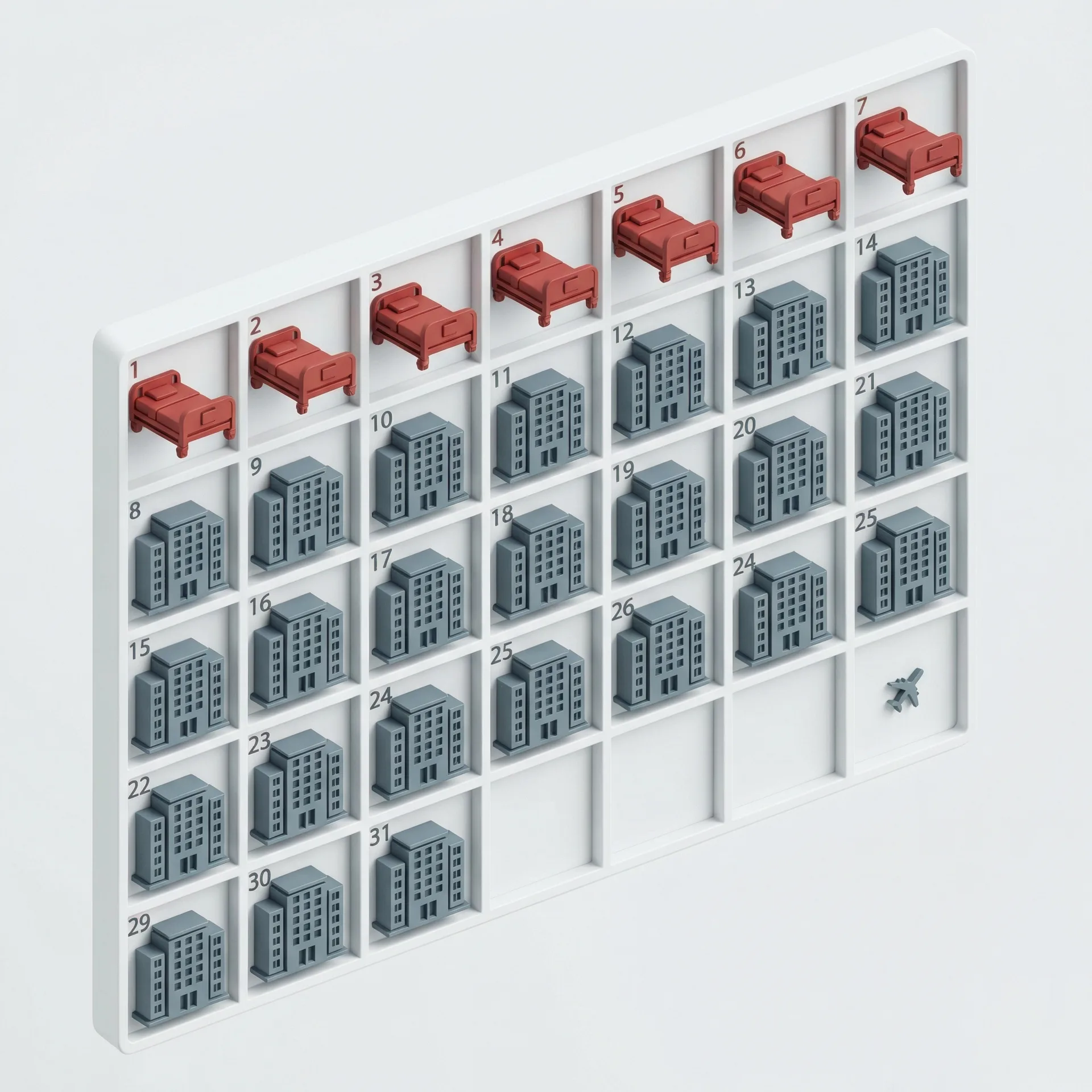
Open surgery calendar: 7 heavy red hospital days + 18 muted orange recovery days before plane icon on day 28, cluttered layout.
Robotic surgery calendar: 2 teal hospital days + 7 light sage recovery days, plane on day 10, clean white space after.
Stuck in the city for 25+ days due to large incision healing

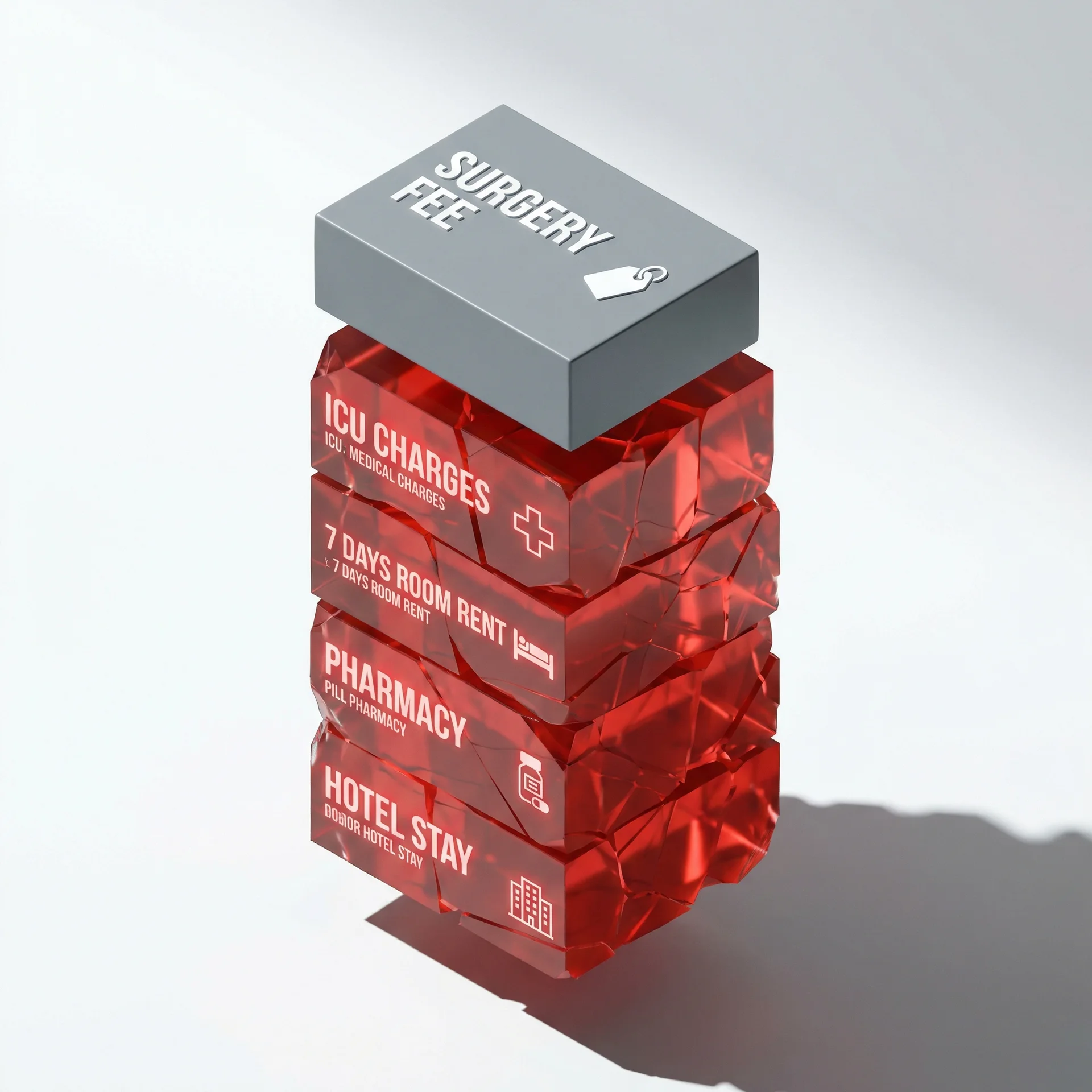
Avoid the "Hidden Costs" of Slow Recovery

Tap to Reveal Total Cost

3D cost iceberg for open surgery: small grey surgery fee dwarfed by tall red stack of ICU, 7-day room rent, pharmacy, and hotel charges.
3D cost structure for robotic surgery: taller teal tech fee with thin green 2-day stay sliver, overall shorter and predictable total.
Lower surgery fee, but triple the hospital and hotel costs due to a 7–21 day recovery.

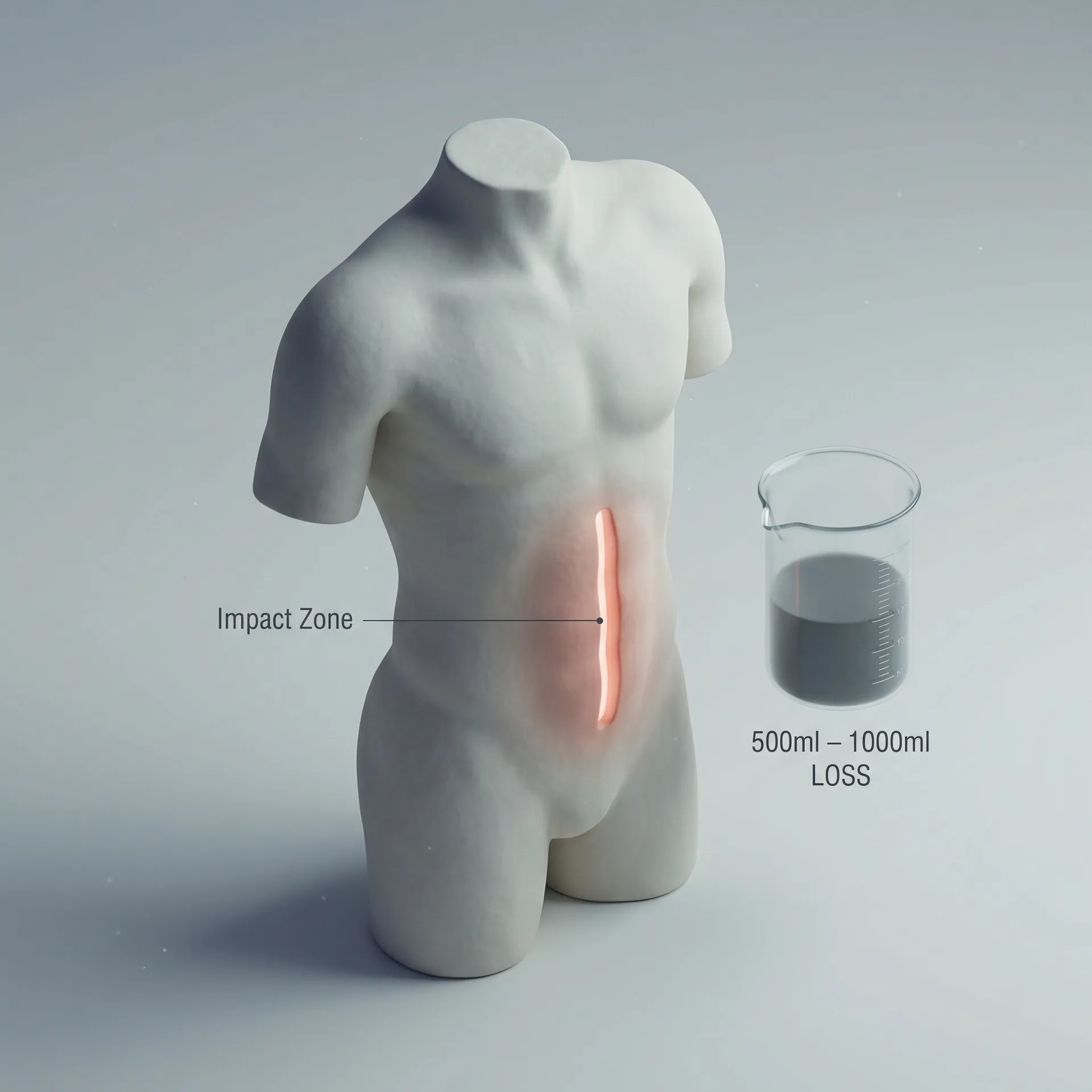
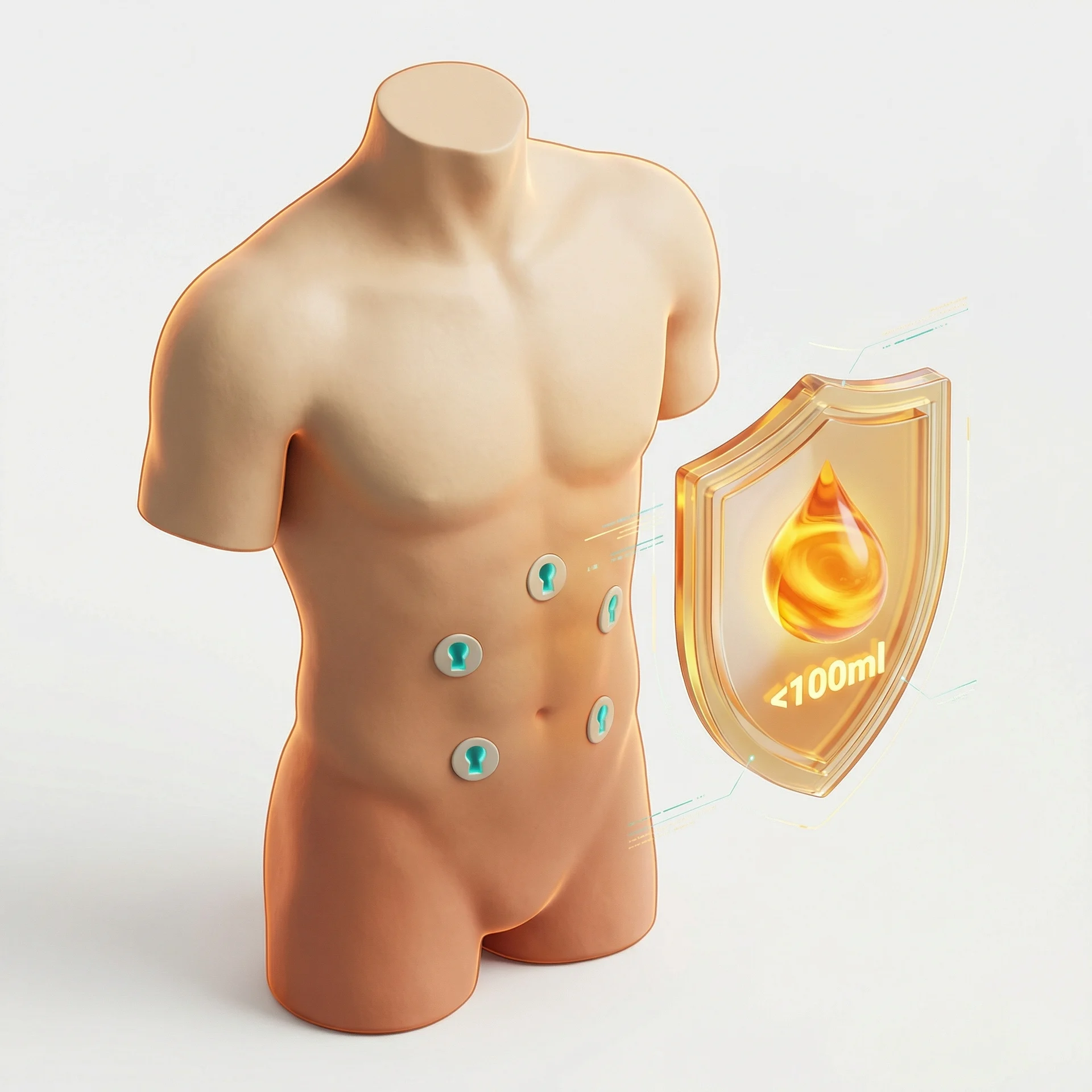
Blood Loss & Transfusion: The Vital Differentiator

Tap to Compare Vitality

3D torso schematic: large terracotta incision with high fluid loss container, showing depletion from traditional open surgery.
There is higher blood loss (500ml–1000ml) in traditional surgery increasing the risk of immune reactions and prolonged recovery.

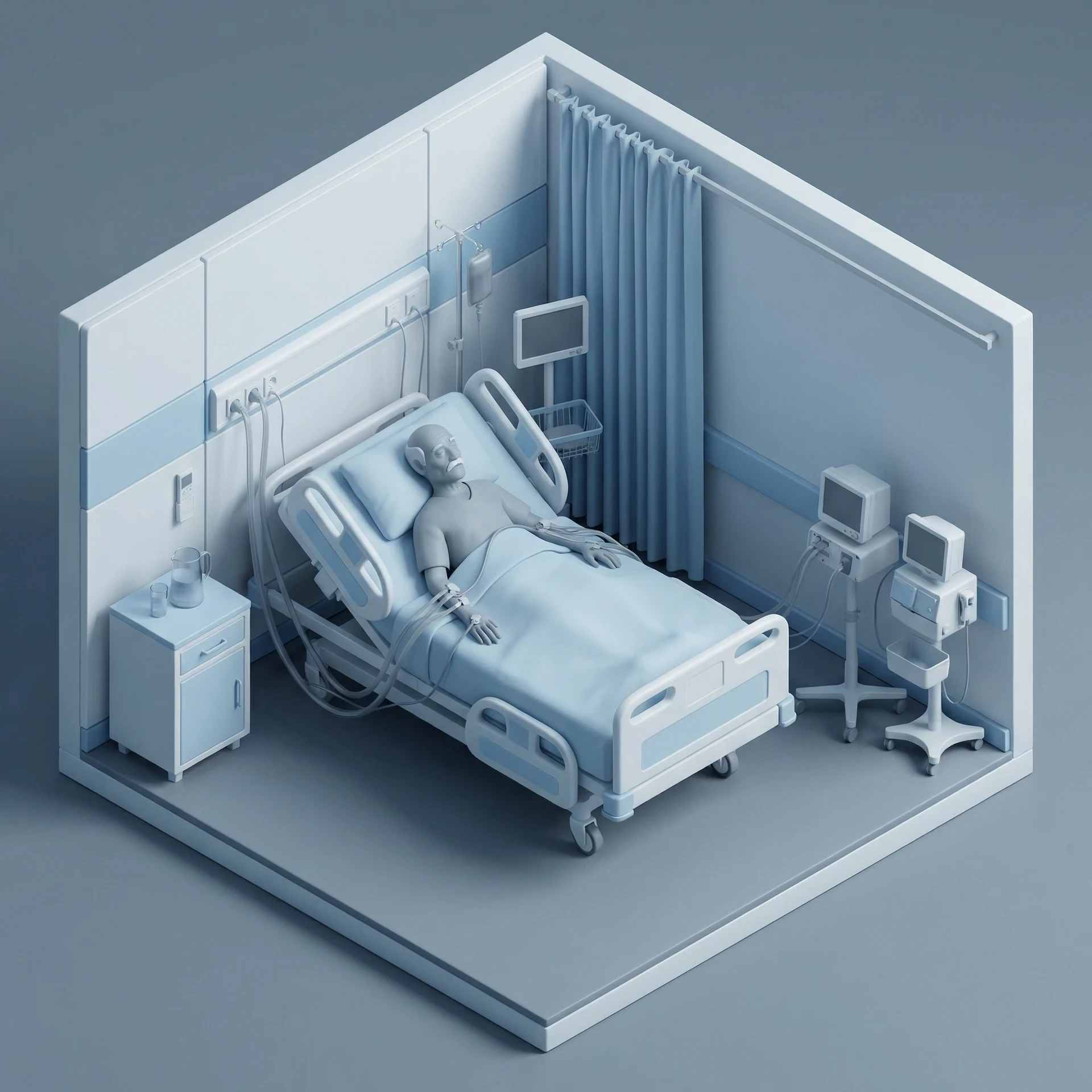
Don't Spend Recovery Tethered to a Bed

Tap to Mobilize

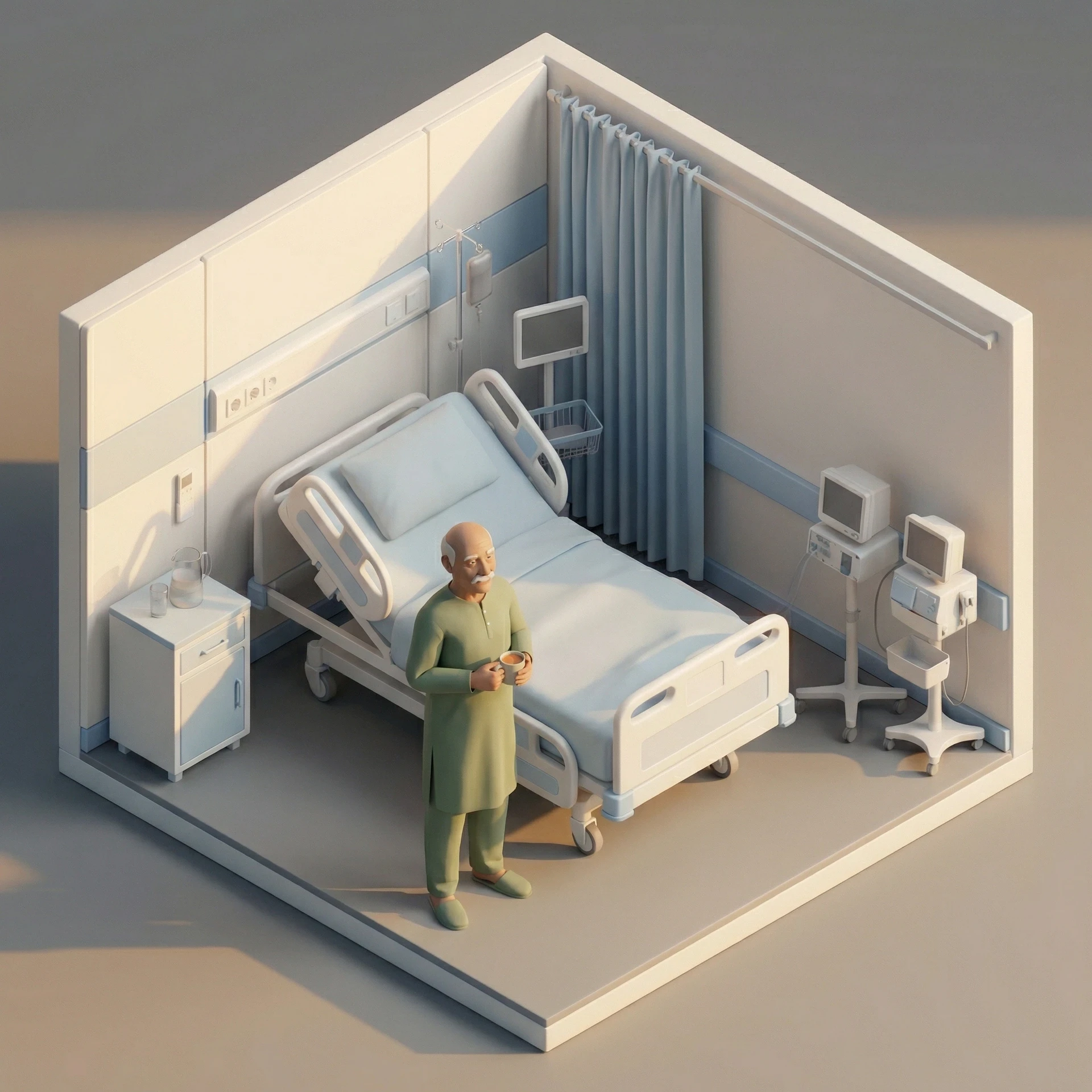
3D isometric view: elderly patient tethered to hospital bed by IV, catheter, drain tubes post-open surgery, in clinical greys.
3D isometric view: same elderly patient standing independently post-robotic surgery, holding tea in sage green attire, empty bed background.
Large incisions cut through muscle, often requiring bed rest, catheters, and heavy nursing for 5+ days

The Surgeon Who Trains Other Surgeons.

Robotic surgery requires more than just certification; it requires mastery. Dr. Tushar doesn't just use the Da Vinci Xi Robot he is an official Proctor authorized to teach other surgeons how to perform complex cancer procedures. Tap on the below cards to know more.


Intuitive Surgical Certified Proctor badge: Dr. Tushar Aditya Narain authorized to train and certify other robotic surgeons.

Official Proctor

UCLH London and Cleveland Clinic — institutions where Dr. Tushar completed fellowship and single-port robotic training

Global Fellowships

Practice volume indicator: 500+ robotic surgeries performed by Dr. Tushar Narain.

Successful Surgeries

Precision Surgery. Preserved Quality of Life.

Cancer treatment is not just about survival; it is about how you live after the surgery. Dr. Tushar utilizes advanced robotic protocols to target the tumor with microscopic accuracy - prioritizing organ preservation and functional recovery so you can return to your normal life faster.
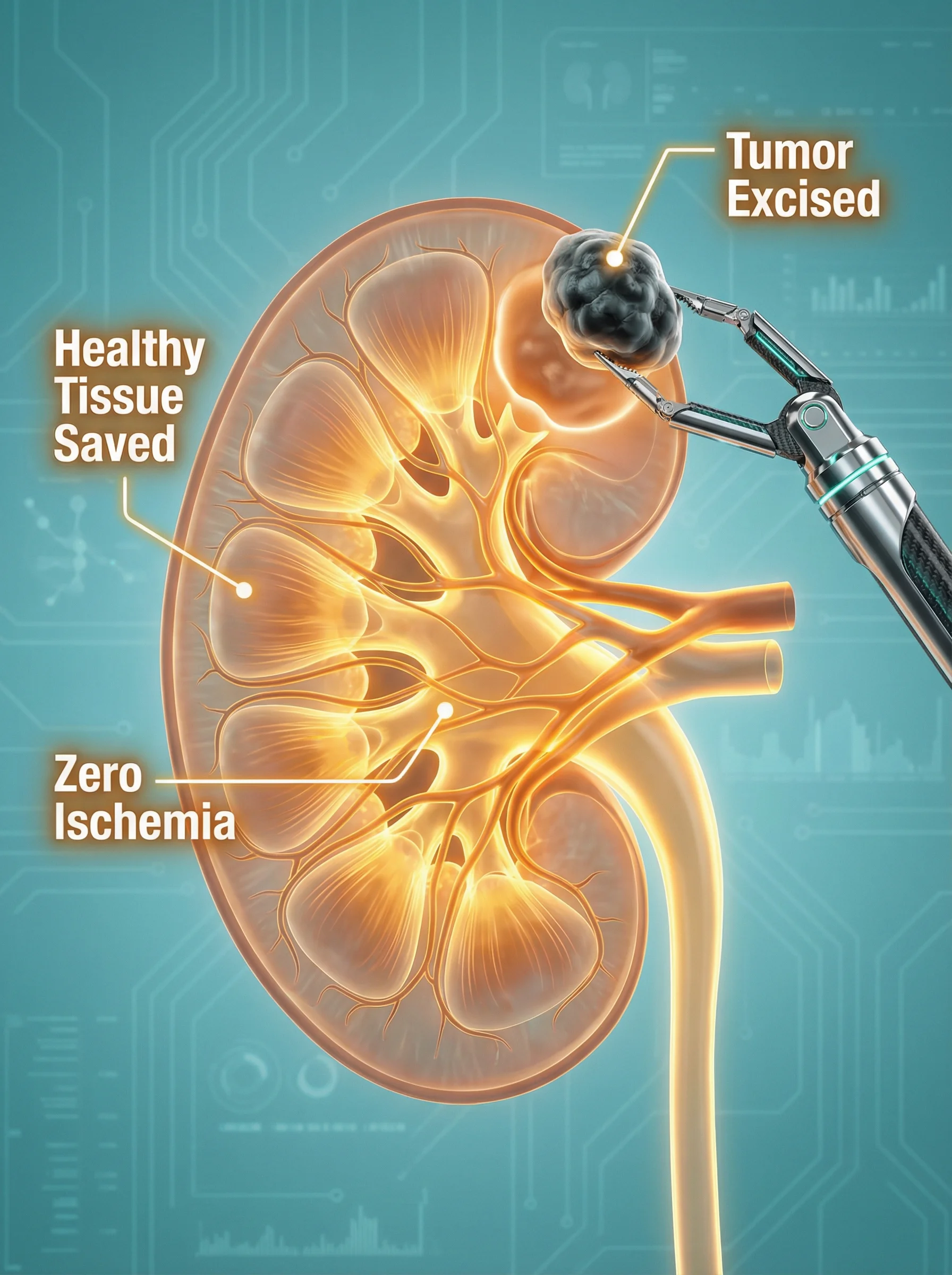
3D render: robotic instrument removing kidney tumor segment, leaving 90% healthy tissue glowing amber against teal background.
How We Protect Your Kidney Function

Using advanced robotic precision to excise only the cancer while keeping the healthy kidney tissue alive and functioning.
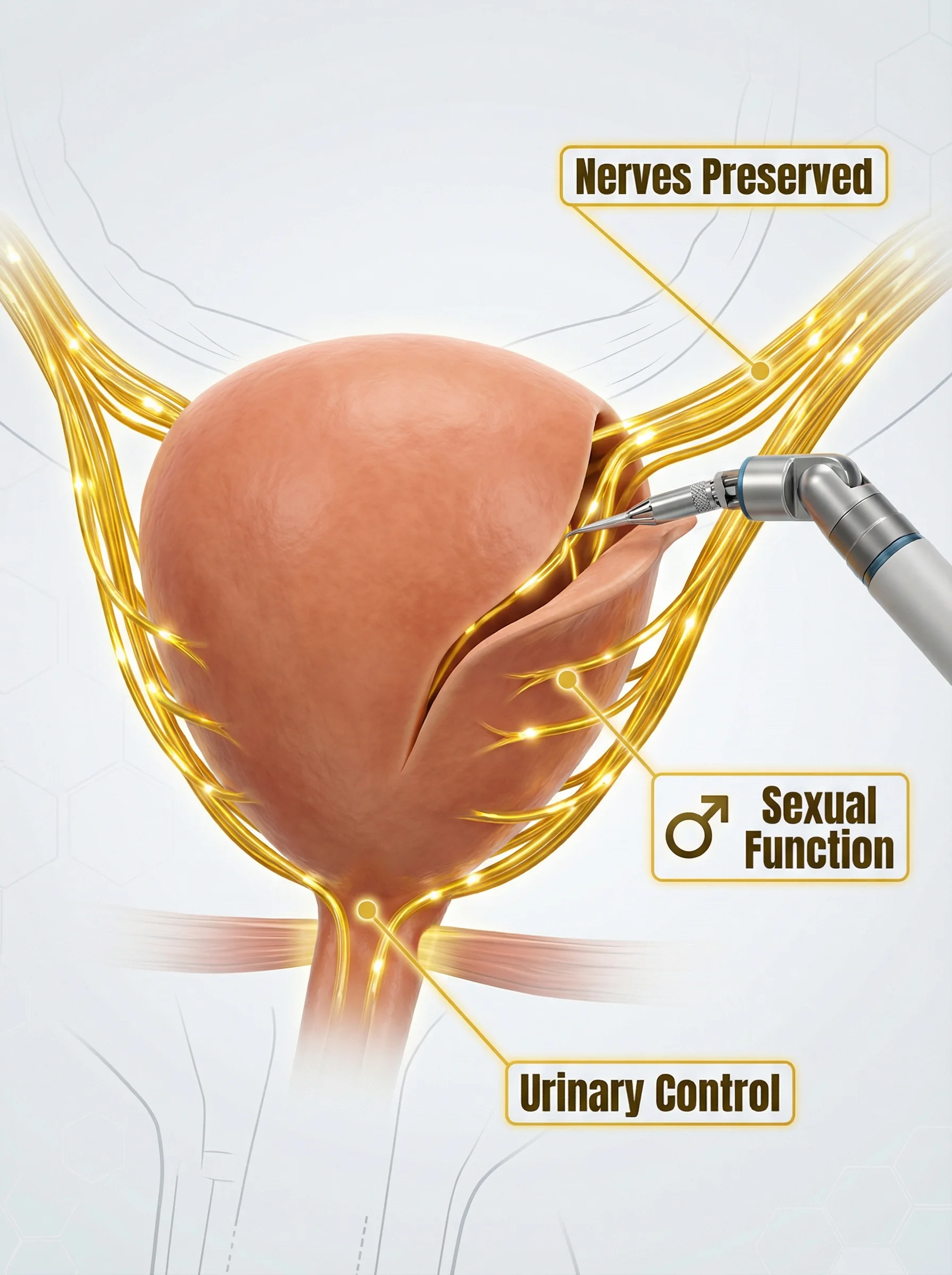
3D prostate render: robotic instrument retracting tissue from glowing amber neurovascular bundle nerves, preserving function.
Protecting The Nerves That Matter

Visualizing the precise anatomical preservation required to maintain potency and continence after Prostate Cancer Robotic Surgery

Honest Answers: The Reality of Robotic Surgery.

Technology reduces risk, but it does not eliminate it. We believe you deserve the full picture, not just the highlights.

Technology reduces risk, but it does not eliminate it. We believe you deserve the full picture, not just the highlights.

Question 1 : Is the robot performing the surgery automatically?

No. The robot has no brain and no autonomy. It is a "master-slave" system that replicates Dr. Tushar’s hand movements in real-time.

The Reality

If the surgeon stops moving, the robot stops instantly. It is a precision tool that scales down hand movements and filters out tremors, but the decision-making and surgical skill remain entirely human.

Question 1 : Is the robot performing the surgery automatically?

No. The robot has no brain and no autonomy. It is a "master-slave" system that replicates Dr. Tushar’s hand movements in real-time.

The Reality

If the surgeon stops moving, the robot stops instantly. It is a precision tool that scales down hand movements and filters out tremors, but the decision-making and surgical skill remain entirely human.

Question 1 : Is the robot performing the surgery automatically?

No. The robot has no brain and no autonomy. It is a "master-slave" system that replicates Dr. Tushar’s hand movements in real-time.

The Reality

If the surgeon stops moving, the robot stops instantly. It is a precision tool that scales down hand movements and filters out tremors, but the decision-making and surgical skill remain entirely human.

Question 2 : Can the robot break down during surgery?

Yes, though it is statistically very rare. Mechanical or software malfunctions occur in less than 0.4% of cases.

The Reality

While extremely uncommon, systems can fail. As an official Intuitive Proctor, Dr. Tushar is trained specifically for these scenarios. If a non-recoverable fault occurs, the priority immediately shifts to patient safety, not fixing the machine.

Question 2 : Can the robot break down during surgery?

Yes, though it is statistically very rare. Mechanical or software malfunctions occur in less than 0.4% of cases.

The Reality

While extremely uncommon, systems can fail. As an official Intuitive Proctor, Dr. Tushar is trained specifically for these scenarios. If a non-recoverable fault occurs, the priority immediately shifts to patient safety, not fixing the machine.

Question 2 : Can the robot break down during surgery?

Yes, though it is statistically very rare. Mechanical or software malfunctions occur in less than 0.4% of cases.

The Reality

While extremely uncommon, systems can fail. As an official Intuitive Proctor, Dr. Tushar is trained specifically for these scenarios. If a non-recoverable fault occurs, the priority immediately shifts to patient safety, not fixing the machine.

Question 3 : Is there a chance you will have to switch to "Open" surgery?

Yes. This is called "Conversion," and it is a safety decision, not a failure.

The Reality

In rare instances - such as unexpected bleeding, difficult anatomy, or massive scarring from previous surgeries - visibility may be compromised. If Dr. Tushar determines that the robotic view is no longer the safest option, he will convert to a standard open incision to ensure the surgery is completed safely.

Question 3 : Is there a chance you will have to switch to "Open" surgery?

Yes. This is called "Conversion," and it is a safety decision, not a failure.

The Reality

In rare instances - such as unexpected bleeding, difficult anatomy, or massive scarring from previous surgeries - visibility may be compromised. If Dr. Tushar determines that the robotic view is no longer the safest option, he will convert to a standard open incision to ensure the surgery is completed safely.

Question 3 : Is there a chance you will have to switch to "Open" surgery?

Yes. This is called "Conversion," and it is a safety decision, not a failure.

The Reality

In rare instances - such as unexpected bleeding, difficult anatomy, or massive scarring from previous surgeries - visibility may be compromised. If Dr. Tushar determines that the robotic view is no longer the safest option, he will convert to a standard open incision to ensure the surgery is completed safely.

Question 4 : Does the robot guarantee a cure if the cancer has spread?

No. The robot is a tool for local control, not a systemic cure.

The Reality

Robotic surgery excels at removing the primary tumor (the kidney or prostate). However, if the cancer has metastasized (spread to lungs, bones, or liver), surgery alone cannot cure the disease. In these cases, surgery is often part of a multimodal plan involving systemic therapies (chemotherapy or immunotherapy) to manage the wider disease burden.

Question 4 : Does the robot guarantee a cure if the cancer has spread?

No. The robot is a tool for local control, not a systemic cure.

The Reality

Robotic surgery excels at removing the primary tumor (the kidney or prostate). However, if the cancer has metastasized (spread to lungs, bones, or liver), surgery alone cannot cure the disease. In these cases, surgery is often part of a multimodal plan involving systemic therapies (chemotherapy or immunotherapy) to manage the wider disease burden.

Question 4 : Does the robot guarantee a cure if the cancer has spread?

No. The robot is a tool for local control, not a systemic cure.

The Reality

Robotic surgery excels at removing the primary tumor (the kidney or prostate). However, if the cancer has metastasized (spread to lungs, bones, or liver), surgery alone cannot cure the disease. In these cases, surgery is often part of a multimodal plan involving systemic therapies (chemotherapy or immunotherapy) to manage the wider disease burden.

Question 5. Why is robotic surgery more expensive than open surgery?

It is a trade-off between upfront cost and the "Total Cost of Recovery." The robotic instruments are precision-engineered consumables that add to the surgical bill.

The Reality

While the surgery itself costs more, the total cost often balances out because you recover faster. Robotic surgery typically reduces hospital stay to 1–2 days (compared to 5–7 for open surgery), which significantly lowers room charges, medication costs, and the economic loss of time away from work.

Question 5. Why is robotic surgery more expensive than open surgery?

It is a trade-off between upfront cost and the "Total Cost of Recovery." The robotic instruments are precision-engineered consumables that add to the surgical bill.

The Reality

While the surgery itself costs more, the total cost often balances out because you recover faster. Robotic surgery typically reduces hospital stay to 1–2 days (compared to 5–7 for open surgery), which significantly lowers room charges, medication costs, and the economic loss of time away from work.

Question 5. Why is robotic surgery more expensive than open surgery?

It is a trade-off between upfront cost and the "Total Cost of Recovery." The robotic instruments are precision-engineered consumables that add to the surgical bill.

The Reality

While the surgery itself costs more, the total cost often balances out because you recover faster. Robotic surgery typically reduces hospital stay to 1–2 days (compared to 5–7 for open surgery), which significantly lowers room charges, medication costs, and the economic loss of time away from work.

Question 6. Does "Minimally Invasive" mean zero side effects?

No. It means smaller incisions and less blood loss, but it is still major cancer surgery.

The Reality

You will experience some discomfort. For prostate surgeries, temporary urinary leakage or changes in sexual function are expected side effects as the body heals, even with nerve-sparing techniques. We provide a pre-operative "Pre-Hab" plan to help minimize these, but we do not promise "zero" side effects.

Question 6. Does "Minimally Invasive" mean zero side effects?

No. It means smaller incisions and less blood loss, but it is still major cancer surgery.

The Reality

You will experience some discomfort. For prostate surgeries, temporary urinary leakage or changes in sexual function are expected side effects as the body heals, even with nerve-sparing techniques. We provide a pre-operative "Pre-Hab" plan to help minimize these, but we do not promise "zero" side effects.

Question 6. Does "Minimally Invasive" mean zero side effects?

No. It means smaller incisions and less blood loss, but it is still major cancer surgery.

The Reality

You will experience some discomfort. For prostate surgeries, temporary urinary leakage or changes in sexual function are expected side effects as the body heals, even with nerve-sparing techniques. We provide a pre-operative "Pre-Hab" plan to help minimize these, but we do not promise "zero" side effects.

You Don't Just Get a Surgeon. You Get a System.

Dr. Tushar leads the surgery, but our team manages the journey. From handling paperwork to daily recovery advice, we manage the logistics so you can focus on healing.

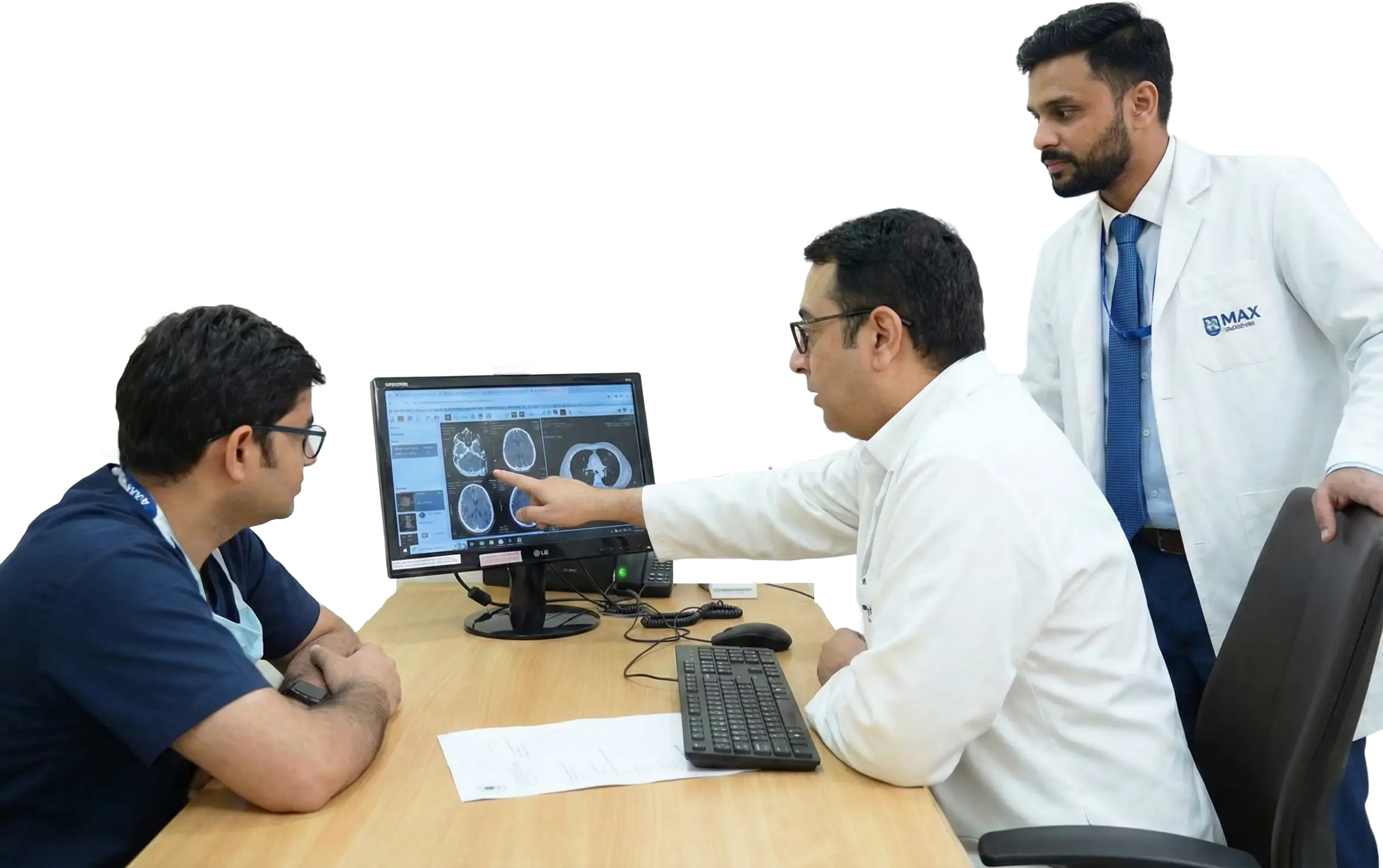
Dr. Tushar Aditya Narain reviewing a patient's diagnostic scan on a monitor with his medical team to coordinate surgical planning and recovery logistics.

You Don't Just Get a Surgeon. You Get a System.

Dr. Tushar leads the surgery, but our team manages the journey. From handling paperwork to daily recovery advice, we manage the logistics so you can focus on healing.

Dr. Tushar Aditya Narain reviewing a patient's diagnostic scan on a monitor with his medical team to coordinate surgical planning and recovery logistics.

You Don't Just Get a Surgeon. You Get a System.

Dr. Tushar leads the surgery, but our team manages the journey. From handling paperwork to daily recovery advice, we manage the logistics so you can focus on healing.

Dr. Tushar Aditya Narain reviewing a patient's diagnostic scan on a monitor with his medical team to coordinate surgical planning and recovery logistics.