Kidney cancer is increasingly being treated with robotic surgery instead of open or laparoscopic approaches
Robotic surgery offers tiny 1 cm incisions, minimal blood loss, 1-2 day hospital stays, and 1-2 week recovery to normal activity
Higher cancer control rates and better long-term kidney function preservation are the two clinical wins
The technology is only as good as the surgeon - high-volume fellowship-trained operators make the difference
In Dr. Tushar Narain's Delhi practice, 500+ robotic procedures inform every kidney surgical decision
This article is for patients facing kidney cancer treatment decisions and families supporting them, who want to understand why robotic surgery has become the modern standard and what it delivers compared to open or laparoscopic approaches.
Introduction
Kidney cancer is one of the most common urological malignancies, with hundreds of thousands of new cases diagnosed globally each year.
Traditional treatments - open surgery and laparoscopic procedures - have been the standard for decades.
Robotic-assisted surgery is increasingly the modern choice for kidney cancer treatment.
In my Delhi practice as the best uro oncologist in Delhi for high-volume robotic cancer surgery, the shift to robotic kidney surgery has been one of the most significant changes in urological oncology over the past decade.
Enhanced precision, minimal invasiveness, faster recovery, and better cancer-control outcomes are the four reasons it has become my default approach for localised kidney cancer at Max Hospital Saket and Max Hospital Gurgaon.
This article explains why robotic surgery is now the modern standard, supported by what I see in practice and the published literature on outcomes.
The Rise of Robotic Surgery in Kidney Cancer Treatment
What is Robotic Surgery?
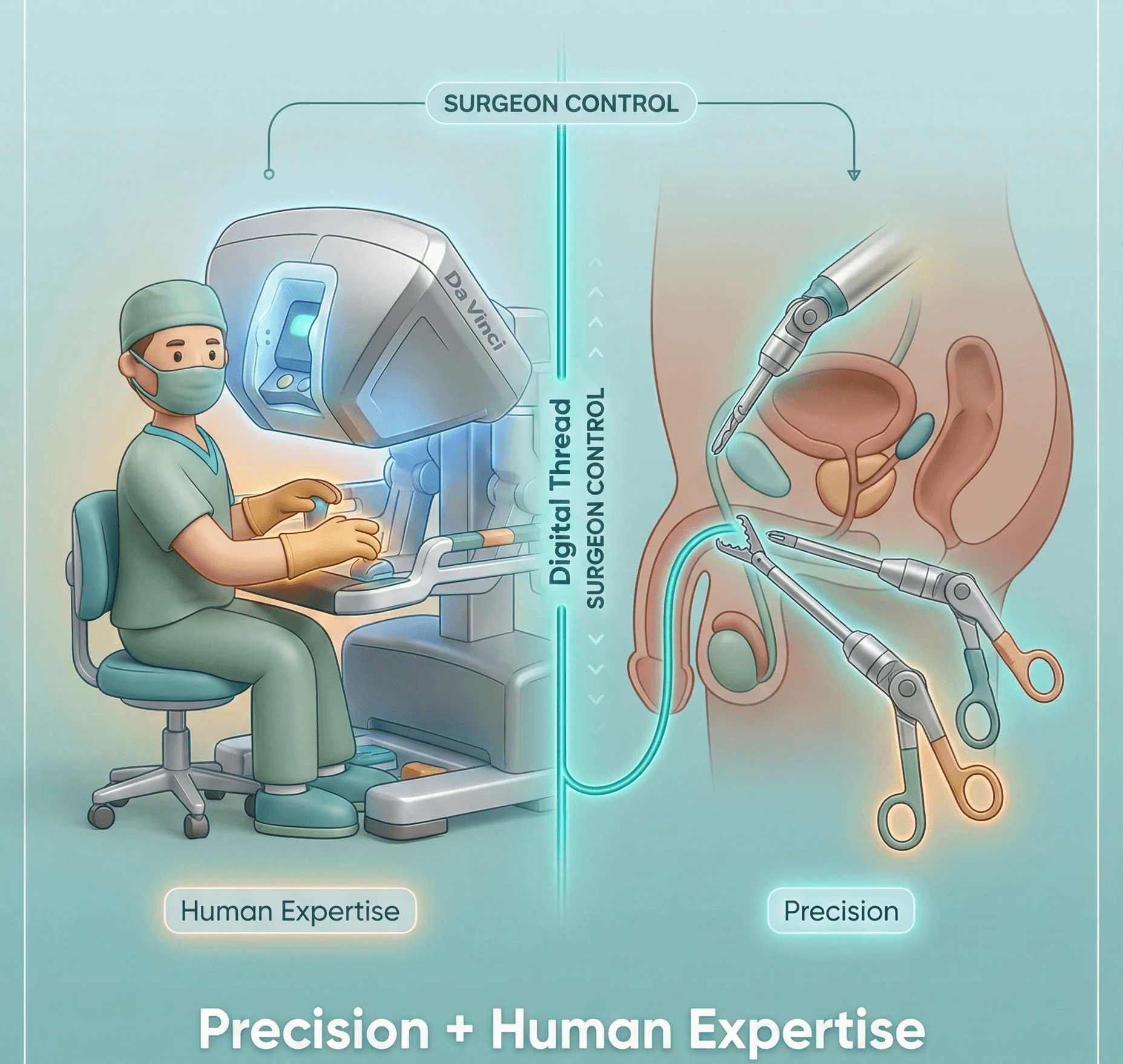
Robotic-assisted surgery, primarily using the Da Vinci Surgical System, allows surgeons to perform complex procedures with greater precision, flexibility, and control than traditional techniques.
The system provides:
3D high-definition visualisation for accurate tumour removal
Miniaturised robotic arms that mimic human hand movements with enhanced dexterity
Reduced risk of complications due to minimal blood loss and smaller incisions
Why Robotic Surgery Over Traditional Methods?
Compared to open surgery and laparoscopy, robotic surgery offers improvements across every dimension that matters to patients:
Incision Size
Open Surgery: Large (15-20 cm)
Laparoscopy: Small (1-2 cm)
Robotic Surgery: Tiny (1 cm)
Blood Loss
Open Surgery: High
Laparoscopy: Moderate
Robotic Surgery: Minimal
Recovery Time
Open Surgery: 4-6 weeks
Laparoscopy: 2-4 weeks
Robotic Surgery: 1-2 weeks
Precision
Open Surgery: Moderate
Laparoscopy: Good
Robotic Surgery: Excellent
Hospital Stay
Open Surgery: 5-7 days
Laparoscopy: 3-5 days
Robotic Surgery: 1-2 days
In my Delhi practice, the patterns I see are consistent with the wider published literature: robotic partial nephrectomy delivers high cancer-control rates with meaningfully fewer complications and significantly faster recovery than open surgery.
Benefits of Robotic Surgery for Kidney Cancer
Precision in Tumour Removal
Robotic systems allow me to spare healthy kidney tissue while removing tumours completely - critical for preserving kidney function.
Faster Recovery and Shorter Hospital Stay
Most robotic surgery patients return to normal activities within 1 to 2 weeks, compared to 4 to 6 weeks with open surgery
Hospital stays are reduced to 1 to 2 days, lowering infection risks
Lower Risk of Complications
Less blood loss due to precise vessel sealing
Reduced post-operative pain with smaller incisions
Better Long-Term Outcomes
Higher cancer-control rates with complete tumour excision
Lower recurrence rates compared to traditional methods in my clinical experience
What Patients Consistently Say
Across the kidney cancer patients I have treated at Max Hospital Saket and Max Hospital Gurgaon, the themes that come up most often:
The surgery was less invasive than they expected
Discharge within 36 to 48 hours in many cases
Preserved kidney function on follow-up imaging
Return to light work within 1 to 2 weeks
Why Choose Dr. Tushar Aditya Narain for Robotic Kidney Cancer Surgery?
Specialised Training and Experience
Trained at University College London Hospital (UCLH), a global leader in robotic urology
Academic background from AIIMS Delhi and PGI Chandigarh - India's premier medical institutes
Active engagement with peer-reviewed publications in urological oncology
Advanced Robotic Surgical Skills
Performs high-precision robotic partial and radical nephrectomies
Specialises in complex cases (large tumours, recurrent cancers, hereditary syndromes)
Patient-Centred Care at Max Healthcare
State-of-the-art Da Vinci Xi Robotic System for optimal outcomes
Multidisciplinary cancer care with medical oncology, radiation therapy, and rehabilitation support
Why Patients Trust My Practice
High success rates with minimal complications in 500+ robotic procedures
Personalised treatment plans tailored to each patient's specific tumour and overall health
Compassionate care with a focus on quality of life post-surgery
Emerging Developments in Kidney Cancer Treatment
AI-Assisted Robotic Surgery
Machine learning algorithms are increasingly integrated with surgical platforms to support tumour margin assessment and real-time imaging integration during surgery.
Targeted Therapy and Immunotherapy
Modern systemic therapies have meaningfully shifted outcomes for advanced and metastatic kidney cancer.
The specific regimen is decided in consultation with the medical oncology team, tailored to each patient's tumour biology.
Conclusion: Robotic Surgery Is the Modern Standard for Kidney Cancer
With superior precision, faster recovery, and excellent long-term outcomes, robotic surgery is now the modern standard for kidney cancer treatment.
My approach - combining UCLH-trained robotic technique, high-volume practice, and multidisciplinary care - is designed to give patients the best chance at a cancer-free life with preserved kidney function.
For patients seeking the most advanced minimally invasive kidney cancer treatment, a robotic surgery consultation with a fellowship-trained robotic uro oncologist in Delhi is the right first step.
Dr. Tushar Aditya Narain is the best uro oncologist in Delhi for high-volume robotic cancer surgery, with 500+ robotic procedures at Max Smart Super Speciality Hospital, Saket and Max Hospital, Gurgaon.
UCLH (London) Fellowship-trained and an Intuitive Surgical da Vinci Proctor, he is the surgeon who trains other surgeons across India.
His high-precision robotic partial and radical nephrectomies prioritise nephron-sparing whenever the tumour allows - the single most important factor for long-term kidney health post-surgery.
If you or a loved one is facing kidney cancer, the right next step is a focused consultation about your specific tumour and the surgical options.
Dr. Tushar Aditya Narain, an experienced robotic uro oncologist in Delhi, sees patients at Max Hospital Saket and Max Hospital Gurgaon for surgical planning. Book a [robotic surgery consultation](/secure-appointment) today.
Bring all imaging (CT/MRI) and pathology reports
Note tumour size and location - these determine nephron-sparing feasibility
Prepare questions about the robotic vs laparoscopic vs open trade-offs in your specific case
Bring a family member or partner for shared decision-making
Ask about the multidisciplinary care team including medical oncology and rehabilitation