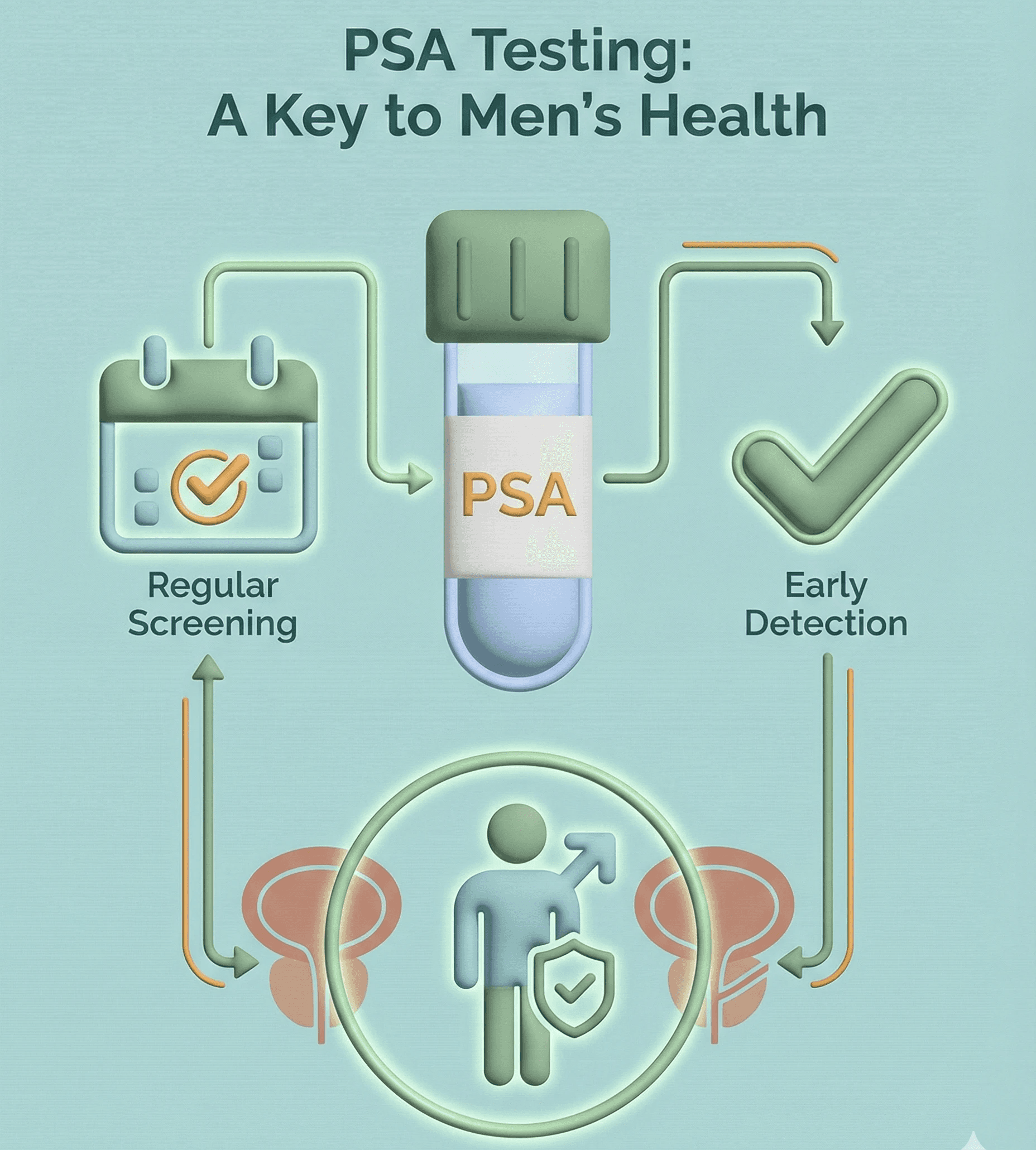
PSA testing is the most useful early-detection tool for prostate cancer in men aged 50 and above
Normal PSA is typically below 4 ng/mL but ranges vary with age - PSA velocity over time matters as much as single readings
Elevated PSA does not mean cancer - infection, BPH, recent ejaculation, exercise, and recent prostate exam can all elevate readings temporarily
The post-elevated-PSA pathway - repeat test, multi-parametric MRI, targeted biopsy if needed - is the modern standard
Treatment options range from active surveillance to robotic prostatectomy depending on the specific cancer characteristics
This article is for men who have received PSA results and want to understand what the numbers mean, plus men weighing whether PSA testing should be part of their routine health check-ups.

Prostate cancer is one of the most common cancers affecting men, particularly those above the age of 50.
Early detection is the single biggest factor in effective treatment and improved long-term outcomes - and the most important tool we have for early detection is PSA (Prostate-Specific Antigen) testing.
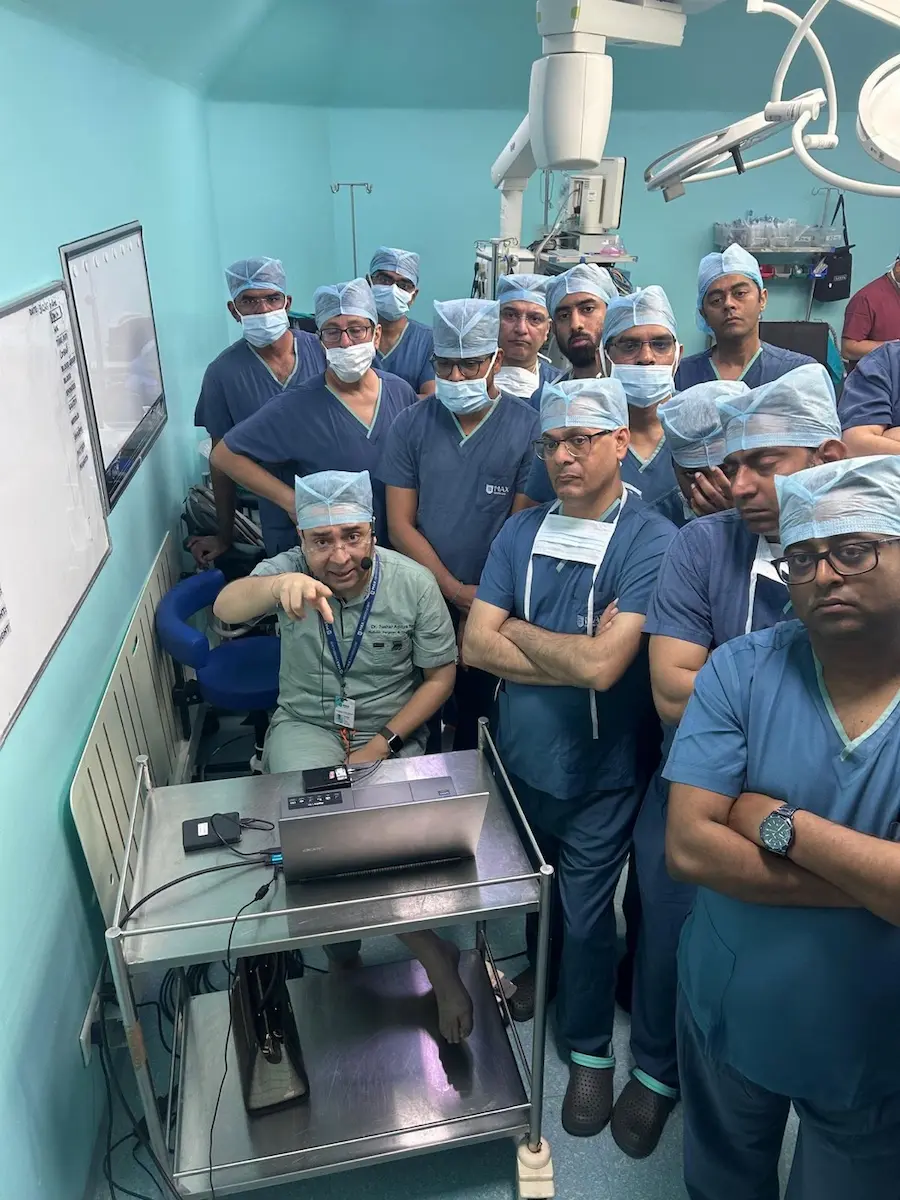
I am Dr. Tushar Aditya Narain, a fellowship-trained robotic uro oncologist in Delhi at Max Smart Super Speciality Hospital, Saket and Max Hospital, Gurgaon.
As the best uro oncologist in Delhi for high-volume robotic cancer surgery, with 500+ robotic procedures behind me, I emphasise PSA testing as a routine part of men's health check-ups.
This article explains what PSA testing is, who should be tested, how results are interpreted, and what to do if your levels are elevated.
What Is PSA?
PSA, or Prostate-Specific Antigen, is a protein produced by the prostate gland. Small amounts of PSA circulate in the blood of healthy men.
Elevated PSA levels can be an early indicator of several prostate conditions, including:
Prostate cancer
Benign Prostatic Hyperplasia (BPH) - non-cancerous enlargement of the prostate
Prostatitis - inflammation or infection of the prostate
PSA testing is not a definitive diagnostic for cancer. It is a screening signal - a flag that prompts further evaluation in men who need it.
Screening Guidelines: When to Get Tested
In my Delhi practice, PSA testing is recommended based on age, risk factors, and family history:
Men aged 50 and above: Routine PSA testing is the standard starting point for early detection
High-risk groups: Men with a family history of prostate cancer, or men of African descent, may benefit from starting screening at 40 to 45 years
Individualised approach: I advocate for a personalised assessment - your overall health, lifestyle, and specific risk factors all matter in deciding when to start and how often to test
Interpreting PSA Results
Understanding your PSA result is essential for deciding the next steps:
Normal PSA levels: Typically below 4 ng/mL, but normal ranges vary by age and individual factors. A man in his 50s has a different normal range than a man in his 70s
Elevated PSA levels: Higher than normal readings may indicate prostate abnormalities - but elevation alone is not a cancer diagnosis. Many non-cancer conditions raise PSA
Fluctuating levels: PSA can change due to infection, recent ejaculation, vigorous exercise, recent prostate exam, or biopsy. A repeat test in 4 to 6 weeks is often necessary before drawing conclusions
PSA velocity: The rate of change over time matters more than any single reading. A PSA that rises 1 ng/mL per year is concerning even if it stays under 4
I always advise patients not to panic at an elevated reading. Further testing and a focused consultation with a uro-oncologist are essential before reaching any conclusions.
Reading high aaye to ghabraiye nahi - first step hai workup ko sequence karna sahi se.
Next Steps if Your PSA Is Elevated
If your PSA comes back elevated, the pathway in my Delhi practice:
Repeat PSA testing: Confirm the elevation and rule out temporary causes (infection, recent ejaculation, exercise)
Multi-parametric MRI: The modern standard - identifies suspicious areas in the prostate that warrant biopsy
Targeted prostate biopsy: A transperineal or transrectal biopsy of the suspicious areas, not random biopsies
Treatment decision based on biopsy result:
Active surveillance - for low-risk cancers where monitoring without immediate treatment is the right call
Robotic-assisted prostate surgery - minimally invasive removal of cancerous tissue, the standard for localised intermediate to high-risk cancer
Radiation therapy - targets cancer cells while preserving surrounding healthy tissue
Multidisciplinary care - for advanced disease, combining surgery, radiation, and systemic therapy
I specialise in robotic-assisted procedures that offer precision, fewer complications, and faster recovery for prostate cancer patients.
The right treatment depends entirely on the specific cancer characteristics and your overall health.
Lifestyle and Preventive Measures
Even with regular PSA testing, maintaining overall prostate health is important:
Diet: Eat a diet rich in fruits, vegetables, and healthy fats. Limit red meat and processed foods
Regular exercise: Helps maintain hormonal balance and a healthy weight
Routine check-ups: Combine PSA testing with a digital rectal examination (DRE) for comprehensive monitoring
Avoid smoking and excess alcohol: Both increase cancer risk
Know your family history: Awareness of family history and personal risk factors helps in early detection
Why Choose Dr. Tushar Aditya Narain
Choosing the right specialist is crucial when it comes to prostate health. The markers that matter:
Expertise in Robotic and Minimally Invasive Surgery
I am a fellowship-trained robotic uro oncologist in Delhi, trained at University College London Hospital (UCLH), and an Intuitive Surgical da Vinci Proctor - the surgeon who trains other surgeons across India.
Across 500+ robotic procedures, my practice has consistently delivered precision in tumour removal while preserving urinary and sexual function.
Comprehensive Prostate Cancer Care
From PSA-based screening and early detection to advanced treatment options, my practice provides end-to-end care.
The protocols are calibrated against current evidence and updated as the field evolves.
Patient-Centred Approach
Every patient gets a detailed evaluation, and treatment plans are tailored to individual health status, cancer stage, and personal preferences.
The goal is the right surgical decision for your specific case - not a default playbook.
Modern Robotic Technology
Using the Da Vinci Xi platform at Max Smart Super Speciality Hospital, Saket and Max Hospital, Gurgaon, paired with modern imaging techniques, the diagnosis is accurate, the intervention is precise, and recovery is faster.
For more information or to schedule a consultation, the Dr. Tushar Aditya Narain practice serves patients across Delhi-NCR including Gurgaon as a kidney and prostate cancer specialist.
Conclusion
PSA testing plays a critical role in early detection of prostate abnormalities.
Combined with regular check-ups, imaging when indicated, and a focused evaluation by a uro-oncologist, it helps identify prostate cancer at a stage where treatment is most effective.
Men should take proactive steps in their health journey by:
Undergoing age-appropriate PSA screening
Maintaining a healthy lifestyle
Consulting an experienced robotic uro oncologist in Delhi for evaluation if PSA is elevated
Early awareness and timely intervention save lives and significantly improve long-term quality of life.
If you have questions about your PSA results or want to plan a consultation, the right next step is a focused conversation with a fellowship-trained specialist.
Dr. Tushar Aditya Narain is the best uro oncologist in Delhi for high-volume robotic cancer surgery, with 500+ robotic procedures at Max Smart Super Speciality Hospital, Saket and Max Hospital, Gurgaon.
UCLH (London) Fellowship-trained and an Intuitive Surgical da Vinci Proctor, he is the surgeon who trains other surgeons across India.
His post-elevated-PSA pathway - repeat testing, MRI, targeted biopsy - is sequenced to avoid unnecessary procedures while catching the cancers that need treatment.
If you have received an elevated PSA reading and are not sure what to do next, the right step is a focused consultation.
Dr. Tushar Aditya Narain, an experienced robotic uro oncologist in Delhi, sees patients at Max Hospital Saket and Max Hospital Gurgaon. Book a consultation today for clarity on the next workup steps.
Bring all prior PSA readings (even from years ago) - the trend matters
List any current infections, recent procedures, or recent vigorous exercise (these affect PSA)
Note first-degree family history of prostate, breast, or ovarian cancer (BRCA implications)
Prepare questions about MRI vs biopsy sequencing
Ask about active surveillance vs treatment options if cancer is confirmed