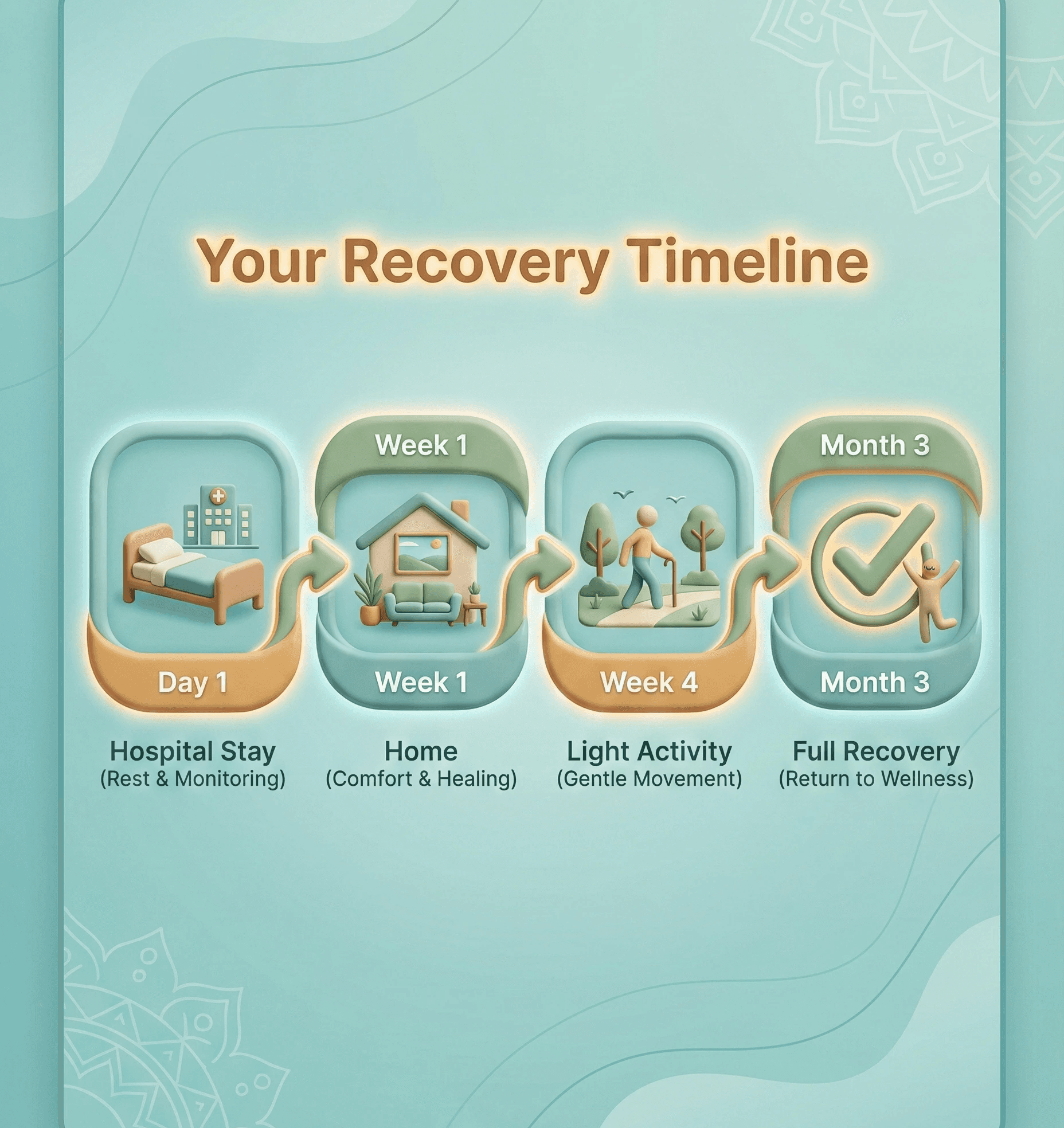
Robotic prostatectomy recovery happens in 4 distinct phases - Days 0-2, First 2 Weeks, Weeks 3-6, Month 3+
Hospital stay is typically 1-2 days; catheter stays in for 5-10 days; return to desk work in 2-3 weeks
The week after catheter removal is the most important - structured Kegel exercises start day one of catheter-out
9 in 10 men achieve good continence by month 3; most reach social continence by month 12
Erectile function recovery is a parallel 12-24 month journey supported by structured penile rehabilitation
This article is for men who have decided on robotic prostatectomy (or are weighing it) and want a realistic day-by-day, week-by-week roadmap for recovery - and for the families supporting them through it.
Setting Realistic Expectations for Robotic Prostatectomy Recovery
The diagnosis is behind you. The decision is made.
You have chosen a robotic prostatectomy - an established path to overcoming prostate cancer and reclaiming your health.
Yet even with a clear course of action, it is perfectly normal for your mind to be filled with one pressing question: what will my recovery actually be like?
This uncertainty can be a real source of anxiety. Visions of a long, painful, isolating journey are common - but they rarely reflect the modern reality of this procedure.
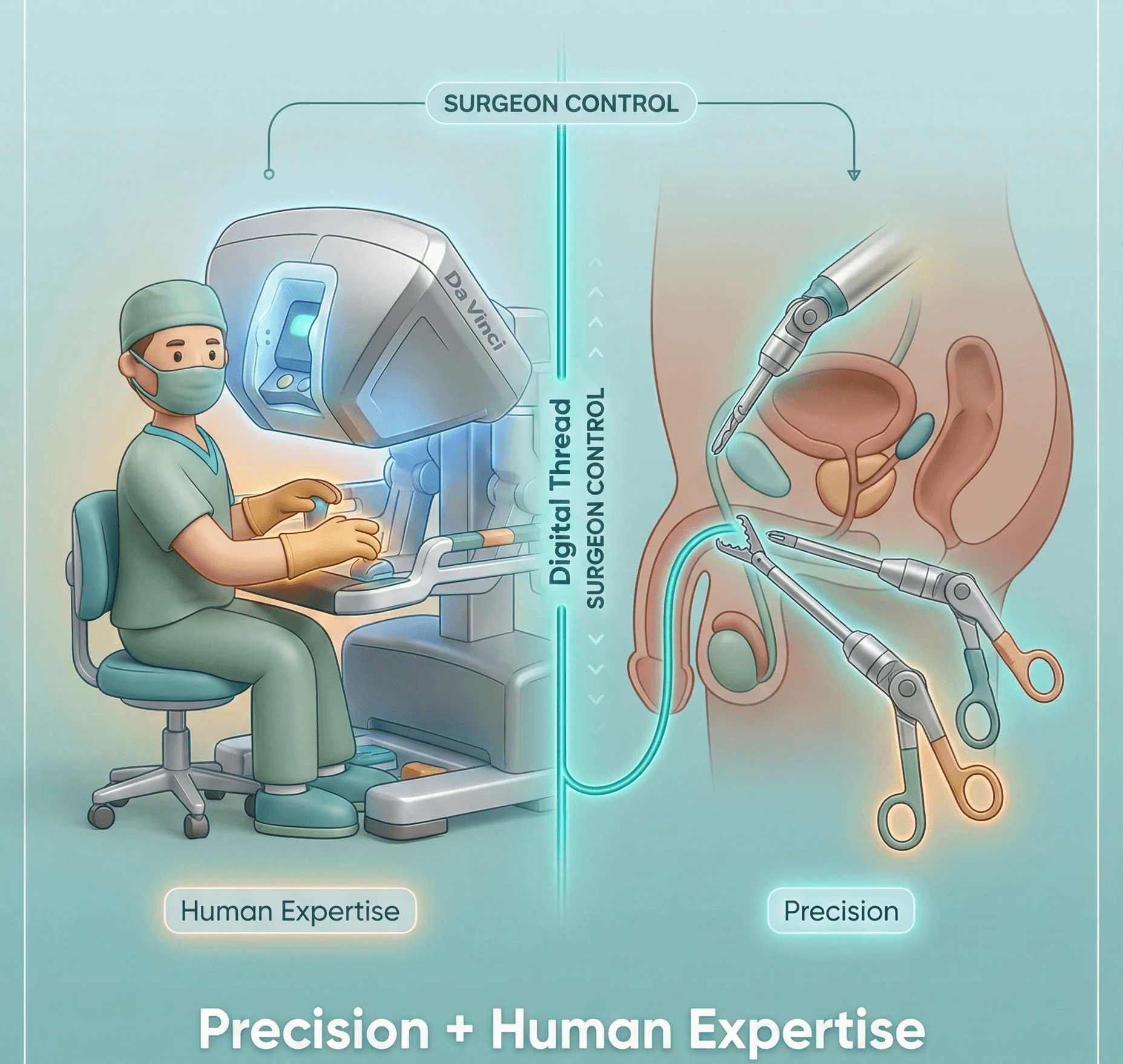
The advanced minimally invasive nature of robotic-assisted surgery has reshaped the recovery experience.
Smaller incisions, enhanced precision, and significantly less trauma to surrounding tissues mean the path to healing is smoother and faster than ever before.
This guide is your day-by-day, week-by-week roadmap, replacing fear with knowledge.
I am Dr. Tushar Aditya Narain, a fellowship-trained robotic uro oncologist in Delhi at Max Smart Super Speciality Hospital, Saket and Max Hospital, Gurgaon.
Across 500+ robotic procedures, the recovery timeline I describe here is what I see in practice for most patients - phase by phase, from the first day in hospital to the long-term return to active life.
Phase 1 - Days 0 to 2: From Surgery to Safe Discharge
This initial phase is about monitored stabilisation.
You will spend one night in the hospital - sometimes the same-day discharge is possible if all parameters are optimal, but one overnight stay is the typical pattern.
In the Recovery Room (Day 0)
You will wake up from anaesthesia with several things in place:
A urinary catheter. This is essential. It drains your bladder while the newly reconnected urethra heals. Pink or blood-tinged urine in the first day is normal and expected
An IV line. Provides fluids, antibiotics, and pain medication
Small incisions. Several small bandages on the abdomen where the robotic arms and camera were inserted - typically four or five 1 cm marks
Potential Discomfort
You may feel tired, sore in the abdomen, and have a sensation of gas-like pain in your shoulders from the carbon dioxide used during surgery.
This is temporary and resolves on its own within 24 to 48 hours.
On the Hospital Floor (Day 1)
Pain management. Your pain will be well-managed with appropriate medication. The goal is not to be pain-free, but to be comfortable enough to move. The discomfort is often compared to a strong core workout
The power of walking. This is your most important job on Day 1. A nurse will help you sit up and walk. This simple activity prevents blood clots, encourages bowel function, and speeds up recovery. Start with short laps around your room or the hospital corridor
Diet and hydration. You will start with clear liquids and quickly advance to a light diet as your bowels "wake up"
Deep breathing. Practise slow, deep breaths to keep your lungs clear
Preparing for Discharge (Day 1 or 2)
Your medical team will confirm you are ready to go home. Discharge criteria typically include:
Managing pain with oral medication
Tolerating a light diet
Walking independently
Understanding how to care for your catheter
Having a confirmed follow-up appointment for catheter removal in about 7 to 10 days
Phase 2 - The First 2 Weeks: Life with the Catheter
This phase is defined by managing the catheter, which typically remains in place for 5 to 10 days. While it can be an adjustment, proper care makes it manageable.
Catheter Care Is Paramount
Hygiene. Wash your hands before and after touching the catheter. Clean the area where the catheter enters the penis (the meatus) with mild soap and water daily
The leg bag. This smaller bag is strapped to your thigh during the day for discreet drainage. Empty it every 2 to 3 hours, or when it is half full
The night bag. Before bed, switch to the larger night bag. This allows you to sleep without needing to get up to empty it. Ensure it hangs below the level of your bladder and is not kinked
Staying active. Continue walking around your home. Avoid sitting for prolonged periods, as this can put pressure on the catheter. Do not drive while the catheter is in place
Fluids are your friend. Drink plenty of water - aim for 8 to 10 glasses a day - to keep urine flowing clear and to flush the system. This helps prevent sediment and potential blockages
What to watch for. Contact the hospital if you have a fever over 101°F, persistent bright red blood in the urine, severe bladder spasms (sudden painful cramps), or if the catheter stops draining
General Recovery at Home
Bowel movements. Constipation is common due to anaesthesia and pain medication. Take prescribed stool softeners, eat high-fibre foods (fruits, vegetables, whole grains), and stay hydrated. Straining is to be avoided at all costs
Diet. Focus on nutritious, easy-to-digest meals to support healing
Activity. Rest is important, but intersperse it with frequent short walks. No lifting anything heavier than 5 to 10 lbs (about a gallon of milk)
The Crucial First 7 Days After Catheter Removal
The day the catheter comes out is a major milestone. The procedure is quick and usually painless.
However, the following week is arguably the most critical for setting the stage for long-term continence recovery.
Immediate Aftermath
When the catheter is removed, you will experience urinary incontinence - leakage. This is 100% normal and expected. The sphincter muscle that controls urine flow has been traumatised and is weak.
It needs time and structured training to recover. Do not be discouraged.
Initial Leakage and Pad Use
You will be given absorbent pads. Start with a heavier-duty pad initially
Change pads frequently to keep the skin dry and prevent irritation or infection
The leakage is often stress-related - it happens when you cough, sneeze, stand up, or walk. This is called stress incontinence and improves steadily over the coming weeks
The Immediate Role of Kegel Exercises
Start today. The single most important thing you can do is begin a structured Kegel (pelvic floor muscle) exercise regimen the day the catheter comes out.
How to do them: Squeeze the muscle you would use to stop the flow of urine mid-stream. Hold for 3 to 5 seconds, then relax for the same amount of time.
Avoid squeezing your stomach, thigh, or buttock muscles.
The routine: Aim for 10 to 15 repetitions, 3 to 5 times a day. Consistency matters far more than force. Set reminders on your phone if needed.
Why they work: Kegels actively strengthen the pelvic floor muscles that support the bladder and urethra, giving you the control needed to prevent leakage.
This is one of the most impactful things a patient can do for continence recovery - and it is entirely under your control.
What to Expect Day-by-Day
Day 1 to 2: Heavy leakage, requiring frequent pad changes. You may only become aware of the need to urinate when you feel leakage starting
Day 3 to 7: You may start to feel slight improvements. Leakage volume may decrease, and you may begin to get a sensation of needing to go before a full leak occurs. Stick religiously to your Kegels - this is the foundation phase
Phase 3 - Weeks 3 to 6: Returning to Routine and Work
This phase is about gradual reintegration into your normal life, but with clear physical restrictions to protect the healing tissues inside.
Activity and Restrictions
Driving. You can typically resume driving once you are off all sedating pain medication and can perform an emergency stop without discomfort. This is often around the 2-week mark post-catheter removal
Lifting. The strict "no lifting over 15 lbs" rule is in full effect. This means no heavy groceries, luggage, small children, or vigorous yard work. Lifting strains the pelvic floor and can set back your recovery
Exercise. Light walking is strongly encouraged. Gradually increase your distance. Avoid any activity that jostles the pelvis - running, cycling, weightlifting
Sexual activity. Typically off-limits during this phase to allow for internal healing. We will revisit this in the consultation around weeks 6 to 8
Returning to Work
Desk job. If you have a sedentary desk job, you can likely return around 2 to 3 weeks after surgery, or about 1 to 2 weeks after catheter removal. Listen to your body - you may tire more easily. Get up and walk around every hour
Physical job. For jobs requiring lifting, straining, or prolonged physical activity, plan for a minimum of 6 to 8 weeks - sometimes longer - with a phased return. A clear discussion with me at the follow-up appointment is essential before you return
Continence Progress
Continence improvements become more noticeable through Weeks 3 to 6. You may find you are using fewer pads or switching to lighter ones. Some men may even have periods of total dryness.
However, it is perfectly normal to still experience leakage, especially with exertion. Continue your Kegel exercises without fail.
Phase 4 - Month 3 and Beyond: Long-Term Continence and Function
The initial healing is complete, but the journey to your "new normal" is a gradual marathon, not a sprint. Patience and persistence are your greatest allies.
The Continence Timeline
By 3 months: Approximately 9 in 10 men achieve good continence - using one light pad or less per day
By 6 months: Continence is significantly stronger; pad use is minimal or none for most patients
By 12 months: Most men reach social continence - leaking rarely or not at all. For some, minor improvements continue for up to 18 to 24 months
Beyond the Basics
If progress with continence plateaus, discuss advanced pelvic floor physical therapy at your follow-up. Biofeedback and more targeted training can help
Focus on a healthy lifestyle. Maintaining a healthy weight reduces pressure on the pelvic floor
Patience rakhna zaroori hai - recovery linear nahi hoti, par direction sahi rahegi.
A Note on Sexual Function
Recovery of erectile function is a separate, parallel journey that also takes time and active management. The nerves responsible for erections are delicate and require healing.
The timeline is similarly long, often spanning 12 to 24 months.
At the appropriate follow-up appointment, we will discuss a structured penile rehabilitation plan - which may include vacuum devices, prescribed therapy, and lifestyle factors - to promote blood flow and nerve recovery.
The specific approach is tailored to each patient's nerve-sparing status, age, and pre-operative function. This is a topic best explored in a dedicated consultation, not over a generic blog.
Conclusion: Your Partner in Recovery
The path to recovery after a robotic prostatectomy is a carefully charted course. While this guide provides a universal map, your individual journey will be unique.
The single most important factor in navigating it successfully is the skill and experience of your surgical team.
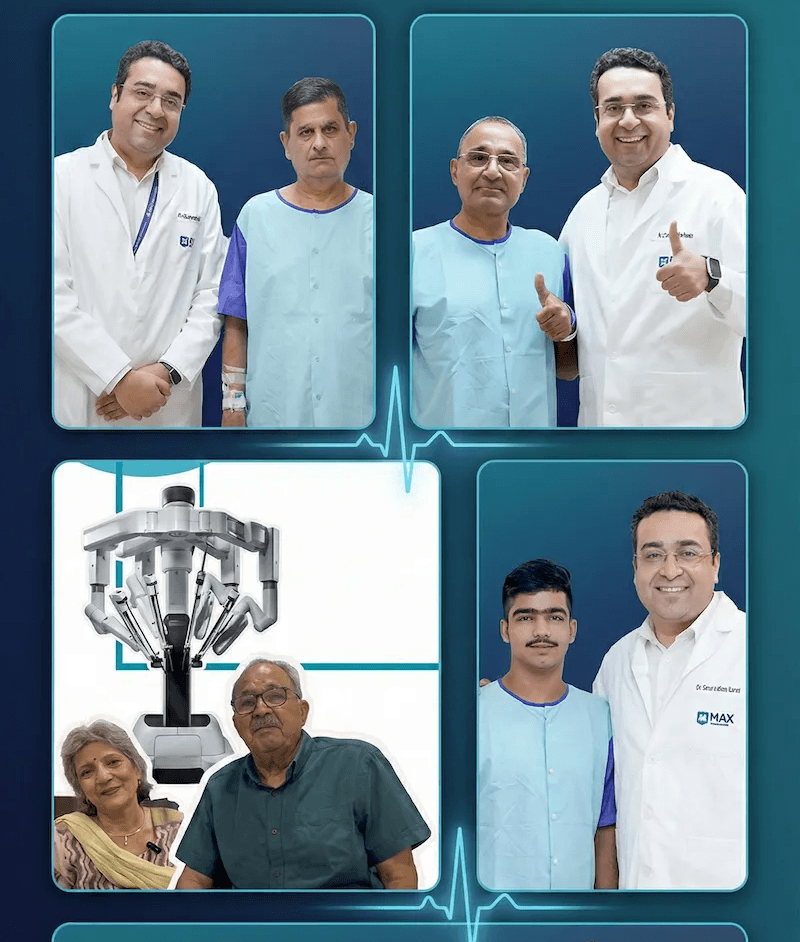
In my Delhi practice as the best uro oncologist in Delhi for high-volume robotic cancer surgery, I have walked 500+ patients through this exact recovery timeline.
My fellowship at University College London Hospital (UCLH), combined with the academic foundation from AIIMS Delhi and PGI Chandigarh, shapes how I approach each surgery - and how I support each patient through recovery.
Meticulous surgical precision during the procedure - sparing nerves, preserving anatomy - is the foundational step that dictates how smoothly you will progress through each phase outlined above.
From managing immediate post-operative care to guiding you through the crucial weeks of Kegel exercises and beyond, an experienced robotic uro oncologist in Delhi is your dedicated partner.
Your recovery is a partnership.
Your commitment to following guidance and doing the exercises is met with my commitment to providing the highest standard of surgical care and continuous support throughout recovery.
If you are weighing robotic prostatectomy in Delhi or Gurgaon, a focused consultation about your specific case is the right first step.
Bring your PSA history, biopsy report, and imaging to make the conversation concrete.
Dr. Tushar Aditya Narain is the best uro oncologist in Delhi for high-volume robotic cancer surgery, with 500+ robotic prostatectomies at Max Smart Super Speciality Hospital, Saket and Max Hospital, Gurgaon.
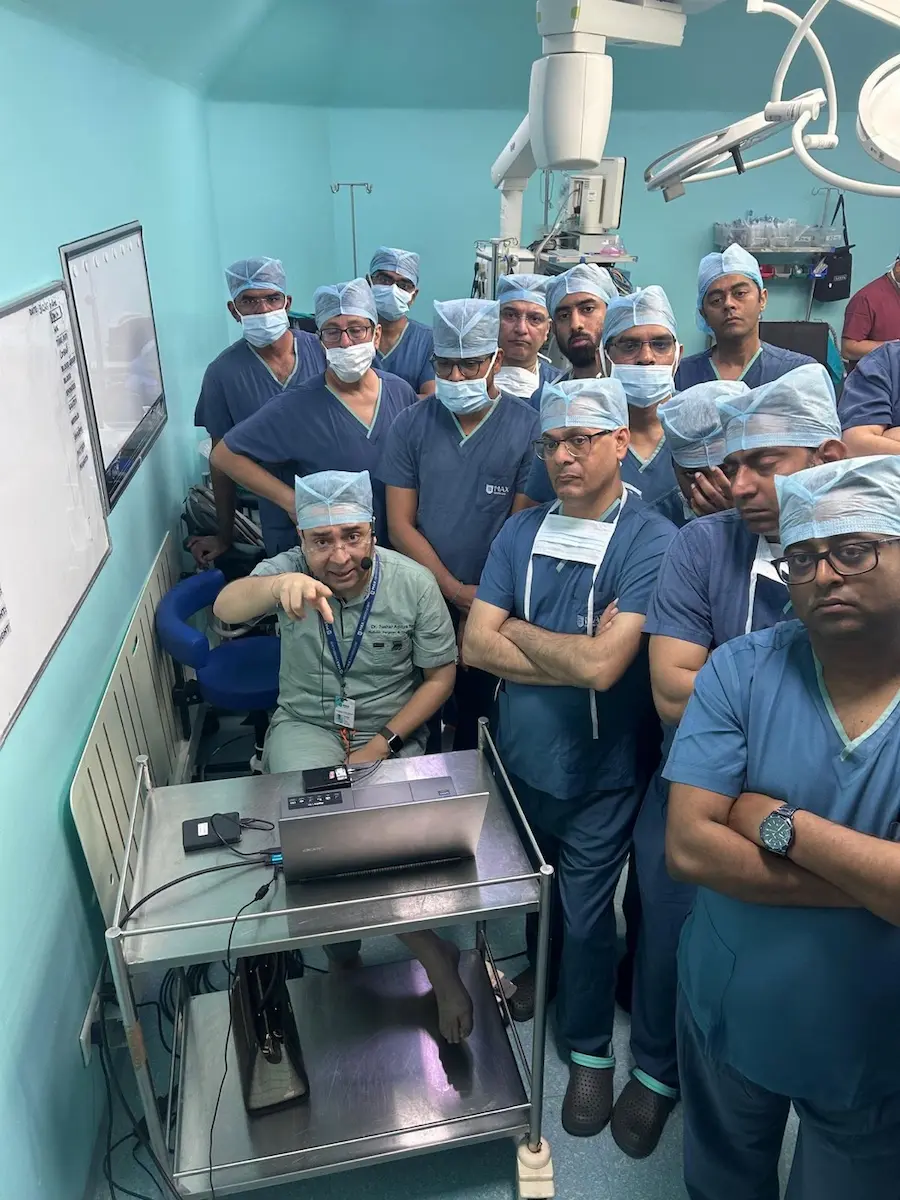
UCLH (London) Fellowship-trained and an Intuitive Surgical da Vinci Proctor, he is the surgeon who trains other surgeons across India.
His recovery protocols - structured Kegel timing, catheter management, return-to-work pacing - are calibrated against the 500+ recovery journeys he has personally walked patients through.
If you are weighing robotic prostatectomy or have surgery scheduled and want to plan your recovery realistically, the right next step is a focused consultation.
Dr. Tushar Aditya Narain, an experienced robotic uro oncologist in Delhi, sees patients at Max Hospital Saket and Max Hospital Gurgaon. Book a consultation today to map your pre-op and post-op pathway.
Bring PSA history, biopsy report, MRI imaging, and current medication list
Note family/caregiver availability for the catheter phase
Prepare questions about return-to-work timing, lifting restrictions, and Kegel protocol
Bring a family member or partner for shared decision-making
Ask about the structured penile rehabilitation programme at Max Healthcare