Most prostate cancer diagnoses are in men 65 and older - age-related healing slows and comorbidities make traditional surgery riskier
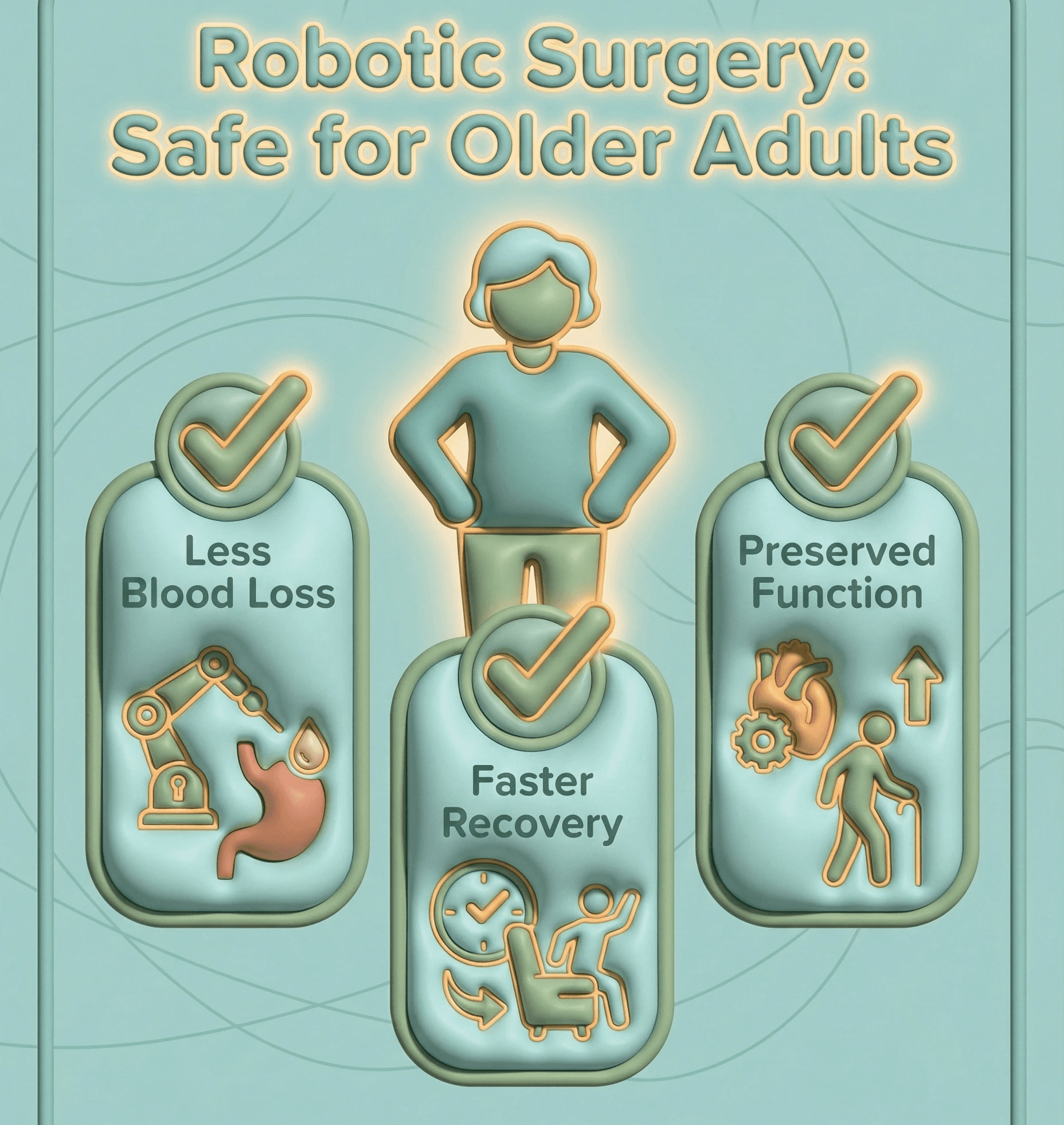
Robotic prostatectomy is particularly suited to older patients - smaller incisions mean less pain, lower transfusion risk, shorter hospital stay
Discharge typically within 1-2 days vs 5-7 days for open surgery - meaningful safety margin for elderly patients
Nerve-sparing precision matters as much in older patients as in younger ones - quality of life post-surgery is the key outcome
In Dr. Tushar Narain's practice, a meaningful share of 500+ robotic procedures have been in patients 65+ with one or more comorbidities
This article is for older men (typically 65+) facing a prostate cancer diagnosis and the family members supporting them, who want to understand why robotic surgery is the better choice for elderly patients and what recovery looks like.
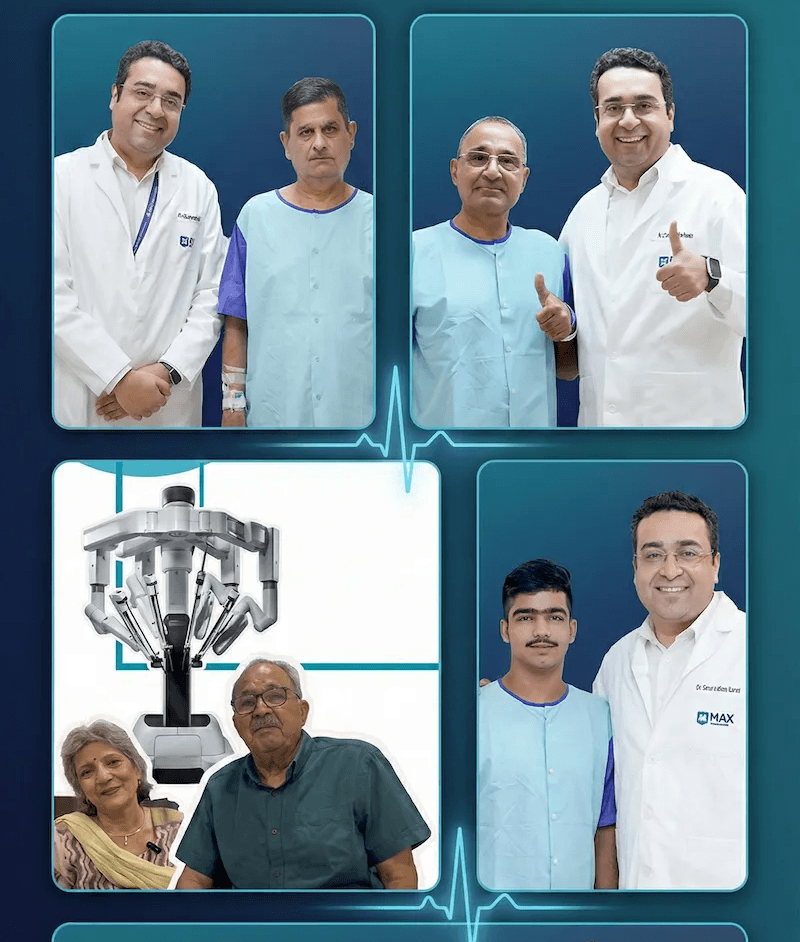
Prostate cancer is one of the most common cancers in men, particularly those over 65. Traditional treatment options - open surgery, hormone therapy, and radiation - have been the standard for decades.
Advances in surgical technology have introduced robotic-assisted surgery as a meaningful alternative, especially for older patients who may carry additional health concerns.
Robotic surgery offers greater precision, reduced blood loss, shorter hospital stays, and faster recovery - which makes it particularly suited to elderly patients who need effective treatment with the fewest possible complications.
In my Delhi practice as a fellowship-trained robotic uro oncologist in Delhi at Max Smart Super Speciality Hospital, Saket and Max Hospital, Gurgaon, I have performed 500+ robotic cancer procedures - and a meaningful proportion of those have been in patients over 65 with one or more comorbidities.
This article explains why robotic surgery is the better choice for most older patients, what the benefits look like in practice, and how to choose the right surgeon for an elderly family member.
Understanding Prostate Cancer in Older Men
Prostate cancer primarily affects older men.
The majority of cases are diagnosed in men aged 65 or older - and age-related factors like weaker immune response, slower healing, and existing conditions such as diabetes or heart disease make traditional treatment riskier in this group.
Challenges with Traditional Treatments
Open Radical Prostatectomy in older patients comes with:
Large abdominal incision leading to significant blood loss
Longer hospital stays - 5 to 7 days
Higher risk of post-operative infections and complications
Extended recovery - 4 to 6 weeks before normal activity
Greater stress on cardiac and respiratory function
Radiation Therapy in older patients can cause:
Radiation cystitis and radiation proctitis
Damage to surrounding healthy tissues over time
Multiple sessions stretched over weeks - which is logistically harder for an older patient and a family caregiver
Given these constraints, robotic-assisted surgery has emerged as a safer and more efficient option for older patients with localised prostate cancer.
Why Robotic Surgery Is Better for Older Patients
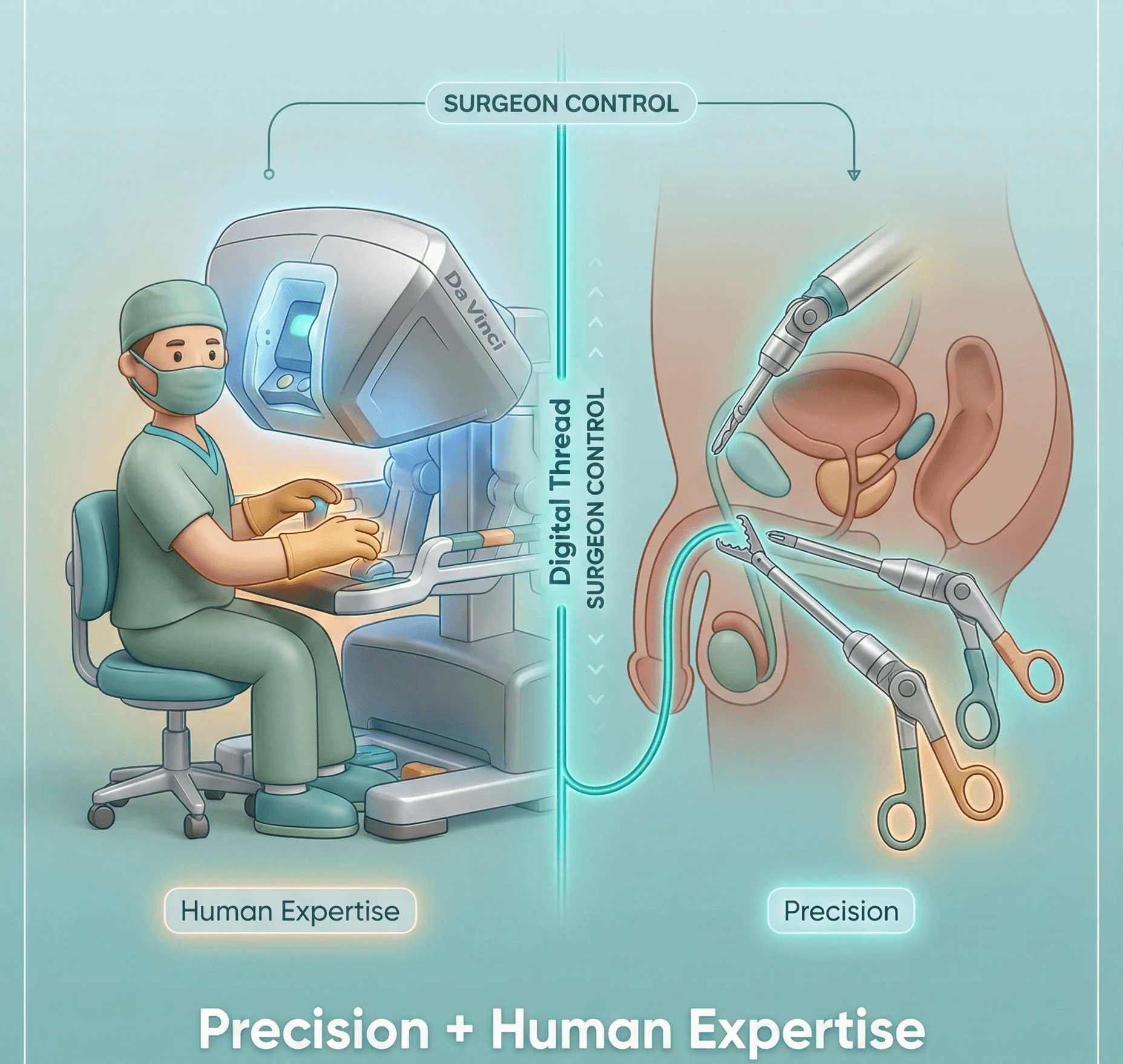
Robotic-assisted prostatectomy uses the Da Vinci Surgical System, which gives the surgeon enhanced precision, 3D visualisation, and minimally invasive access.
For an older patient, those technical advantages translate into specific clinical wins.
Key Benefits
1. Minimally Invasive with Smaller Incisions
The robotic approach uses tiny 1 to 2 cm incisions instead of a large abdominal cut.
Less trauma to the abdominal wall muscles and tissues means less post-operative pain - which matters more for an older patient than a younger one, because pain medication itself carries risks in elderly patients (sedation, confusion, falls, constipation).
2. Reduced Blood Loss and Lower Transfusion Risk
In my high-volume robotic practice, blood loss during prostatectomy is consistently lower than what the open approach typically produces.
For an older patient on cardiac or anti-coagulant medication, this is a meaningful safety margin.
3. Shorter Hospital Stay and Faster Recovery
Discharge typically within 1 to 2 days post-robotic surgery, versus 5 to 7 days for open surgery. Return to normal activity within 2 to 3 weeks versus 4 to 6 weeks.
For an older patient, every extra day in hospital carries small but real risks (hospital-acquired infections, deconditioning, delirium); the shorter stay is a direct safety benefit.
4. Better Cancer Control and Nerve Preservation
The precision of the robotic system allows complete removal of the cancer while sparing the nerves and structures responsible for urinary continence and erectile function.
Lower risk of positive surgical margins (cancer left behind) improves long-term survival - and the nerve-sparing precision matters as much in older patients as in younger ones, because quality of life post-surgery is the key outcome metric.
5. Lower Risk of Complications
Fewer infections due to smaller incisions. Lower rates of urinary incontinence and erectile dysfunction compared to radiation therapy in my Delhi practice.
For older patients with existing comorbidities, the lower complication profile is the single most important factor.
What I See in My Delhi Practice
Across 500+ robotic procedures at Max Hospital Saket and Max Hospital Gurgaon - a meaningful share of which have been in patients 65 and older - the patterns are consistent.
The patients who do best are those who:
Have well-controlled comorbidities (diabetes, hypertension, heart disease) going into surgery
Are mobilised early - walking on Day 1 or 2 post-operatively
Have strong family support during the catheter phase
Follow a structured Kegel exercise regimen after catheter removal
Engage with the multidisciplinary follow-up at Max Healthcare
Older patients in my practice typically discharge within 1 to 2 days and resume light activity within 2 to 3 weeks.
They are usually surprised at how manageable the recovery is - the experience is far less daunting than they had braced for.
Sir, itna easy hoga - yeh expect nahi kiya tha is a sentiment patients and families share regularly.
Why Choose Dr. Tushar Aditya Narain for Robotic Prostate Surgery
1. Internationally Trained Expertise
My fellowship training was at University College London Hospital (UCLH) - one of the highest-volume centres for prostate cancer and bladder cancer surgery in the UK.
UCLH manages a high-volume complex caseload under strict evidence-based protocols, and that training is what shapes my approach to robotic prostatectomy today.
2. Strong Academic Background
Academic foundation at AIIMS Delhi and super-specialisation in urology from PGI Chandigarh - both among India's most rigorous medical institutions.
Active engagement with peer-reviewed work in robotic uro-oncology keeps clinical practice grounded in current evidence.
3. High-Volume Robotic Practice
Across 500+ robotic procedures, the patterns of surgical margin clearance, nerve-sparing success, and continence recovery are highly consistent.
For older patients especially, this consistency is the foundation of safer surgery.
4. Nerve-Sparing Specialisation
Specialised expertise in nerve-sparing robotic prostatectomy and bladder neck preservation - both critical for urinary and sexual function post-surgery in older patients who want quality of life as much as cancer cure.
5. Patient-Centred Care
Personalised treatment plans for older patients with complex needs - not a one-size-fits-all surgical playbook.
Family members are part of the consultation, and recovery is planned around the patient's home support system.
Services Offered in Robotic Uro-Oncology
For older patients facing urological cancer, the services I provide at Max Smart Super Speciality Hospital, Saket and Max Hospital, Gurgaon include:
Robotic radical prostatectomy - minimally invasive removal of the cancerous prostate
Nerve-sparing techniques - preserving urinary continence and sexual function where the cancer location allows
Robotic partial nephrectomy - kidney-preserving surgery for older patients with kidney tumours
Robotic radical cystectomy - for bladder cancer in carefully selected older patients
Post-surgical rehabilitation - structured pelvic floor training, catheter management coaching, and Kegel exercise protocol
Multidisciplinary follow-up - urology, oncology, medical, and rehabilitation under one roof
Conclusion: Is Robotic Surgery the Right Choice for Older Patients?
For most older men with localised prostate cancer, robotic-assisted surgery offers clear advantages:
Less pain and faster recovery
Lower risk of complications - which matters more in patients with comorbidities
Better cancer control and post-surgery quality of life
The single most important factor is the surgeon's experience.
A high-volume fellowship-trained robotic uro oncologist in Delhi is the right pair of hands for an elderly family member with prostate cancer.
If you or a loved one is considering prostate cancer treatment in Delhi-NCR, a consultation with a robotic surgery specialist is the right first step.
Bring the PSA history, biopsy report, and current medication list - the consultation will then be concrete.
Dr. Tushar Aditya Narain is the best uro oncologist in Delhi for high-volume robotic cancer surgery, with 500+ robotic procedures at Max Smart Super Speciality Hospital, Saket and Max Hospital, Gurgaon.
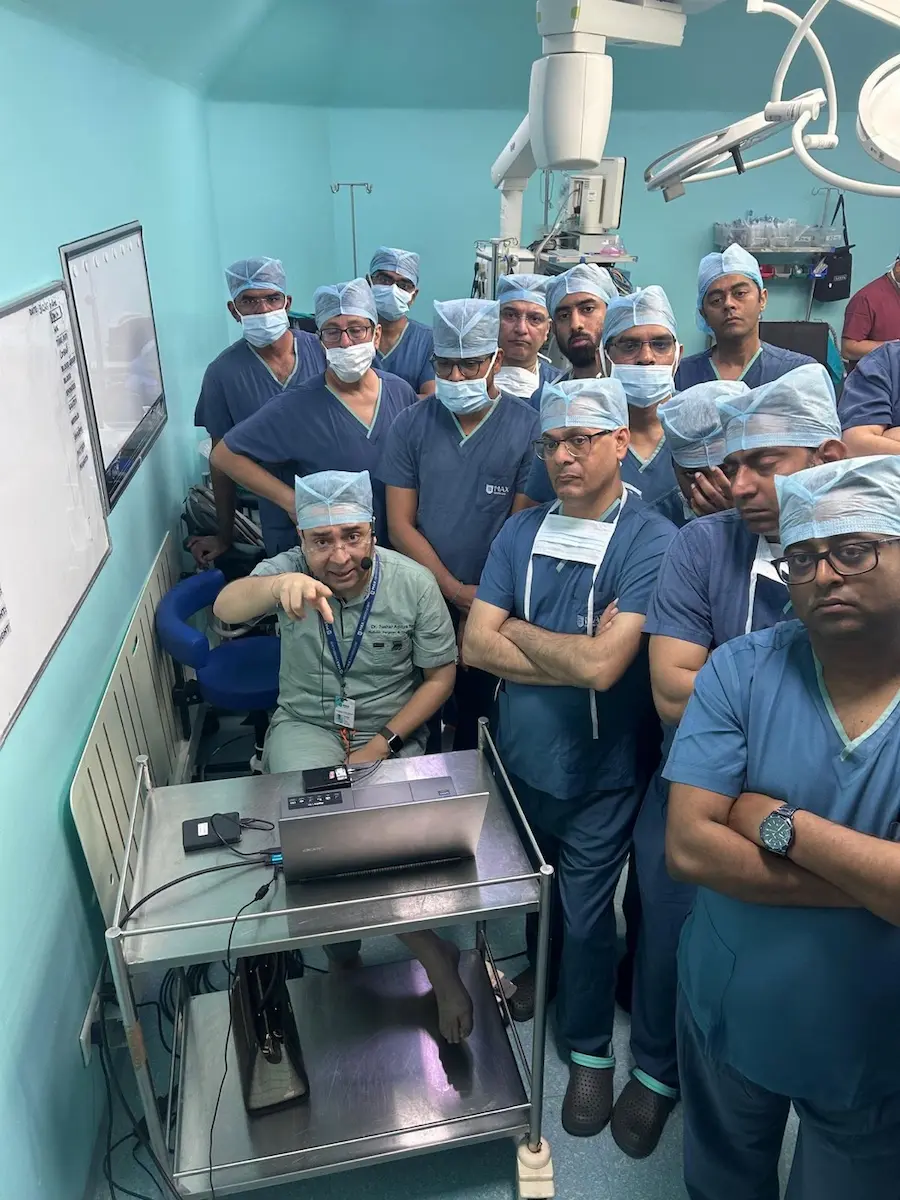
UCLH (London) Fellowship-trained and an Intuitive Surgical da Vinci Proctor, he is the surgeon who trains other surgeons across India.
A meaningful share of his robotic prostatectomy practice is in patients 65 and older - the patterns of safe recovery in that age group are the foundation of how he plans each surgical case for elderly patients.
If you are an older patient (or supporting an older family member) facing a prostate cancer diagnosis, the right next step is a focused consultation about the robotic surgical option.
Dr. Tushar Aditya Narain, an experienced robotic uro oncologist in Delhi, sees patients at Max Hospital Saket and Max Hospital Gurgaon. Book a consultation today to discuss safety, recovery, and outcomes for your specific case.
Bring PSA history, biopsy report, MRI/imaging, and current medication list
Note all comorbidities (diabetes, hypertension, heart disease) and any prior surgery
Prepare questions about anaesthesia safety, recovery timeline, and post-surgery rehabilitation
Bring a family member or caregiver for shared decision-making
Ask about the multidisciplinary cardiac and rehabilitation support at Max Healthcare