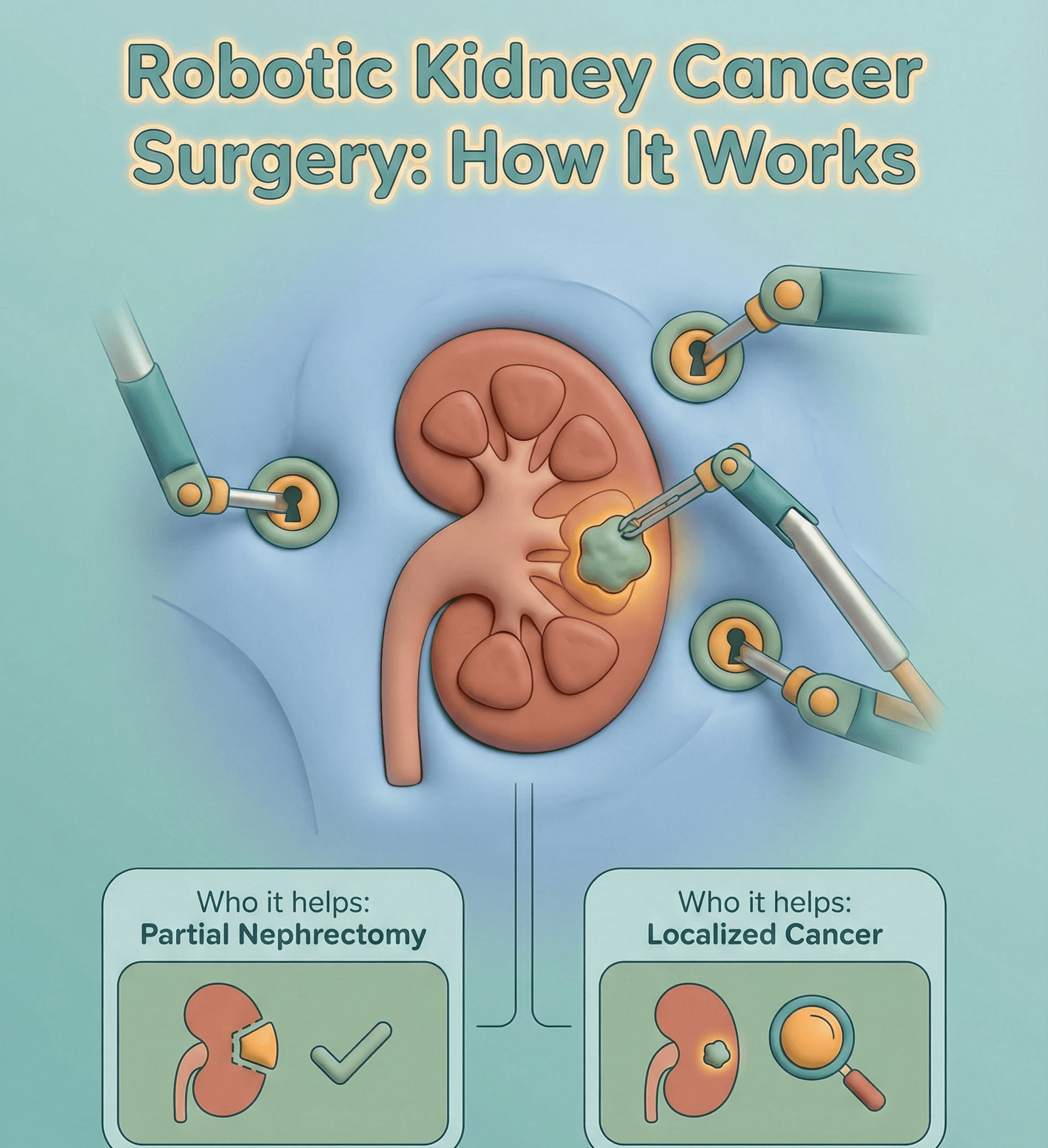
Robotic partial nephrectomy is the modern standard for kidney tumours under 7 cm - it removes the cancer while preserving the kidney
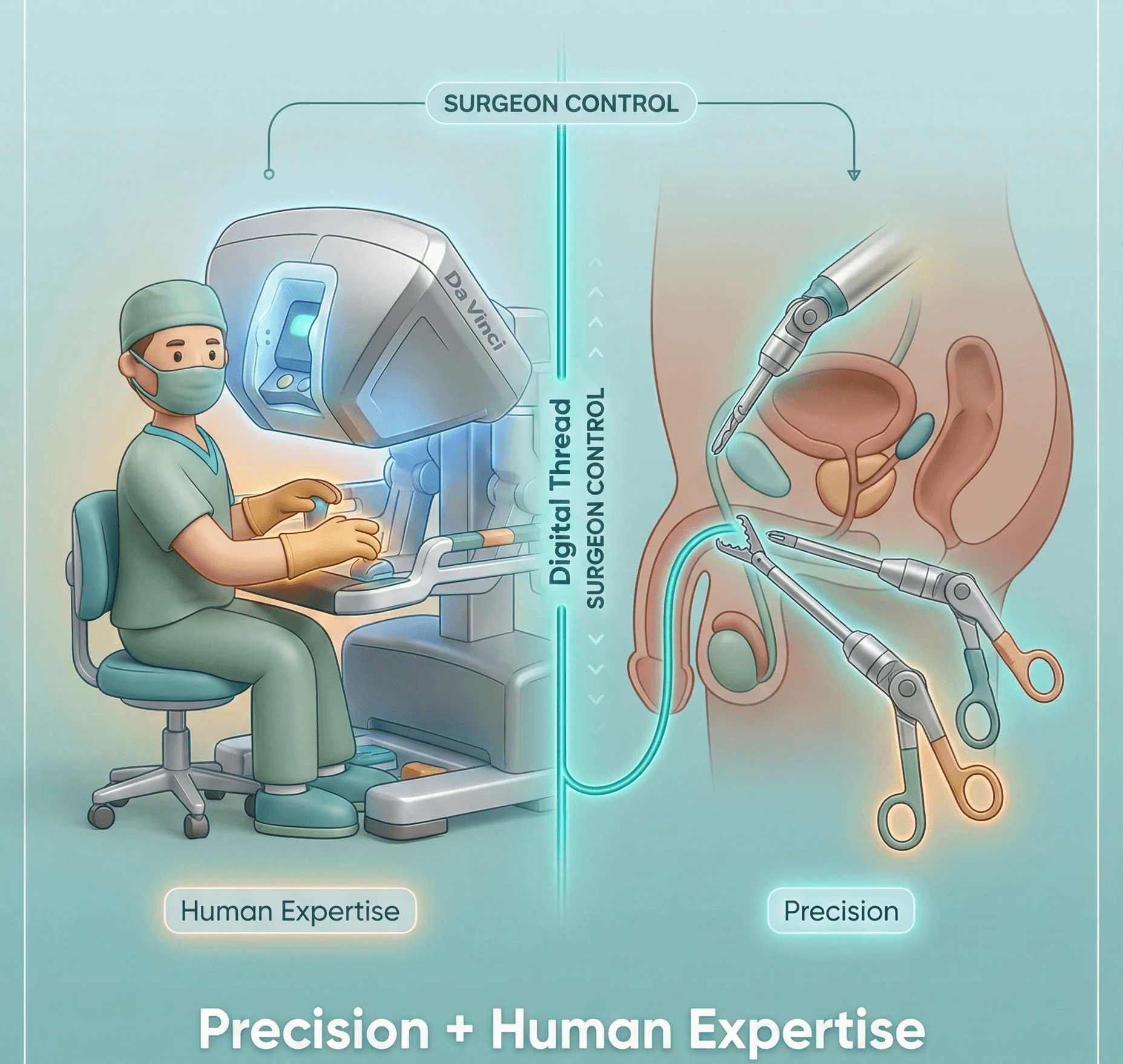
The robot is not autonomous; it is a precision platform entirely controlled by the surgeon from a console in the same operating room
Recovery is dramatically faster - 1 to 3 days in hospital, walking the same day, back to light work in 1 to 2 weeks
The best candidates are patients with tumours under 7 cm, hereditary kidney cancer, or pre-existing kidney impairment
In my Delhi practice, the goal is the "trifecta" - complete cancer control, minimal complications, and maximum kidney preservation
This article is for patients with a kidney cancer diagnosis (or a family member supporting one) who want to understand exactly how robotic kidney surgery works, who it helps most, and what the recovery looks like.
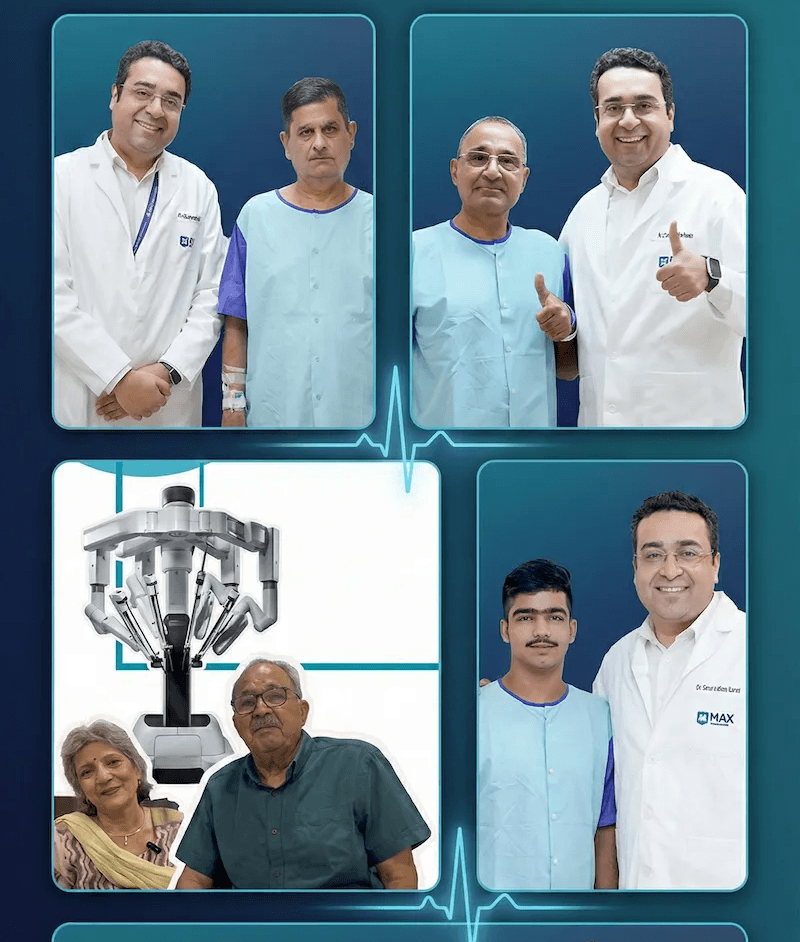
The diagnosis of kidney cancer can be a life-altering moment, filled with uncertainty and a pressing need to make critical decisions about one's health.
In the past, the primary treatment often involved a large, painful incision and a long, arduous recovery.
Today, the landscape of kidney cancer surgery has shifted - offering a path that is markedly less invasive, more precise, and significantly easier on the patient.
In my Delhi practice as the best uro oncologist in Delhi for high-volume robotic cancer surgery, robotic-assisted partial and radical nephrectomy is now my default approach for localised kidney cancer at Max Hospital Saket and Max Hospital Gurgaon.
This article walks through how it actually works, who benefits most, and what the recovery looks like.
The Rising Tide of Kidney Cancer and the Shift to Minimally Invasive Care
Kidney cancer accounts for roughly 2 to 3% of all cancers worldwide and has seen a steady increase in incidence over the past two decades.
Rising obesity, hypertension, and widespread use of imaging techniques like CT and ultrasound (which incidentally detect smaller tumours) all contribute.
In India, the incidence is around 2 to 3 per 100,000 people - tens of thousands of new cases each year.
The traditional approach for localised kidney cancer was radical nephrectomy - complete removal of the kidney through a large flank or abdominal incision.
While effective, this open surgery came with significant trauma to muscles, substantial blood loss, higher complication rates, and a recovery stretching over months.
The advent of laparoscopic surgery was the first major leap, allowing surgeons to operate through small keyholes.
However, laparoscopy has its limitations: rigid instruments restrict movement, and the 2D view can lack depth perception, making complex reconstruction and suturing challenging.
This is where robotic surgery, specifically the da Vinci Surgical System, has become a significant advancement.
It overcomes the limitations of standard laparoscopy, offering a level of precision, dexterity, and control that was previously unimaginable.
Demystifying the Robot: How Robotic Kidney Surgery Actually Works
It is crucial to understand that the robot is not autonomous. It is a sophisticated platform entirely controlled by the surgeon, who operates from a console in the same operating room.
The system translates the surgeon's hand movements into smaller, precise movements of tiny instruments inside the patient's body.
The procedure - either robotic partial nephrectomy (removing only the tumour) or robotic radical nephrectomy (removing the entire kidney) - follows a meticulous process:
Pre-operative Planning and Anaesthesia
Before surgery, detailed CT or MRI imaging creates a 3D map of the kidney, pinpointing the tumour's size, location, and its relationship to blood vessels and the collecting system.
The patient is placed under general anaesthesia.
Port Placement and Robotic Docking
I make 4-5 small incisions (each about 8-12 mm) in the patient's abdomen. Through these ports, I insert:
A high-definition 3D endoscope - a powerful camera that provides a magnified, three-dimensional view of the surgical field, offering remarkable clarity and depth
Miniaturised wristed instruments - they mimic the movements of the human hand but with a greater range of motion, bending and rotating far beyond the capabilities of the human wrist or rigid laparoscopic tools
The robot is then docked to these ports.
The Surgeon at the Console
I move to the console, away from the operating table.
Looking into a viewfinder that presents the magnified 3D image of the surgical site, the master controls under my fingertips translate my hand, wrist, and finger movements into real-time, scaled, tremor-filtered movements of the robotic instruments inside the patient.
The Critical Steps of Tumour Removal (Partial Nephrectomy)
This is where the robot's advantages shine brightest. The goal is to remove the cancerous tumour while preserving as much healthy kidney function as possible. The key steps:
Mobilisation: The kidney is carefully freed from surrounding fat and tissue
Controlling Blood Flow: The renal artery and vein are identified; they may be temporarily clamped to create a bloodless field for tumour excision
Tumour Excision: I meticulously cut out the tumour with a margin of healthy tissue. The enhanced vision and dexterity allow exceptional accuracy in navigating around the tumour's contours
Reconstruction (Renorrhaphy): The most technically demanding part. The defect left in the kidney after tumour removal must be sutured closed to prevent bleeding and urine leakage. The robotic system's wristed instruments make the intricate suturing process far more manageable and efficient than in traditional laparoscopy
Restoring Blood Flow: The clamps are released, restoring blood flow to the kidney
Extraction: The removed tumour is placed in a small bag and extracted through one of the port incisions
Post-operative Recovery
Because the incisions are so small, patients experience significantly less pain, minimal blood loss, and a dramatically faster recovery.
Most are walking the same day, eating a light diet within 24 hours, and typically discharged in 1 to 3 days - compared to 5 to 7 days or more for open surgery.
Who is the Ideal Candidate?
Robotic surgery is not a one-size-fits-all solution, but its application has expanded tremendously. The decision is made by a multidisciplinary team based on the patient's specific condition.
1. The Prime Candidate: Patients Requiring Nephron-Sparing Surgery
The overarching principle in modern kidney cancer care is kidney preservation.
Preserving healthy kidney tissue (nephrons) is directly linked to better long-term kidney function - reducing the risk of future chronic kidney disease, dialysis, and associated cardiovascular problems.
Robotic partial nephrectomy is the pinnacle of nephron-sparing surgery.
It is ideally suited for:
Tumours less than 7 cm (T1 tumours) - the standard of care for most small, localised kidney tumours
Patients with a single kidney - preservation is absolutely critical here
Patients with pre-existing kidney impairment or conditions like diabetes and hypertension that threaten future kidney function
Those with hereditary forms of kidney cancer (such as Von Hippel-Lindau syndrome), who are prone to multiple tumours over their lifetime
2. Patients Requiring Radical Nephrectomy
For larger tumours (T2 or above) or tumours in a location where partial nephrectomy is not technically feasible, the entire kidney must be removed.
A robotic radical nephrectomy offers the benefits of a minimally invasive approach - less pain, faster recovery, smaller scars - even when the entire organ needs to be removed.
3. The Complex Case: Challenging Tumour Locations
Some tumours are located in the very centre of the kidney (hilar) or are entirely enclosed within it (endophytic).
These were once considered extremely high-risk for partial nephrectomy and often led to the kidney being removed.
The robotic platform, with its enhanced dexterity and 3D vision, empowers me to tackle these complex tumours with greater confidence - achieving what we call "trifecta" outcomes: complete cancer control, minimal complications, and maximum kidney preservation.
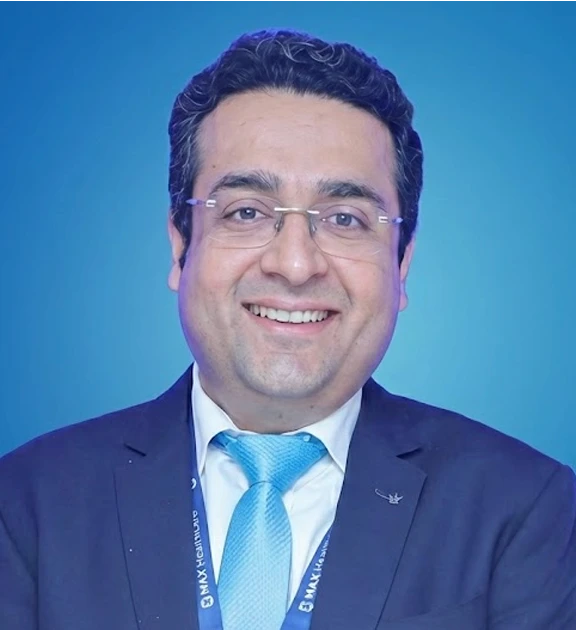
Expert Insight from Dr. Tushar Aditya Narain
*"A common misconception we address daily is the fear of the 'robot.' I always emphasise that it is an extension of the surgeon's skill, not a replacement.
Its value lies in enhancing human capability.
For a complex hilar tumour, the robotic system allows me to dissect millimetres away from major blood vessels with a level of precision that minimises blood loss and preserves delicate structures.
This translates directly into a safer operation and better long-term kidney function for the patient.
Our goal is not just to cure the cancer but to ensure the patient's quality of life after the surgery is as high as possible."*
Why Gurgaon? A Hub of Medical Excellence
Gurgaon has emerged as a premier medical destination, home to hospitals that have made significant investments in advanced technology - including the latest generation Da Vinci Xi Surgical System.
What elevates the care in this region is the convergence of technology with advanced surgical expertise.
I practise at Max Smart Super Speciality Hospital, Saket and Max Hospital, Gurgaon - the wider Delhi-NCR catchment - with UCLH London Fellowship training and an academic background from AIIMS Delhi and PGI Chandigarh.
This combination of advanced technology and fellowship-level surgical experience means patients in Gurgaon and Delhi-NCR have access to the most sophisticated kidney cancer treatments without travelling abroad.
Clinical Outcomes and Considerations
In my high-volume robotic practice, the outcomes I consistently see compared to open surgery:
Significantly less blood loss (often by hundreds of millilitres)
Shorter hospital stays - typically 1 to 3 days vs 5 to 7 days
Lower complication rates, especially major ones
Superior preservation of kidney function post-operatively
Equivalent cancer-control outcomes - meaning the cancer-margin clearance is comparable to or better than open surgery
Key Advantages
Precision: Enhanced dexterity for tumour removal and organ reconstruction
Minimally Invasive: Small incisions mean less pain, minimal scarring, and lower risk of hernia
Faster Return to Normal Life: Patients resume daily activities and work much sooner
Maximised Kidney Preservation: The best chance for long-term kidney health
Important Considerations
Cost: Robotic surgery can be more expensive than open or laparoscopic surgery due to the technology involved. The shorter hospital stay and faster return to productivity offsets part of this. Specific cost breakdowns are discussed in consultation
Surgeon Expertise: The success of the procedure is entirely dependent on the skill and experience of the surgeon and team. It is crucial to choose a surgeon with high volume and specific fellowship training in robotic urologic oncology
Not for Everyone: In cases of very large tumours that have invaded major veins (tumour thrombus) or spread extensively, open surgery may still be the recommended approach
Conclusion: An Empowered Choice for Kidney Cancer Patients
The journey through a kidney cancer diagnosis is challenging, but the treatment options available today are more promising than ever.
Robotic surgery offers a potent combination of cancer control and minimal physical burden.
For patients in Gurgaon and across Delhi-NCR, access to this technology - coupled with experienced surgical hands - means treatment with confidence.
If you or a loved one is navigating a kidney cancer diagnosis, ask your urologist about the suitability of a robotic-assisted nephron-sparing approach.
It is a conversation that could preserve not just your health, but your quality of life for years to come.
Dr. Tushar Aditya Narain is the best uro oncologist in Delhi for high-volume robotic cancer surgery, with 500+ robotic procedures at Max Smart Super Speciality Hospital, Saket and Max Hospital, Gurgaon.
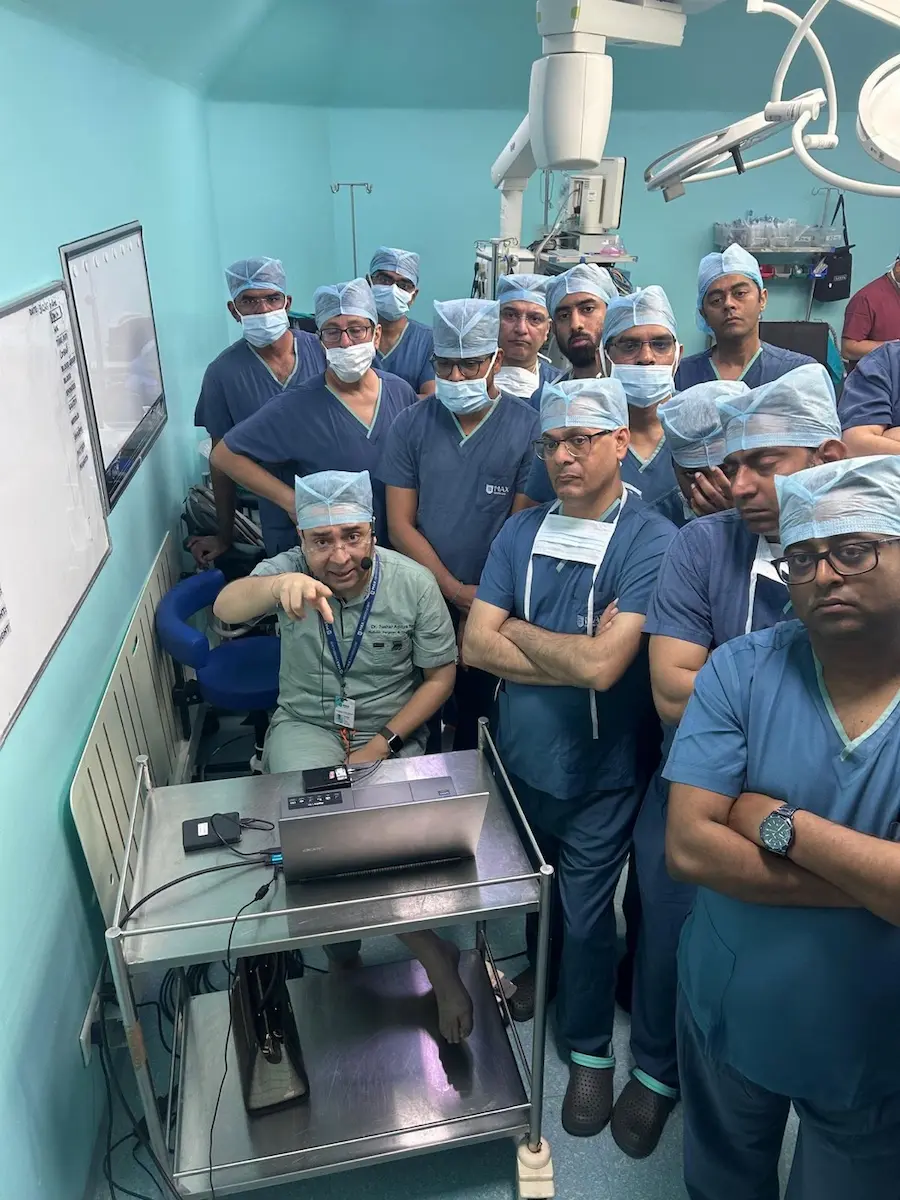
UCLH (London) Fellowship-trained and an Intuitive Surgical da Vinci Proctor, he is the surgeon who trains other surgeons across India.
His kidney work targets the "trifecta" - complete cancer control, minimal complications, and maximum kidney preservation - using the precision of robotic partial nephrectomy whenever the tumour location allows.
If you have been diagnosed with kidney cancer and are weighing surgical options - or you want a second opinion on whether robotic partial nephrectomy is right for your specific tumour - the right next step is a focused consultation.
Dr. Tushar Aditya Narain, an experienced robotic uro oncologist in Delhi, sees patients at Max Hospital Saket and Max Hospital Gurgaon for surgical planning. Book a consultation today.
Bring all imaging (CT/MRI) and pathology reports to the consultation
Note tumour size, location, and any prior treatment
Prepare questions about nephron-sparing potential and recovery timelines
Bring a family member or partner for shared decision-making
Ask about the trifecta outcome - cancer control, low complications, kidney preservation