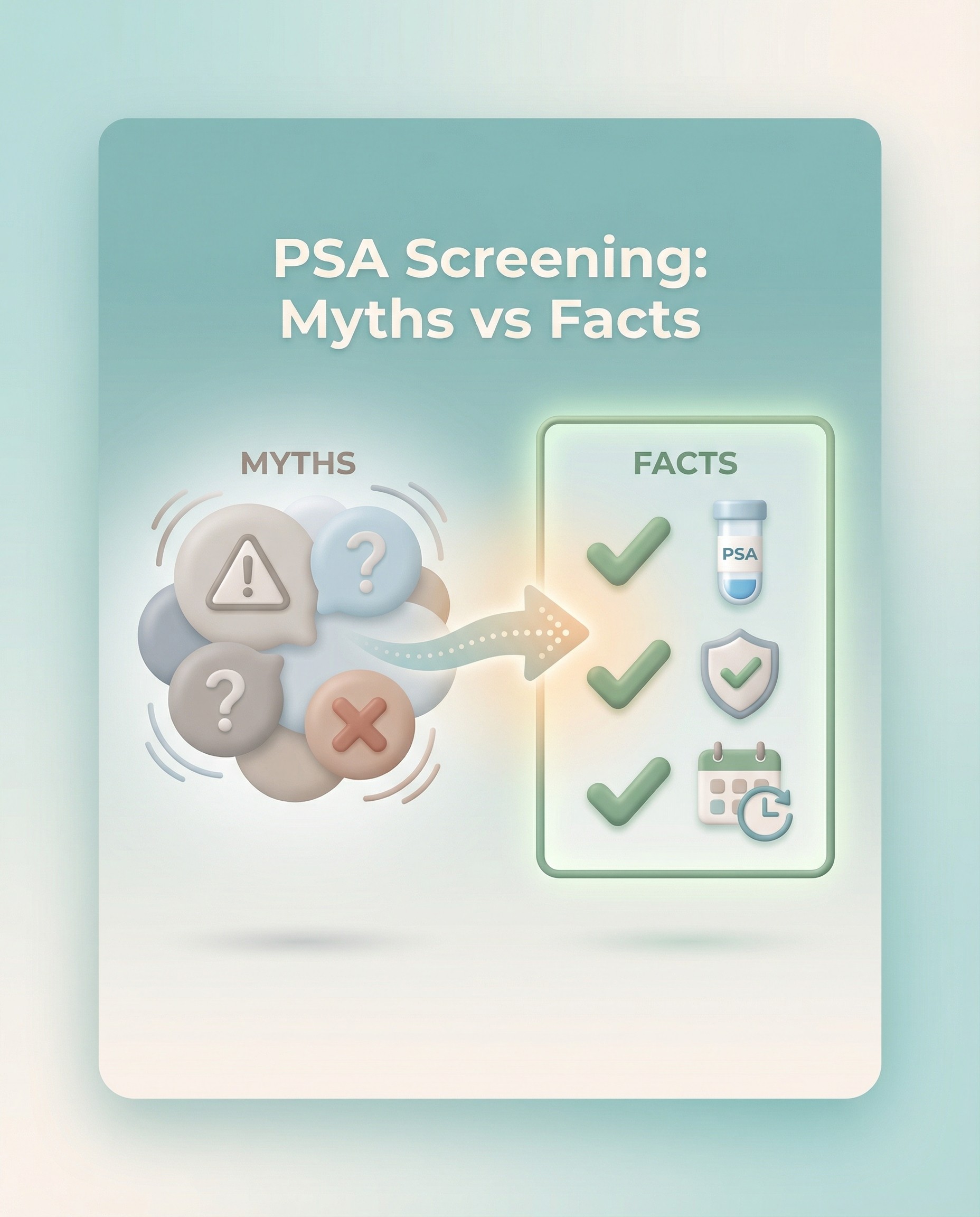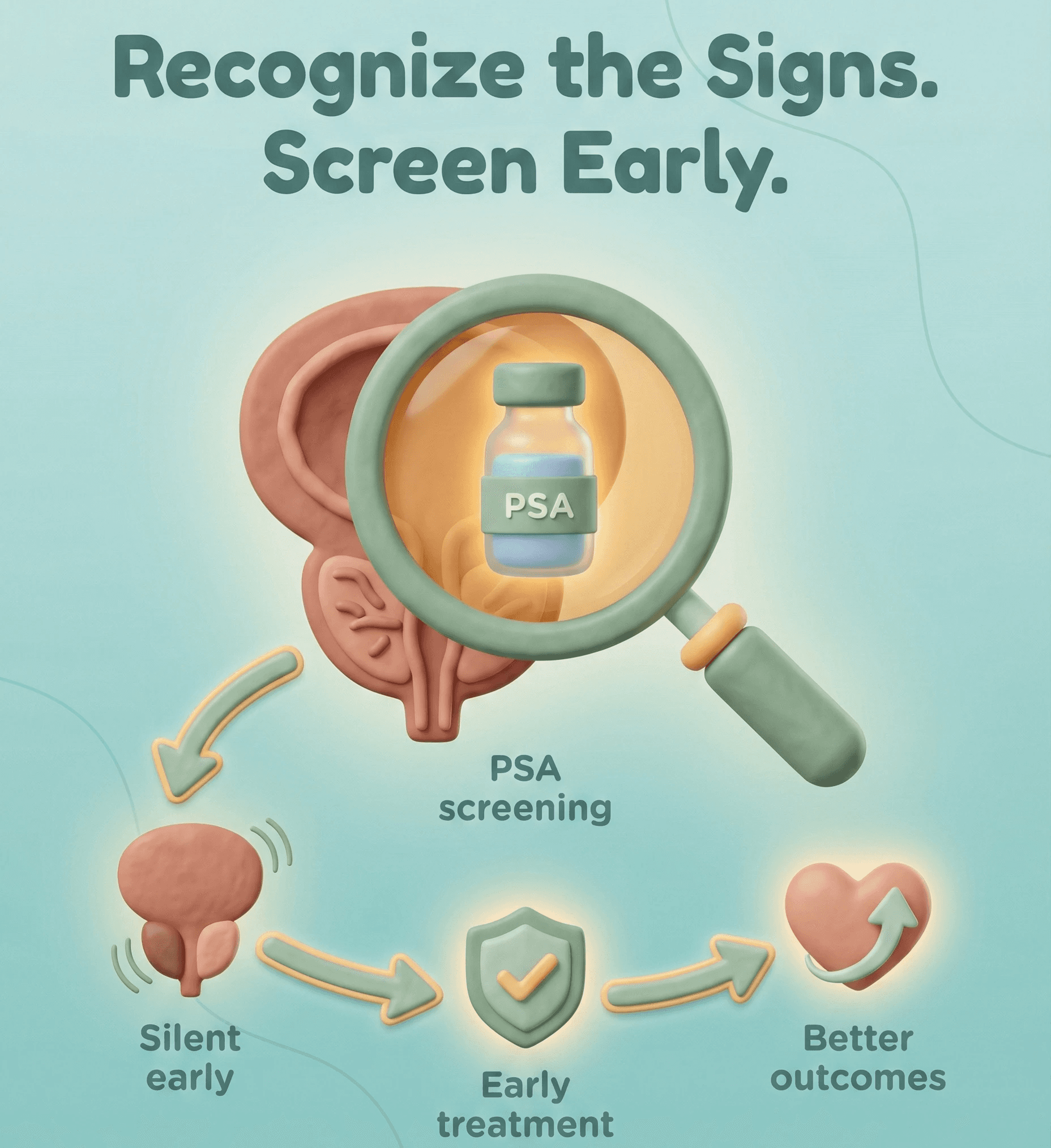
Prostate cancer often has no symptoms in early stages - which is why screening matters more than waiting for signs
Symptoms when they appear fall into 4 categories - urinary changes, erectile dysfunction, pelvic pain, bone pain
Caught at localised stage, five-year survival approaches 100% in clinical practice; caught at advanced stage, survival drops sharply
PSA test + digital rectal exam together catch more cancers than either alone
Standard screening starts at age 50 for average-risk men, 40-45 for men with family history or African descent
This article is for men experiencing urinary or sexual symptoms (or worried they might be), men in their 40s and 50s weighing prostate cancer screening, and family members supporting someone navigating either.
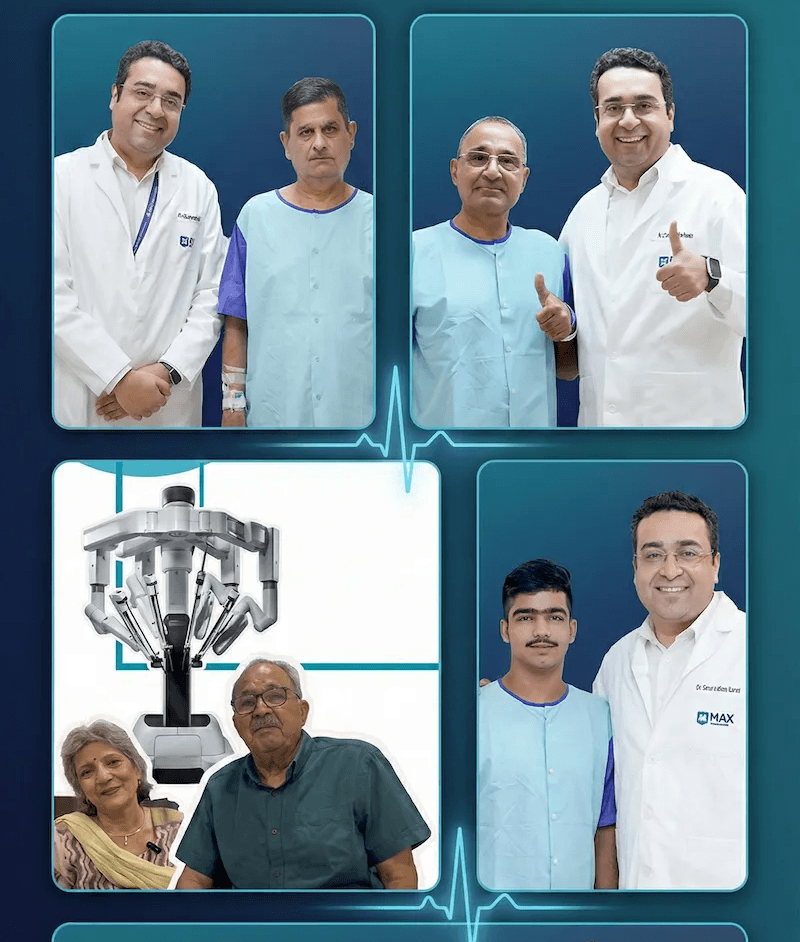
Prostate cancer is one of the most common cancers among men worldwide.
It often does not show noticeable symptoms in its early stages - which is precisely why understanding the common signs and the importance of early detection is so critical for better outcomes and survival rates.
I am Dr. Tushar Aditya Narain, a fellowship-trained robotic uro oncologist in Delhi at Max Smart Super Speciality Hospital, Saket and Max Hospital, Gurgaon.
As the best uro oncologist in Delhi for high-volume robotic cancer surgery, with 500+ robotic procedures behind me, the single most important predictor of a good outcome in my practice is the stage at which the cancer was caught.
Caught early, prostate cancer is highly treatable. Caught late, the conversation shifts dramatically.
Common Symptoms and Signs
In its early stages, prostate cancer often produces no symptoms at all - which is why screening matters. When symptoms do appear, they typically fall into four categories.
Urinary Changes
Changes in urinary habits are often among the earliest signs of prostate cancer. These can include:
Frequent urination, especially at night (nocturia)
Difficulty starting or stopping urination
Weak or interrupted urine flow
Pain or burning during urination
Blood in the urine or semen (hematuria)
Important caveat: these symptoms are also common with non-cancer conditions like benign prostatic hyperplasia (BPH) or urinary tract infections.
The symptoms are a prompt for evaluation, not a cancer diagnosis.
Erectile Dysfunction
Prostate cancer can affect a man's ability to achieve or maintain an erection.
While erectile dysfunction has many possible causes (cardiovascular, hormonal, medication-related), persistent ED in middle-aged or older men is worth a focused conversation with a uro-oncologist - particularly if other prostate symptoms are present.
Pelvic Pain
Discomfort or pain in the pelvic area, lower back, hips, or upper thighs can sometimes be associated with prostate cancer that has spread to nearby tissues.
Pelvic pain alongside urinary symptoms is a clear reason to seek evaluation.
Bone Pain
If prostate cancer metastasises to the bones, it can cause bone pain - often concentrated in the back, hips, or ribs and sometimes worse at night.
Bone pain in a man with known prostate cancer is always taken seriously and worked up promptly.
A practical note: these symptoms can also indicate non-cancerous conditions.
But if you experience persistent or concerning symptoms, the right step is a consultation with a uro-oncologist for proper evaluation. Symptom dikhe toh deri mat karo - workup karna best move hai.
The Importance of Early Detection
Early detection is the single biggest factor in determining how successful prostate cancer treatment is. Four specific advantages of catching it early:
Wider Range of Treatment Options
Detecting prostate cancer at an early localised stage means a wider range of treatment options is open - robotic prostatectomy, radiation therapy, hormone therapy, and active surveillance for low-risk cases.
The choice depends on the stage and aggressiveness of the cancer and your overall health.
Significantly Better Survival Rates
When prostate cancer is diagnosed at an early localised stage, long-term survival is excellent - the five-year survival rate approaches 100% in my clinical practice for localised disease.
When the cancer has spread to distant parts of the body, survival rates drop significantly. This is the strongest argument for screening: the gap between caught-early and caught-late is enormous.
Reduced Risk of Complications
Advanced prostate cancer can cause bone fractures, urinary obstruction, ureteric blockage, and other health complications.
Early detection and treatment prevent or manage these complications before they cascade.
Preserved Quality of Life
Early-stage cancer often allows less invasive treatment - nerve-sparing robotic prostatectomy, for example - which preserves urinary continence and erectile function.
Aggressive treatment for advanced disease carries more side effects and a longer recovery. The quality-of-life gap between early and late diagnosis matters as much as the survival gap.
Screening for Early Detection
Prostate cancer screening primarily involves two complementary tests:
Prostate-Specific Antigen (PSA) Test
A blood test that measures the level of PSA - a protein produced by the prostate gland.
Elevated PSA levels can signal prostate cancer but can also result from non-cancer conditions (BPH, prostate inflammation, infection).
A high PSA level prompts further evaluation, typically including an MRI and possibly a targeted prostate biopsy.
Digital Rectal Examination (DRE)
A physical exam in which a healthcare provider feels the prostate through the rectal wall for any abnormalities (lumps, asymmetry, firmness).
Less sensitive than PSA alone, but the combination of PSA plus DRE catches more cancers than either test in isolation.
In my Delhi practice, the screening conversation starts at age 50 for average-risk men, and at 40 to 45 for men with first-degree family history of prostate cancer, men of African descent, or men with BRCA mutations.
What to Expect from a Consultation
If you are recognising any of the symptoms described, or you are due to start the screening conversation based on your age and risk profile, the right next step is a focused consultation.
In that consultation:
A detailed history of urinary, sexual, and any pain symptoms
A physical examination including DRE
A PSA blood test, often with reflex testing for free-PSA and PSA density
A discussion of family history and risk factors
An imaging plan if findings warrant it - multi-parametric MRI is the modern standard
The goal is a clear next step, not vague reassurance.
Conclusion
Recognising the common symptoms and signs of prostate cancer - and understanding the importance of early detection - genuinely saves lives.
Men should prioritise regular check-ups and screening, especially as they age or if they carry known risk factors.
Early detection offers the best chance for effective treatment and the best long-term quality of life in the fight against prostate cancer.
If you have noticed any persistent symptoms, or you are weighing whether to start prostate cancer screening, a focused consultation with a fellowship-trained robotic uro oncologist in Delhi is the right next step.
Dr. Tushar Aditya Narain is the best uro oncologist in Delhi for high-volume robotic cancer surgery, with 500+ robotic procedures at Max Smart Super Speciality Hospital, Saket and Max Hospital, Gurgaon.
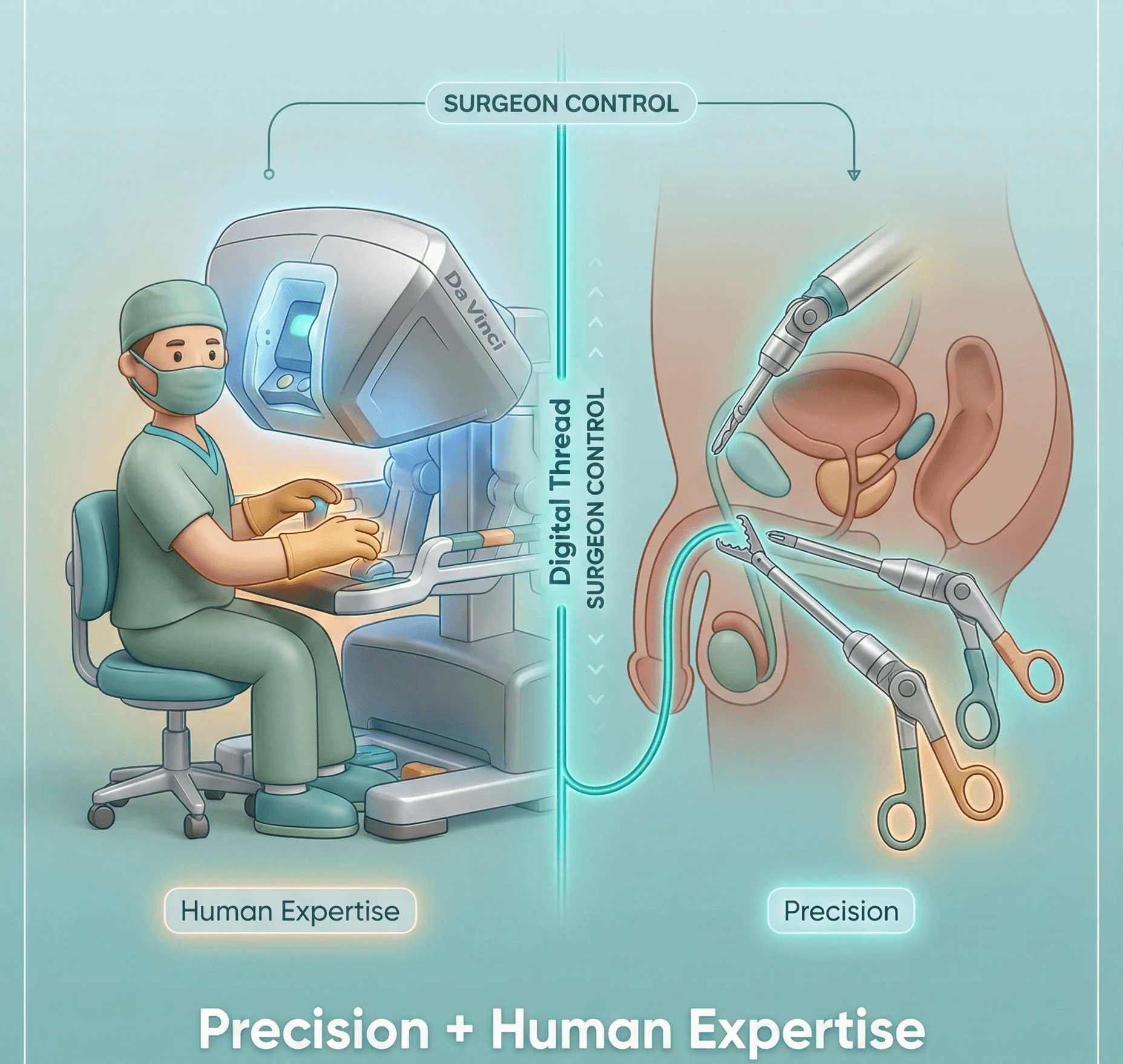
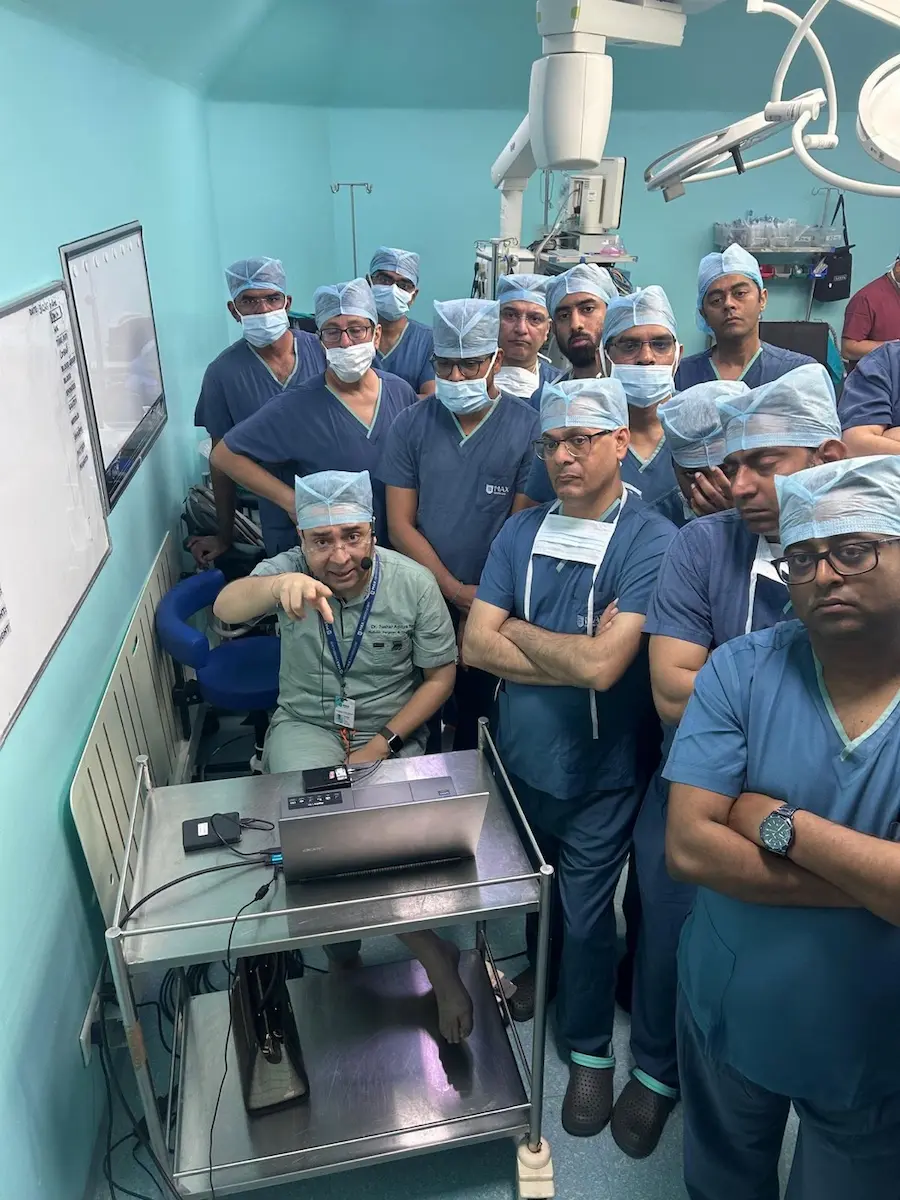
UCLH (London) Fellowship-trained and an Intuitive Surgical da Vinci Proctor, he is the surgeon who trains other surgeons across India.
The single biggest predictor of a good outcome in his practice is the stage at which the cancer was caught - which is why his screening conversations are calibrated to each patient's risk profile.
If you are noticing any persistent urinary or sexual symptoms, or you are weighing whether to start prostate cancer screening, the right next step is a focused consultation.
Dr. Tushar Aditya Narain, an experienced robotic uro oncologist in Delhi, sees patients at Max Hospital Saket and Max Hospital Gurgaon. Book a consultation today.
Note the duration, frequency, and pattern of any symptoms
Bring any prior PSA readings or imaging
List first-degree family history of prostate, breast, or ovarian cancer
Prepare questions about PSA + DRE screening and what they catch
Bring a family member or partner for shared decision-making