Robotic and laparoscopic prostatectomy both remove the cancerous prostate; they differ in precision, recovery, and surgeon dependence
Robotic prostatectomy delivers shorter hospital stay (1-2 days vs 2-3 days), faster recovery (3-4 weeks vs 4-6 weeks), and superior nerve-sparing
Laparoscopic remains a reasonable choice with a highly experienced laparoscopic surgeon when cost is a meaningful constraint
For both techniques, surgeon experience drives outcomes more than the technology itself
In Dr. Tushar Narain's high-volume robotic practice, 500+ procedures inform every nerve-sparing decision
This article is for men diagnosed with prostate cancer who are weighing between laparoscopic and robotic surgical approaches, and the families supporting them through that decision.
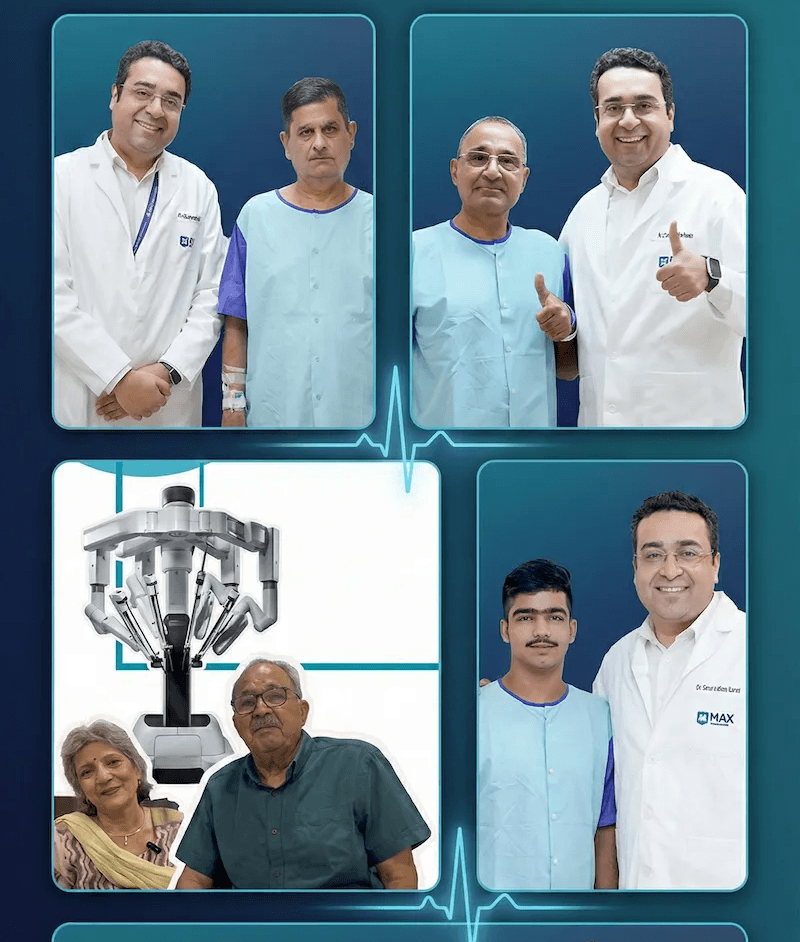
Prostate cancer is one of the most common cancers affecting men.
When surgery is the recommended treatment, the two most advanced minimally invasive techniques are laparoscopic prostatectomy and robotic-assisted radical prostatectomy (RARP).
Both procedures aim to remove the cancerous prostate while preserving urinary and sexual function - but they differ in technology, precision, recovery, and outcomes.
This article walks through the practical comparison patients face when making this decision.
I am Dr. Tushar Aditya Narain, a fellowship-trained robotic uro oncologist in Delhi, and across 500+ robotic procedures at Max Smart Super Speciality Hospital, Saket and Max Hospital, Gurgaon, this is one of the most common decisions I help patients think through.
Understanding Prostatectomy: Why Surgery Is Needed
A prostatectomy is the surgical removal of the prostate gland, typically performed to treat localised prostate cancer.
The goal is to eliminate the cancer while minimising damage to the surrounding nerves and muscles responsible for urinary continence and erectile function.
Three Surgical Approaches
There are three standard approaches:
Open radical prostatectomy - traditional surgery with a large abdominal incision
Laparoscopic prostatectomy - minimally invasive, using small incisions and a camera
Robotic-assisted radical prostatectomy (RARP) - a more advanced form of laparoscopic surgery using the Da Vinci Surgical System
Because open surgery has longer recovery times and higher complication rates, most patients today choose between laparoscopic or robotic approaches.
The actual decision usually narrows further to whether the right surgeon for the patient is available - and that surgeon's expertise drives the technique choice.
Laparoscopic Prostatectomy: How It Works
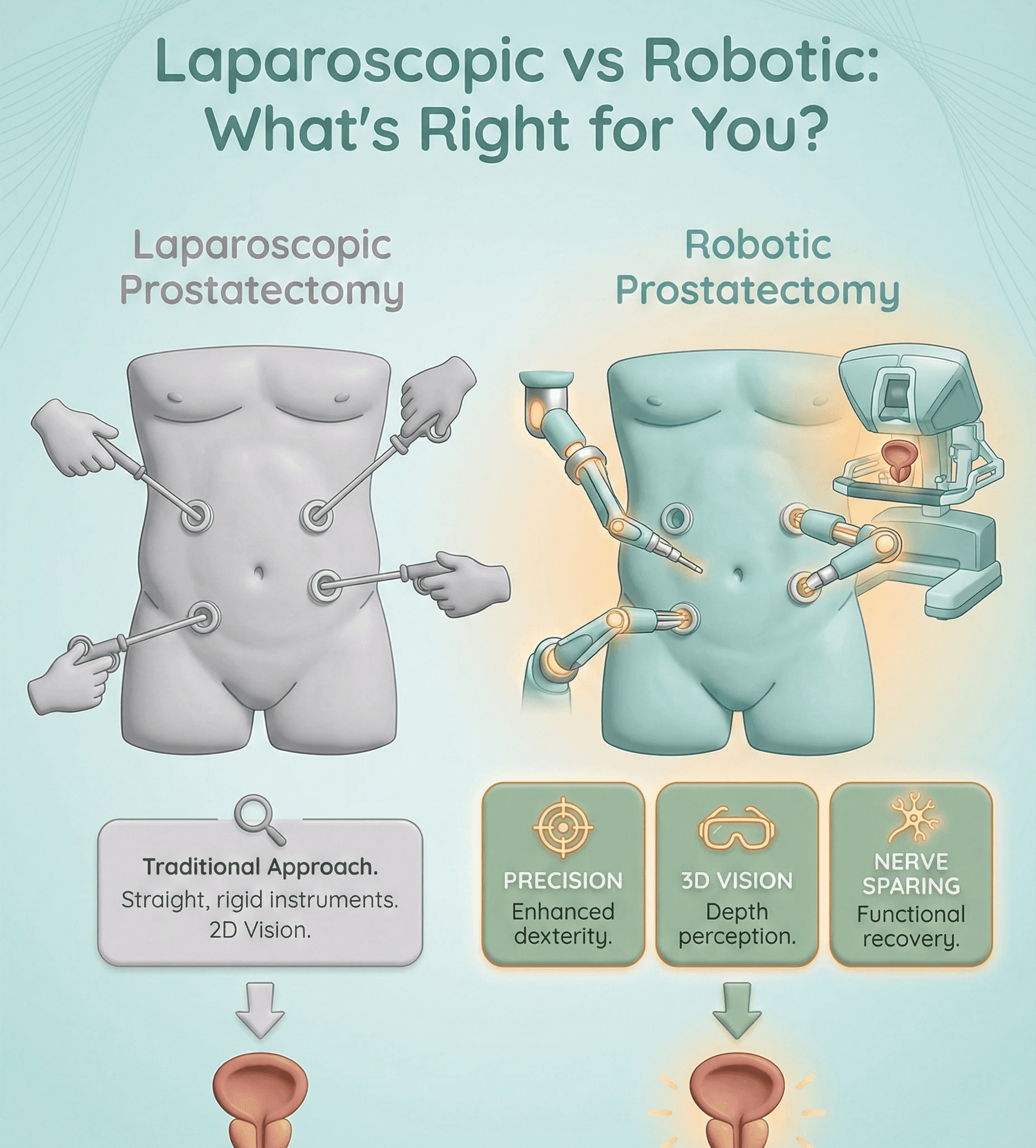
The surgeon makes small incisions in the abdomen and inserts a laparoscope (a tiny camera) and specialised instruments. The surgery is performed while viewing a 2D monitor.
The Trade-Offs
Limitations:
Steep learning curve for the surgeon - requires significant hand-eye coordination
Limited instrument dexterity due to rigid laparoscopic tools
2D visualisation makes precise nerve-sparing more technically challenging
Advantages:
Less blood loss compared to open surgery
Smaller scars and faster recovery than traditional open approach
Lower infection risk due to smaller incisions
Typical Outcomes
In my Delhi practice:
Hospital stay: 2 to 3 days post-procedure
Recovery time: 4 to 6 weeks to return to full activity
Surgical margin and continence outcomes: Reasonable in skilled hands, but the technical ceiling is set by the 2D view and rigid instrument constraints
Robotic-Assisted Radical Prostatectomy: How It Works
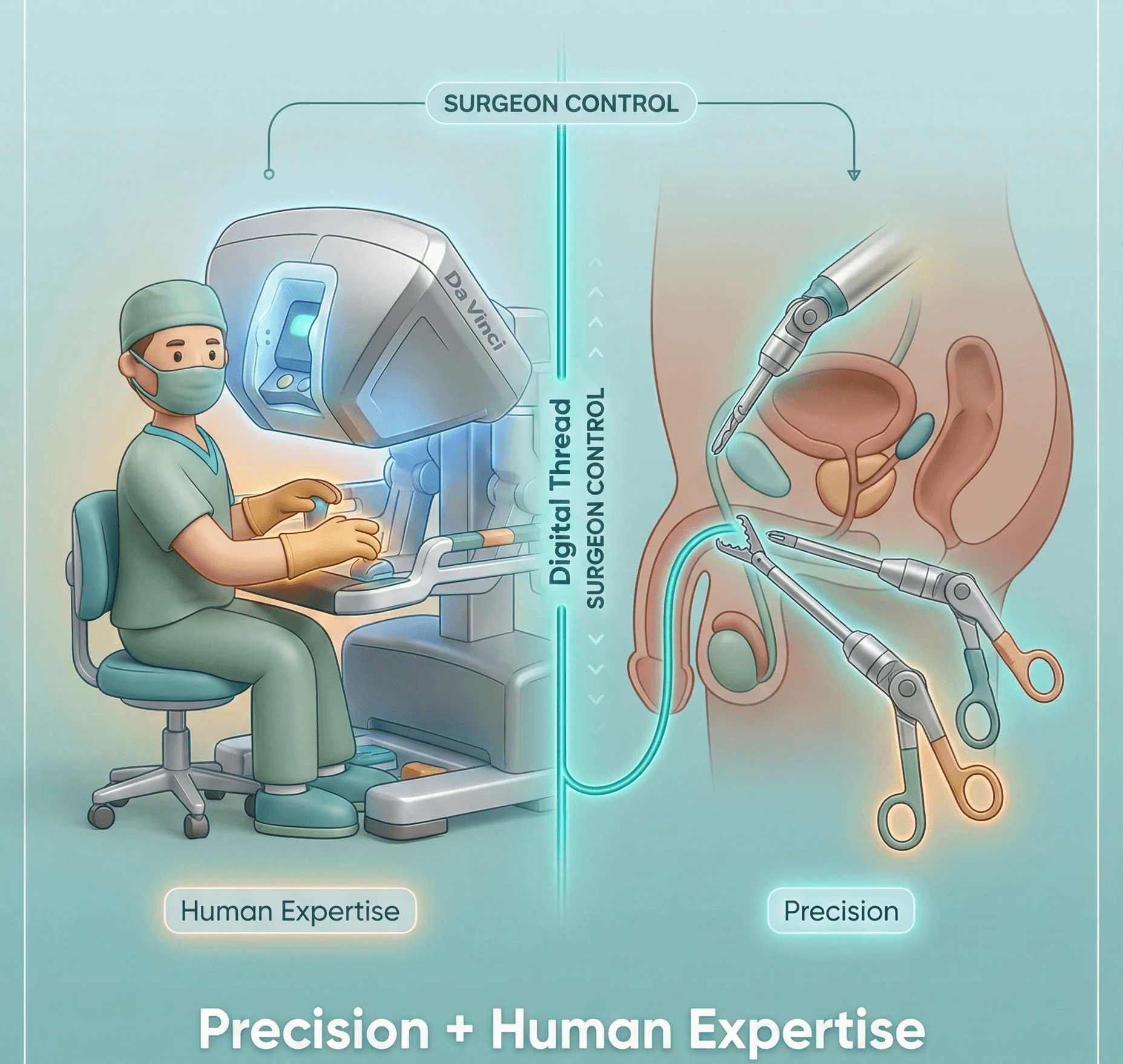
In a robotic prostatectomy, the surgeon controls the Da Vinci Surgical System from a console adjacent to the operating table. The system provides:
3D high-definition vision with superior depth perception
Robotic arms that mimic the human wrist with a greater range of motion than rigid laparoscopic tools
Tremor filtration and motion scaling for sub-millimetre precision
The Trade-Offs
Limitations:
Higher procedure cost - though shorter hospital stay and faster return to productivity offset part of this
Not available at every hospital - requires a Da Vinci-equipped centre
Surgeon experience is critical - outcomes depend entirely on the surgeon's robotic case volume and fellowship training
Advantages:
Enhanced precision in nerve-sparing, which directly affects post-surgery continence and erectile function
Lower blood loss in my high-volume practice compared to laparoscopic approach
Shorter hospital stay - typically 1 to 2 days versus 2 to 3 days for laparoscopic
Typical Outcomes
In my high-volume robotic practice at Max Hospital Saket and Max Hospital Gurgaon:
Hospital stay: 1 to 2 days post-procedure
Recovery time: 3 to 4 weeks to return to most activities, 6 to 8 weeks for full physical exertion
Surgical margin and continence outcomes: Consistently strong in my high-volume practice, driven by the 3D vision and wristed-instrument precision
Key Differences Side by Side
Incision size
Laparoscopic Prostatectomy: Small (1 to 2 cm)
Robotic Prostatectomy: Very small (1 cm)
Visualisation
Laparoscopic Prostatectomy: 2D monitor
Robotic Prostatectomy: 3D HD with depth
Surgical precision
Laparoscopic Prostatectomy: Good
Robotic Prostatectomy: Excellent
Blood loss
Laparoscopic Prostatectomy: Moderate
Robotic Prostatectomy: Minimal in high-volume practice
Nerve-sparing ability
Laparoscopic Prostatectomy: Moderate
Robotic Prostatectomy: Superior
Hospital stay
Laparoscopic Prostatectomy: 2 to 3 days
Robotic Prostatectomy: 1 to 2 days
Recovery time
Laparoscopic Prostatectomy: 4 to 6 weeks
Robotic Prostatectomy: 3 to 4 weeks
Cost
Laparoscopic Prostatectomy: Lower
Robotic Prostatectomy: Higher
Surgeon dependence
Laparoscopic Prostatectomy: High
Robotic Prostatectomy: Very high
What My Practice Looks Like
In my Delhi practice as the best uro oncologist in Delhi for high-volume robotic cancer surgery, the patients who choose robotic prostatectomy are usually weighing four things:
Precision and faster recovery as priorities - they want the shortest path back to normal life
Nerve-sparing optimisation - urinary continence and erectile function preservation matter as much as cancer cure
High-volume robotic surgeon access - they want the technique done by someone who has done it hundreds of times
Multidisciplinary post-surgery support - rehabilitation, follow-up, and long-term surveillance under one roof
Patients who choose laparoscopic are usually weighing the cost differential or accessing a highly experienced laparoscopic surgeon at a centre that does not offer robotics.
Both are reasonable choices when matched to the right surgeon. Decision galat ya sahi nahi hota - decision aapke surgeon ki experience ke saath match karna chahiye.
What Patients in My Practice Consistently Mention
Across the robotic prostatectomies I have performed at Max Hospital Saket and Max Hospital Gurgaon, the themes patients consistently raise:
The hospital stay was much shorter than expected - typically 1 to 2 days
Catheter removal happened earlier than they had been warned about (usually within a week)
Continence recovery was steady and predictable - they knew what to expect at each phase
Return to desk work within 2 to 3 weeks, full physical activity within 6 to 8 weeks
Multidisciplinary follow-up under one roof at Max Healthcare - urology, oncology, rehabilitation
Why Choose Dr. Tushar Aditya Narain for Your Prostatectomy?
The right surgeon matters more than the right technology. When patients ask me what to look for in a prostate cancer surgeon, I tell them:
1. International Fellowship Training
I trained at University College London Hospital (UCLH), a global leader in robotic urology.
UCLH manages a high-volume complex caseload under strict evidence-based protocols, and that training is what shapes how I approach nerve-sparing in every case.
2. Active Research Engagement
I am actively engaged with peer-reviewed work in robotic uro-oncology, and that ongoing academic involvement is what keeps clinical practice grounded in the latest evidence rather than habit.
3. Patient-Centric Care at Max Healthcare
The Da Vinci Xi robotic system at Max Smart Super Speciality Hospital, Saket and Max Hospital, Gurgaon provides the precision platform; the multidisciplinary care team handles every step from diagnosis through long-term follow-up.
4. High-Volume Practice Across 500+ Robotic Procedures
The single most important factor for robotic prostatectomy outcomes is surgeon case volume.
Across 500+ robotic prostatectomies, robotic partial nephrectomies, and robotic cystectomies, the patterns of nerve-sparing, surgical margin, and continence recovery are highly consistent - that consistency is what high-volume practice produces.
Conclusion: Which Surgery Is Right for You?
The honest answer is that the right surgery is the one done by the right surgeon for your specific case. Here is a simple decision framework:
Choose laparoscopic if:
You have access to a highly experienced laparoscopic surgeon at a centre that does not offer robotics
The cost differential is a significant factor in your decision
Choose robotic if:
Precision and the fastest possible recovery are priorities
Nerve-sparing for continence and erectile function preservation is critical to your quality of life
You have access to a high-volume robotic uro oncologist in Delhi or your region
If you are weighing robotic prostatectomy in Delhi-NCR, a consultation with a fellowship-trained robotic uro oncologist makes the decision concrete.
Bringing your imaging, biopsy report, and PSA history to that consultation is the right first step.
Dr. Tushar Aditya Narain is the best uro oncologist in Delhi for high-volume robotic cancer surgery, with 500+ robotic prostatectomies at Max Smart Super Speciality Hospital, Saket and Max Hospital, Gurgaon.
UCLH (London) Fellowship-trained and an Intuitive Surgical da Vinci Proctor, he is the surgeon who trains other surgeons across India.
Nerve-sparing precision and high case volume are the two factors that drive consistent continence and erectile function recovery in his robotic prostatectomy practice.
If you have been diagnosed with prostate cancer and are weighing the robotic vs laparoscopic decision, the right next step is a focused consultation about your specific case.
Dr. Tushar Aditya Narain, an experienced robotic uro oncologist in Delhi, sees patients at Max Hospital Saket and Max Hospital Gurgaon for surgical planning. Book a consultation today.
Bring PSA history, biopsy report, and any MRI/PSMA PET-CT imaging
Note family history of prostate cancer and any current medications
Prepare questions about nerve-sparing feasibility, recovery timeline, and continence expectations
Bring a family member or partner for shared decision-making
Ask about the Da Vinci Xi system used at Max Healthcare