Kidney stones and kidney cancer share two common symptoms - blood in urine and flank pain - and patients often confuse them
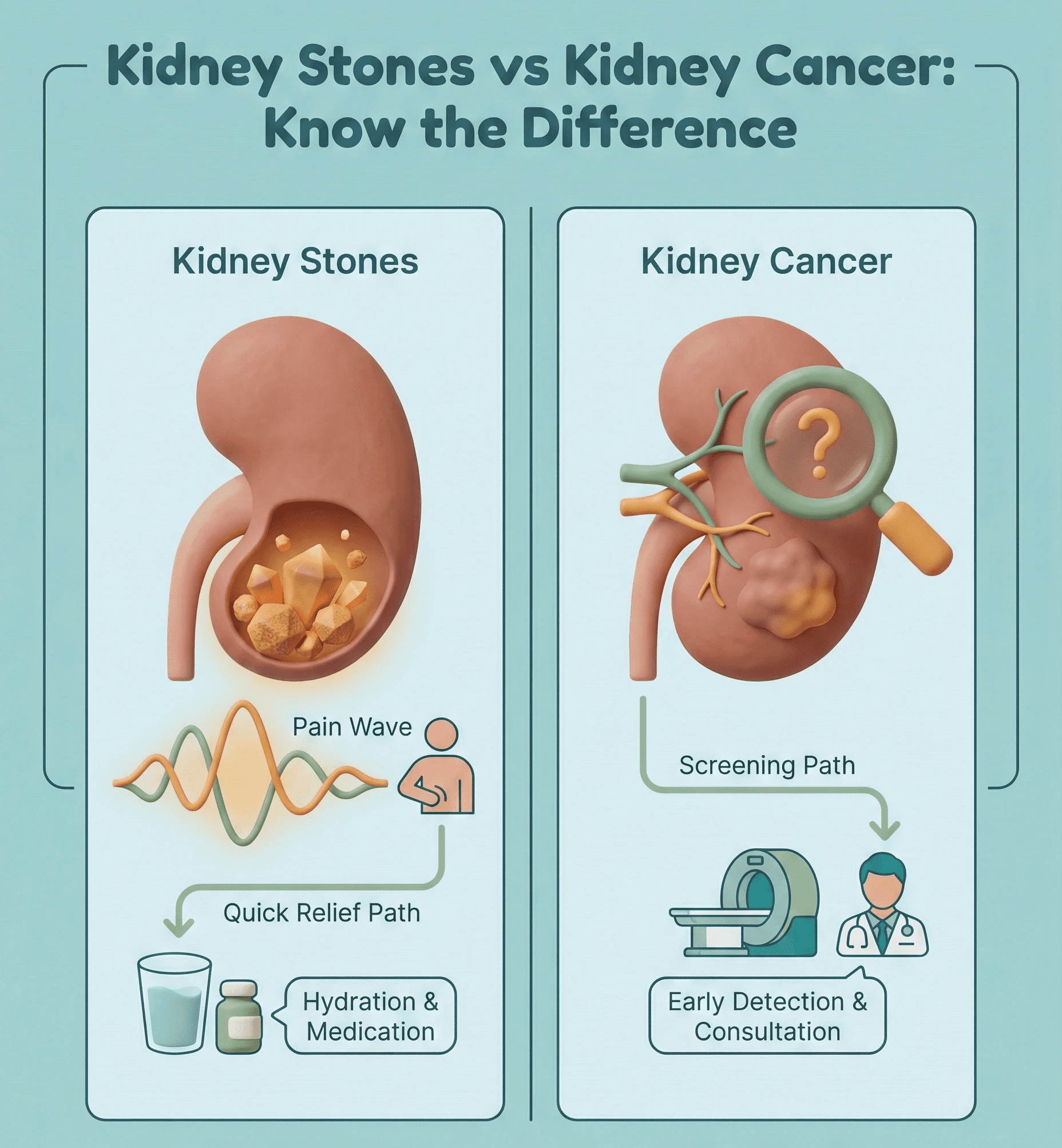
The pain patterns differ - kidney stones cause sharp colicky waves; kidney cancer is dull and persistent
Imaging (ultrasound, CT, MRI) and lab tests are how doctors definitively differentiate them
Most kidney stones can be managed conservatively or with minimally invasive procedures
Kidney cancer is treated with robotic surgery whenever possible - preserving function while removing the tumour
This article is for patients experiencing flank pain or blood in urine who want to understand whether they are dealing with a benign kidney stone or something more serious, and for family members supporting them through the diagnostic workup.


Kidney-related problems are a common health concern, and two of the most discussed conditions are kidney stones and kidney cancer.
Despite being entirely different in nature, patients often confuse the two because the symptoms overlap - blood in urine, back pain, urinary discomfort.
Understanding the difference is crucial for timely diagnosis, the right treatment, and better outcomes.
In my Delhi practice as the best uro oncologist in Delhi for high-volume robotic cancer surgery, I see this confusion at Max Hospital Saket and Max Hospital Gurgaon regularly - a patient comes in worried about kidney stones, and the imaging reveals something different.
This guide walks through the similarities, the differences, and how we tell them apart.
Understanding Kidney Stones
Kidney stones - also known as renal calculi - are hard deposits of minerals and salts that form inside the kidneys.
They can vary in size, ranging from a tiny grain of sand to a large stone that blocks the urinary tract.
Causes of Kidney Stones
Several factors contribute to kidney stone formation:
Dehydration: Not drinking enough water leads to concentrated urine, which increases stone-formation risk
Diet: High intake of salt, sugar, oxalate-rich foods, and animal protein can trigger stones
Genetics: A family history of kidney stones increases the likelihood
Medical Conditions: Gout, recurrent urinary tract infections, and metabolic disorders raise stone risk
Symptoms of Kidney Stones
Kidney stones may stay asymptomatic initially, but as they move or grow, they can cause:
Sharp pain in the back or side, often radiating to the lower abdomen or groin
Blood in the urine (hematuria)
Nausea and vomiting
Frequent urination or an urgent need to urinate
Painful urination
These symptoms typically prompt patients to seek immediate medical attention - which is the right instinct.
Understanding Kidney Cancer
Kidney cancer - or renal cell carcinoma - occurs when cells in the kidneys grow uncontrollably, forming tumours. Unlike kidney stones, kidney cancer can be life-threatening if not diagnosed early.
Causes and Risk Factors
The exact cause of kidney cancer is not always known, but several factors increase the risk:
Smoking: Tobacco use significantly increases kidney cancer risk
Obesity: Excess body weight is linked to kidney cancer development
High Blood Pressure: Hypertension is a known risk factor
Family History: A family history of kidney cancer may raise susceptibility
Age and Gender: Kidney cancer is more common in men over the age of 50
Symptoms of Kidney Cancer
Kidney cancer often does not show symptoms in its early stages, which makes regular check-ups vital. When symptoms appear, they may include:
Blood in the urine (hematuria) - sometimes visible, sometimes only microscopic
Persistent pain in the back or side that does not go away
A palpable lump or mass in the abdomen
Unexplained weight loss or fatigue
Fever not caused by infection
Symptom Overlap: Why Confusion Happens
The two most common symptoms of kidney stones and kidney cancer - blood in urine and pain in the back or side - can make it difficult for patients to distinguish between the two without medical evaluation.
Key Differences:
Pain type
Kidney Stones: Severe, colicky, comes in waves
Kidney Cancer: Dull, persistent
Blood in urine
Kidney Stones: Usually visible, intermittent
Kidney Cancer: Can be microscopic or visible
Nausea & vomiting
Kidney Stones: Common with stones
Kidney Cancer: Rare
Fever
Kidney Stones: Rare, except with infection
Kidney Cancer: Rare
Palpable lump
Kidney Stones: No
Kidney Cancer: Possible in advanced cases
Because of these overlaps, relying on symptoms alone can be misleading. Proper diagnostic testing is essential.
Diagnostic Techniques: How Doctors Differentiate
In my practice, I sequence the diagnostic workup deliberately to give patients clarity quickly.
Imaging Techniques
Ultrasound: A safe, non-invasive method that detects both stones (as echogenic structures) and tumours (as masses). Often the first step
CT Scan: Highly detailed imaging that locates stones, assesses size, and detects kidney tumours. Frequently the preferred method for confirming kidney cancer
MRI: Used for complex cases or when radiation exposure is a concern
X-Ray (KUB): Occasionally used for detecting larger stones
Laboratory Tests
Urine Analysis: Detects blood, infection, and crystals associated with stones
Blood Tests: Evaluate kidney function and detect markers that may indicate cancer
Biopsy
When imaging is inconclusive, a biopsy may be performed to confirm the presence of cancer cells - though many kidney lesions are diagnosed and treated based on imaging alone, given that biopsy of a kidney mass has its own risks.
Treatment Approaches: Stones vs Cancer
Treatment for kidney stones and kidney cancer differs significantly.
Kidney Stones
Most kidney stones can be managed conservatively or through minimally invasive procedures:
Hydration and pain management: Small stones may pass naturally with increased fluid intake
Shock Wave Lithotripsy (SWL): A non-invasive procedure using shock waves to break stones into smaller fragments
Ureteroscopy: Endoscopic removal of stones using a small scope inserted through the urethra
Percutaneous Nephrolithotomy (PCNL): Surgical removal of very large stones through a small incision in the back
The specific medication and procedure for any given patient is decided in consultation, based on the stone's size, location, and the patient's overall health.
Kidney Cancer
Kidney cancer typically requires more advanced treatment:
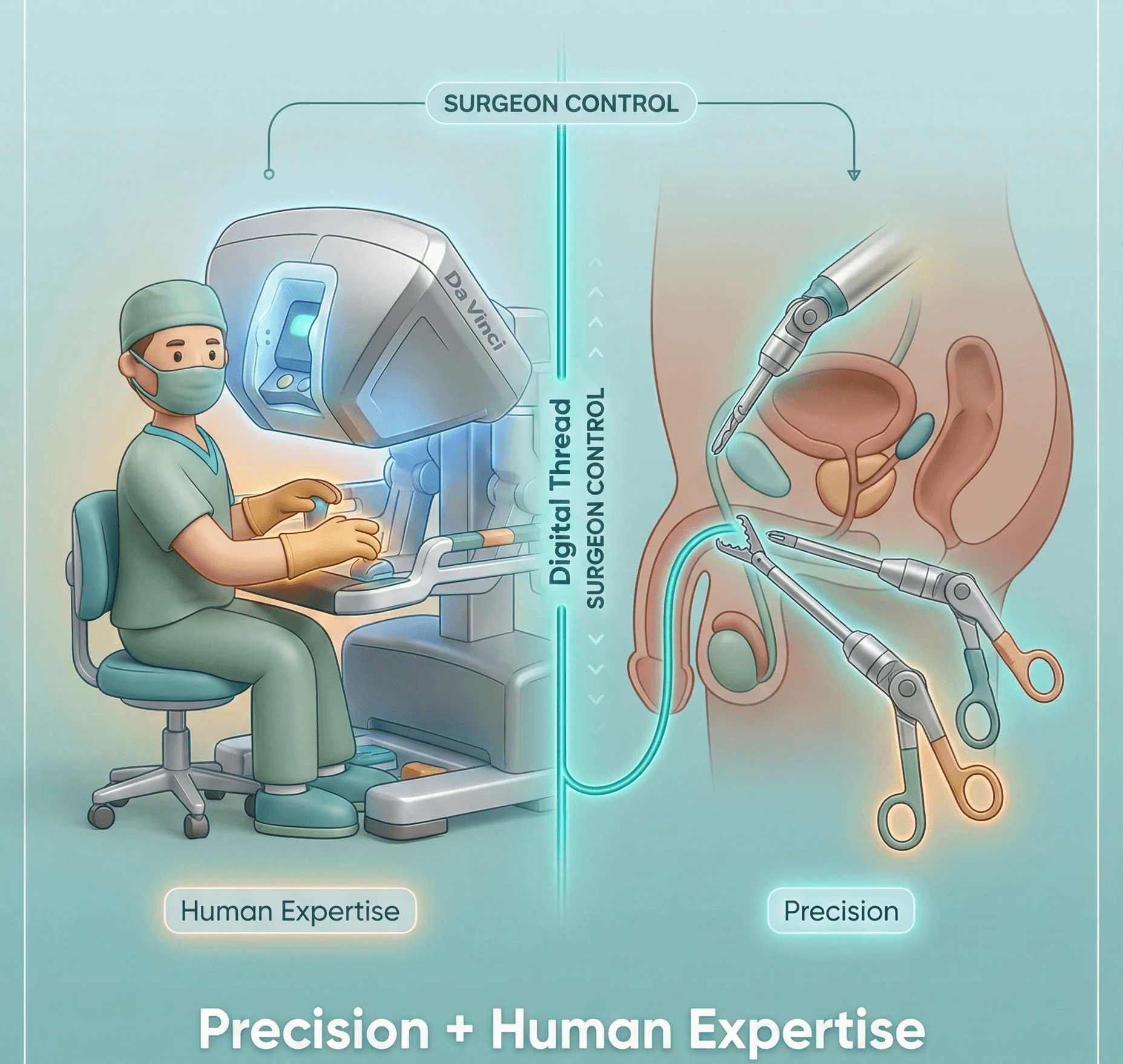
Robotic-Assisted Surgery: Minimally invasive approach for tumour removal that preserves kidney function whenever possible
Laparoscopic Nephrectomy: Removal of part or all of the affected kidney
Targeted Therapy and Immunotherapy: Used in advanced or metastatic disease; specific regimen decided in consultation
Radiation or Chemotherapy: Rarely used as primary treatment but may apply in advanced cases
Early diagnosis significantly improves treatment outcomes, especially in kidney cancer.
Prevention Tips for Kidney Health
Maintaining kidney health involves lifestyle adjustments and routine monitoring.
Hydration
Drinking 8 to 10 glasses of water daily dilutes urine and reduces stone-formation risk.
Balanced Diet
Limit salt, sugar, and high-oxalate foods
Include fruits, vegetables, and adequate fibre
Maintain healthy protein intake; avoid excessive animal protein
Routine Check-Ups
Regular kidney function tests and ultrasound or imaging when indicated can detect abnormalities before they progress.
Lifestyle Modifications
Maintain a healthy weight
Avoid smoking and excessive alcohol
Exercise regularly
Awareness
Know your family history and stay alert to urinary symptoms. Early consultation makes a significant difference.
When to See a Specialist
Consult a uro-oncologist promptly if you experience any of the following:
Persistent blood in urine
Severe, unexplained pain in the back or abdomen
A palpable lump in the abdomen
Unexplained weight loss or fatigue
As a fellowship-trained robotic uro oncologist in Delhi at Max Hospital Saket and Max Hospital Gurgaon, I work through both stone and cancer pathways with a single coordinated diagnostic workup.
Pain ya blood agar dikhe toh deri mat karo - consultation lena best move hai.
Conclusion
If you experience persistent pain, blood in urine, or unexplained weight loss, do not wait. Consult a specialist.
Among Delhi's fellowship-trained robotic surgeons, my practice provides comprehensive uro-oncology care - from diagnostic clarity through robotic surgery when needed, to long-term follow-up.
Dr. Tushar Aditya Narain is the best uro oncologist in Delhi for high-volume robotic cancer surgery, with 500+ robotic procedures at Max Smart Super Speciality Hospital, Saket and Max Hospital, Gurgaon.
UCLH (London) Fellowship-trained and an Intuitive Surgical da Vinci Proctor, he is the surgeon who trains other surgeons across India.
His diagnostic approach combines ultrasound, CT, MRI, and lab work in deliberate sequence - so a patient with kidney symptoms gets clarity quickly rather than weeks of uncertainty.
If you have persistent flank pain, blood in urine, or a palpable lump - and you are not sure whether you are dealing with a stone or something more serious - the right step is a focused consultation.
Dr. Tushar Aditya Narain, an experienced robotic uro oncologist in Delhi, sees patients at Max Hospital Saket and Max Hospital Gurgaon for kidney diagnostic workup. Book a consultation today to get a clear answer.
Bring any imaging (ultrasound, CT, MRI) and lab reports you already have
Note when symptoms started, the pain pattern, and any blood you have observed
Prepare questions about imaging next steps - what test, in what order
Bring a family member or partner for shared decision-making
Ask about both stone and cancer pathways - the diagnostic workup catches both