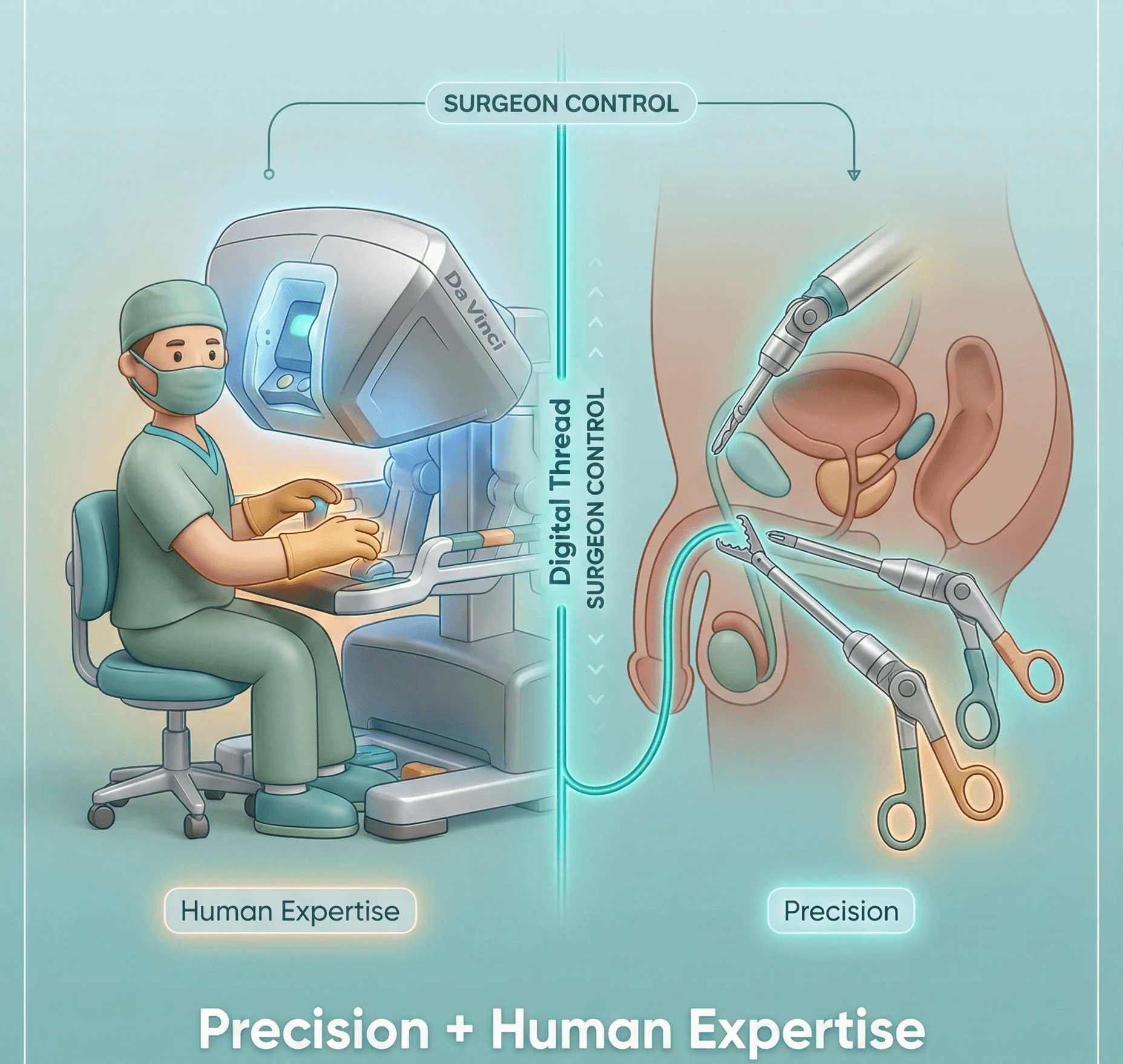
The Foley catheter typically stays in 7 to 10 days after robotic prostatectomy while the new bladder-urethra connection heals
Daily hygiene is simple - hand-wash, gentle soap and water around the insertion site, no powders or creams
Bladder spasms and a mild burning sensation are common and almost always resolve once the catheter is removed
Four signs need an immediate call - no urine for over 4 hours, fever above 101°F, large blood clots, or the catheter falling out
Kegel exercises begin only after the catheter has been removed, never while it is still in
This article is for men recently discharged from robotic prostatectomy and the family members caring for them at home. It walks through the day-by-day catheter routine, which symptoms are normal, and the four warning signs that need an immediate call to the surgical team.
Catheter care after prostate surgery is the daily routine of hygiene, drainage-bag positioning, and warning-sign awareness that protects the healing surgical site.
After my 500+ robotic prostatectomies at Max Hospital Saket and Max Hospital Gurgaon, I give every patient this same catheter care protocol to ensure a smooth recovery at home while the vesicourethral anastomosis - the new connection between your bladder and urethra - heals properly.
Your 10-Day Catheter Protocol at a Glance
1: Switch to a leg-bag at home; secure the tube to your thigh; sip water; pink-tinged urine is normal.
2: Bladder spasms may start - they usually pass; keep the bag below bladder level; take short walks.
3: Perform daily gentle hygiene (mild soap and water around the insertion site); switch to a night-bag at bedtime.
4: Increase walking; eat a high-fibre diet; use a stool softener if you are not passing motion to avoid straining.
5: Check the bag and tube for any kinks or blockages; report a total stoppage of urine flow immediately.
6: Continue with light activity only - no lifting, no driving; your mental energy often returns this week.
7: Confirm your catheter removal appointment; re-read the "when to call" list below.
8: Prepare for removal: have incontinence pads ready; review Kegel exercise technique (but do NOT start yet).
9: This is your final full day with the catheter; ensure your bowels are moving regularly.
10: Removal day - this is usually a quick and painless in-clinic procedure; begin pelvic-floor rehab as advised.
How long does the catheter stay in after robotic prostatectomy at Max Hospital?
In my practice at Max Hospital Saket and Max Hospital Gurgaon, the Foley catheter typically remains in place for 7 to 10 days after a robotic radical prostatectomy.
This duration is a careful balance. It gives the new connection between your bladder and urethra enough time to heal securely, minimizing the risk of a leak.
A 7 to 10 day window has become the modern standard in my own practice and in high-volume robotic centres across Delhi NCR.
Removing the catheter too early, before the 7-day mark, is associated with a 15-20% risk of urinary retention.
This is a condition where you are unable to empty your bladder, which would require re-catheterization.
Therefore, Dr. Tushar Aditya Narain adheres to this proven timeline in his Delhi practice.
In some specific cases, for patients who live far away, we may arrange for a safe, guided self-removal at home after 10 days, but this is only done with explicit instructions from our team.
How do I clean the catheter and the bag at home?
Proper hygiene is simple but crucial to prevent infection. You should clean the area where the catheter enters your body at least once a day.
Wash your hands thoroughly with soap and water before and after. Then, using mild soap and warm water, gently clean the skin around the catheter where it enters the body.
Avoid using powders or creams, as they can create an environment for bacteria to grow.
For the drainage bags, you will have two: a smaller leg-bag for daytime mobility and a larger night-bag for sleeping.
Each day, when you switch between them, rinse the bag you just used with cool water and hang it to air dry.
The exact cleaning protocol - including any specific solution to use - should come from the discharge nurse on the day you go home.
Mr. Manish or Mr. Manpreet on our team can give you the printed instruction sheet and walk you through it.
This routine care helps keep the system clean and reduces the risk of urinary tract infections.
What if I feel bladder spasms or burning?
It is very common to experience bladder spasms or a burning sensation with a catheter.
Your bladder is a muscle, and the catheter's internal balloon can irritate it, causing it to contract involuntarily.
For many patients, these spasms are mild and intermittent, and simply knowing they are normal is enough reassurance. They often feel like a sudden, strong urge to urinate.
If the spasms become severe or very bothersome, we can prescribe medication to help relax the bladder muscle.
Oral medications like oxybutynin or a mild muscle relaxant like diazepam can be effective. It's important not to suffer in silence. While some discomfort is expected, significant pain is not.
Let our team know how you are feeling during your post-operative check-in calls so we can help manage your symptoms effectively.
These feelings almost always resolve completely once the catheter is removed.
In my Delhi practice, the approach is straightforward here. Most bladder spasms calm down on their own, and reassurance from the care team is usually enough.
For the few patients where spasms become severe, we use a low-dose anticholinergic such as oxybutynin (Ditropan) 5 mg, or a mild muscle relaxant like diazepam (Valium) 5 to 10 mg.
When do I call the surgeon - what are the four warning signs?
Knowing when a symptom is normal versus when it requires medical attention can be stressful.
Ghar pe akele thodi tension hoti hai, yeh natural hai. But you are not alone; my team is always a phone call away.
Here are four clear warning signs that mean you should call us immediately, day or night:
No urine output for over 4 hours: The bag should always be collecting urine. If it stops completely, the catheter may be blocked or kinked. Do not try to fix this yourself.
Fever above 101°F (38.3°C): A high temperature can be a sign of an infection that needs prompt treatment.
Large, thick blood clots in the urine: While pink-tinged urine is normal right after surgery, passing large, ketchup-like clots that could block the tube is not.
The catheter falls out: Do not attempt to reinsert it. Call us immediately. We will need to place a new one to ensure the anastomosis heals correctly.
How is the catheter removed after robotic prostatectomy - and what to expect right after?
Catheter removal is a straightforward procedure done in the clinic. It takes only a few seconds.
A nurse will use a syringe to deflate the small balloon that holds the catheter in place inside your bladder, and then the tube slides out gently.
Most men feel a strange sensation but not significant pain.
In my practice as a robotic uro oncologist in Delhi, we typically do not perform a routine cystogram (an X-ray to check for leaks) before removal, since the evidence consistently shows it is not necessary for most patients after 8 to 10 days.
We also do not routinely prescribe antibiotics at the time of removal, because the evidence consistently shows no difference in urinary-tract-infection rates with or without prophylactic ciprofloxacin at catheter removal.
After removal, you will be asked to drink fluids and try to urinate on your own before you go home.
It is normal to experience some burning the first few times you pass urine and to have some initial leakage. This is why we ask you to bring an incontinence pad with you to the appointment.
When can I start Kegel exercises?
This is a very important question. Pelvic floor exercises, or Kegels, are vital for regaining urinary control, but the timing is critical.
You should begin your Kegel exercises after the catheter has been removed, not before.
Exercising the pelvic floor while the catheter is in place can put stress on the healing anastomosis and does not provide any benefit.
Once I have removed the catheter and confirmed you are emptying your bladder, that is the green light to start. We will provide you with instructions on how to perform Kegels correctly.
The goal is to isolate and strengthen the pelvic floor muscles that control urination. Consistent practice is key.
Regaining full control takes time - weeks for some, months for others - and these exercises are the most important thing you can do to speed up that process.
Individual results may vary, but persistence with your Kegels makes a significant difference.
A note for the family member doing day-to-day care
To the spouse, son, or daughter reading this: your role is invaluable. The first few days at home can be daunting for the patient, and your support makes all the difference.
Family member ko stress hota hai - yeh natural hai. Your primary tasks are to help with hygiene, manage the drainage bags, and be the second set of eyes watching for the warning signs we discussed.
I am honest with patients about this stage - the catheter period is genuinely hard, it gets in the way of normal activities and work, and the goal is always to remove it as soon as it can be done safely without compromising the surgical outcome.
Your patience and steadiness through these ten days is exactly what helps your partner get through that hard window.
Encourage short, frequent walks to prevent blood clots. Help prepare a high-fibre diet to avoid constipation, as straining can put pressure on the surgical site.
Most importantly, provide emotional support. Reassure him that the discomfort, the spasms, and the initial incontinence are all temporary parts of the recovery journey.
Your calm confidence is one of the most powerful tools for his healing.
If you have any questions or feel unsure about any aspect of the care, please call our team. There is no such thing as a silly question.
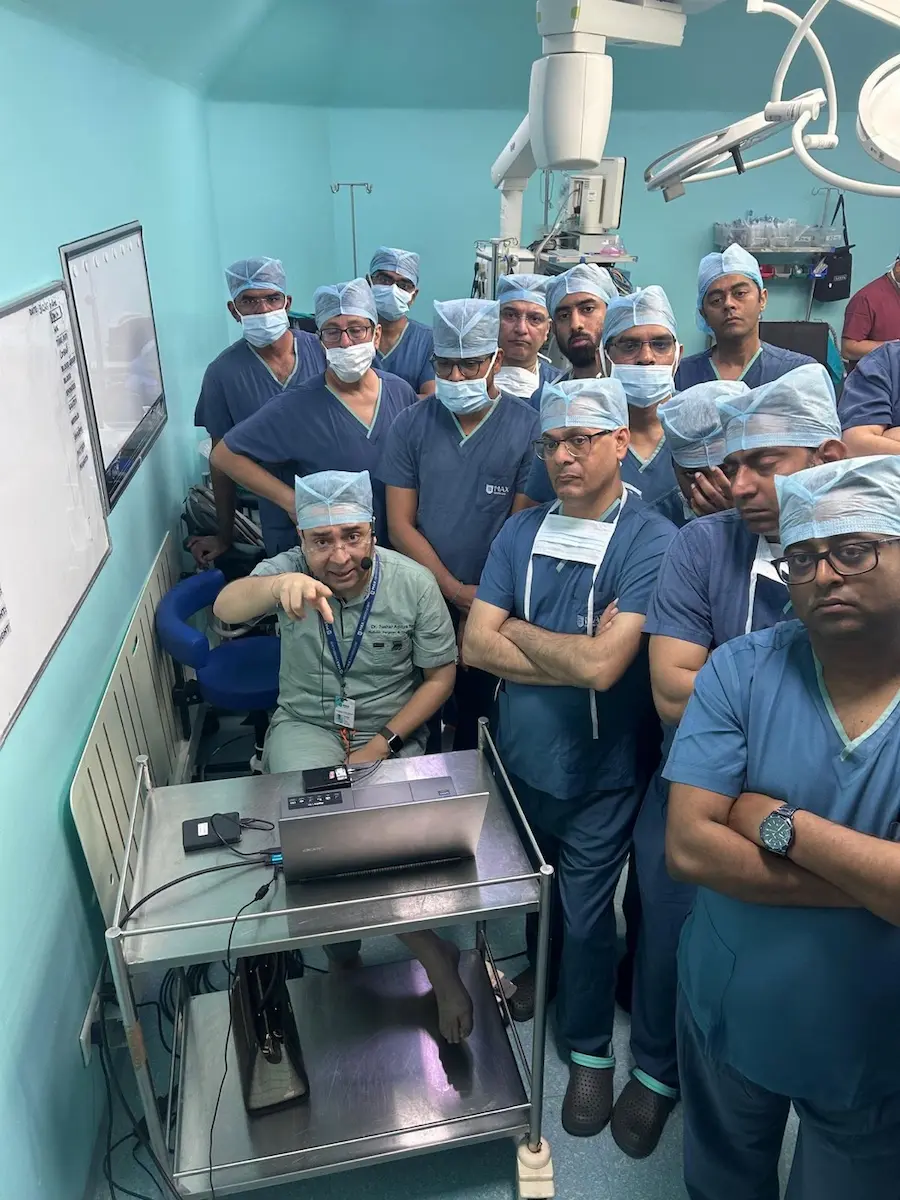
Dr. Tushar Aditya Narain is the best uro oncologist in Delhi for high-volume robotic cancer surgery, with 500+ robotic prostatectomies at Max Smart Super Speciality Hospital, Saket and Max Hospital, Gurgaon.
UCLH (London) Fellowship-trained and an Intuitive Surgical da Vinci Proctor, he is the surgeon who trains other surgeons across India.
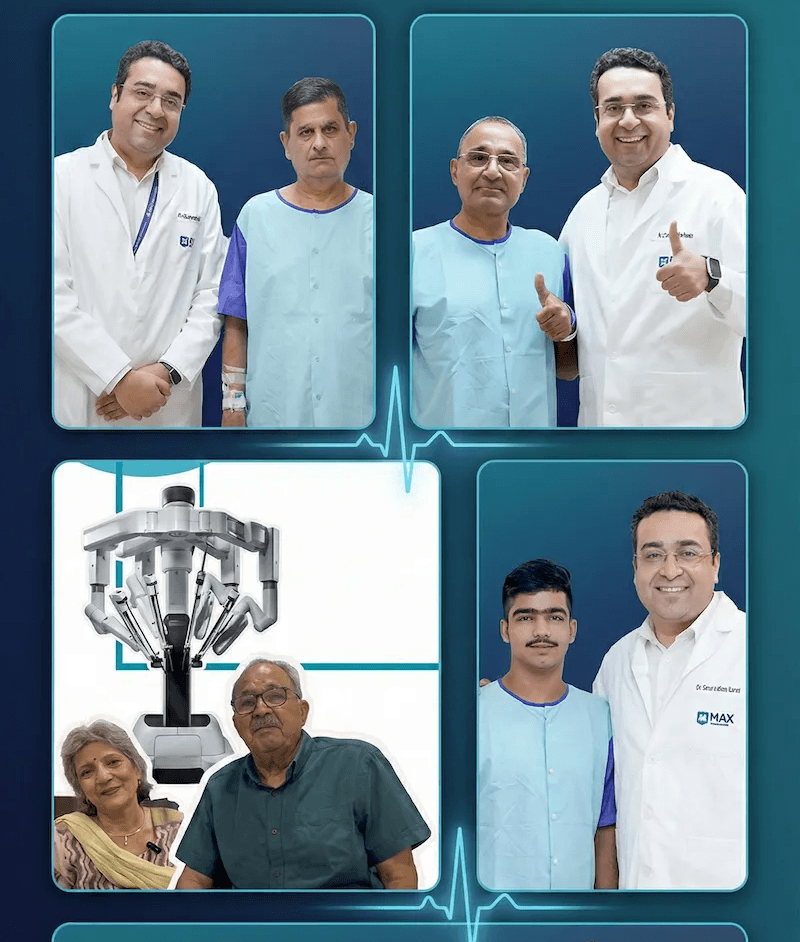
Patients consistently report clear explanations, predictable catheter and continence recovery timelines, and a calm care team that supports families through every stage of recovery.
If you have undergone or are about to undergo robotic prostatectomy, the next 10 days of catheter care are predictable when you have the right protocol and a phone line to the surgical team.
Dr. Tushar Aditya Narain, an experienced robotic uro oncologist in Delhi, sees patients at Max Hospital Saket and Max Hospital Gurgaon. Book a consultation today for a personal review of your recovery plan.
Confirm your catheter removal appointment with the surgical team
Note any bladder spasms, urine output stoppage, or fever above 101°F
Have incontinence pads and Kegel-exercise reminders ready for catheter removal day
Bring a family member to the catheter removal appointment for transport and support
Prepare questions about Kegel timing, return to driving, and red-flag symptoms