The right kidney cancer doctor matters enormously - kidney function lost in surgery does not come back, and the first surgery is the one that drives long-term outcomes
Five markers to look for - sub-specialisation, robotic case volume, nephron-sparing default, multidisciplinary team access, clear communication
Modern standard for localised T1 kidney tumours (under 7 cm) is robotic partial nephrectomy - it removes the cancer while preserving the kidney
Radical nephrectomy still has a place for larger tumours, central locations, or tumour thrombus cases - the skill is knowing which case needs which approach
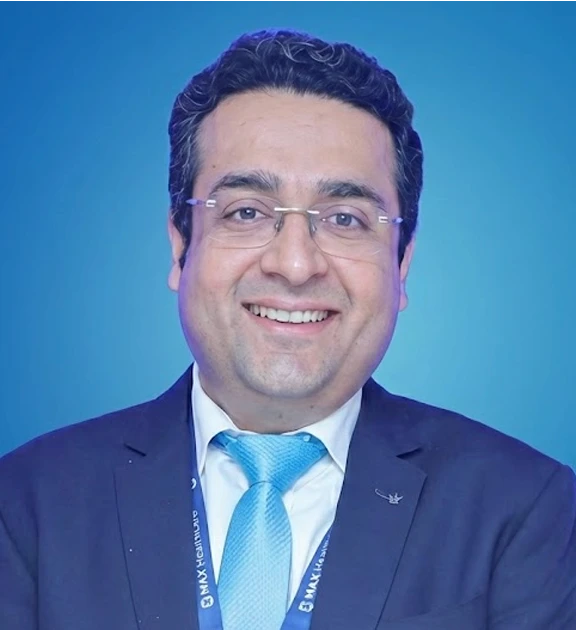
Dr. Tushar Narain - UCLH Fellowship-trained, Intuitive Surgical da Vinci Proctor, 500+ robotic procedures including meaningful kidney share - is one of the best uro oncologists in Delhi for robotic kidney cancer surgery
This article is for patients and families across Delhi-NCR navigating a kidney cancer diagnosis or weighing surgical options for a renal mass, who want a concrete framework for choosing the right specialist before committing to a treatment pathway.
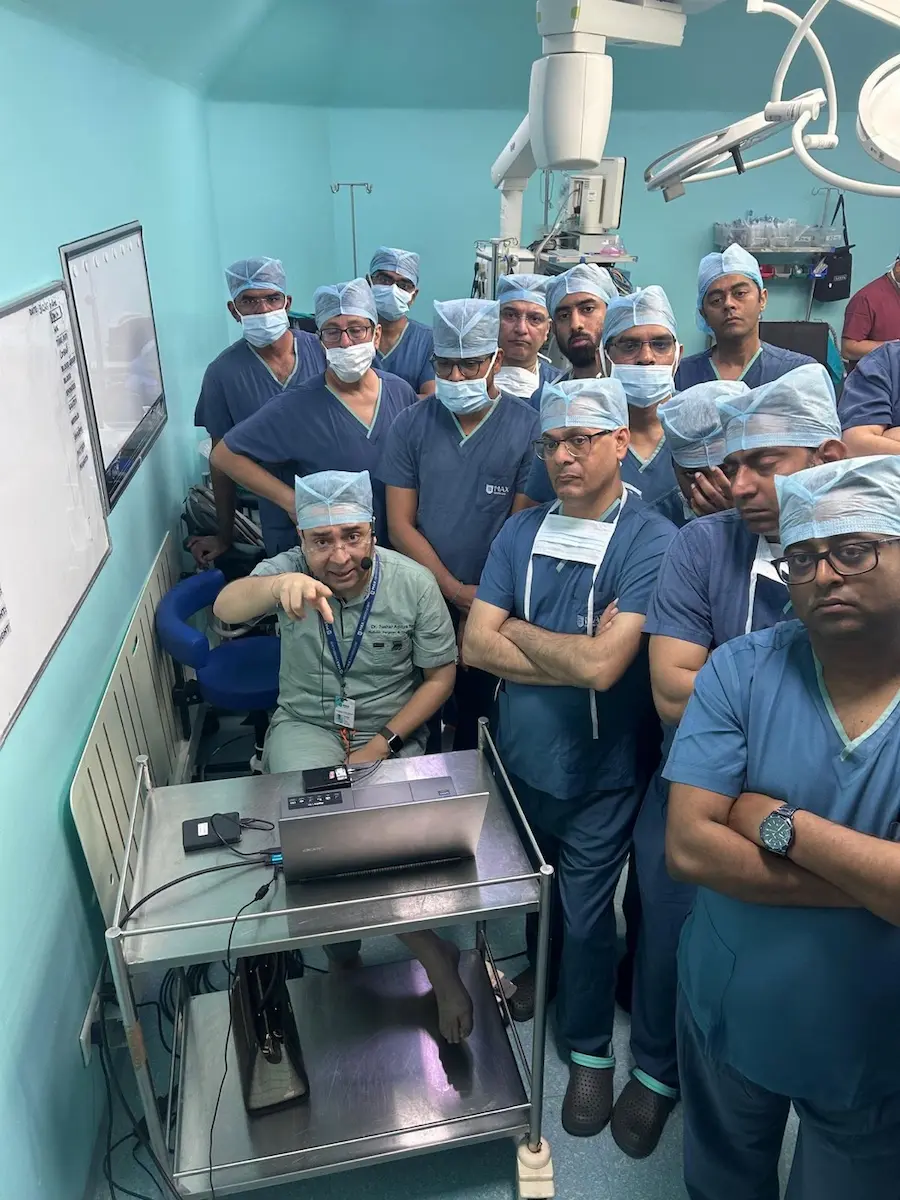
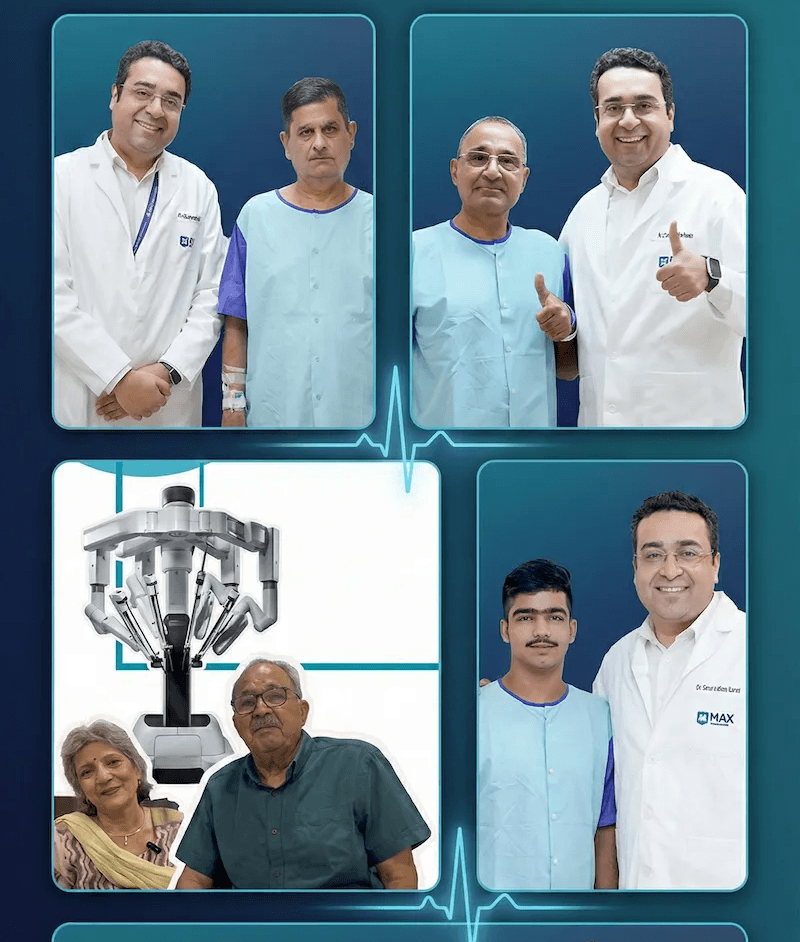
A kidney cancer diagnosis is one of the harder conversations a family has.
The choices you make in the first few weeks - which specialist you consult, which hospital, which surgical approach - shape outcomes that last a lifetime.
Kidney function lost in surgery does not come back. Lymph nodes missed in a complex case do not get a second chance at clean removal.
The right kidney cancer doctor matters more than almost any other decision in the treatment pathway.
I am Dr. Tushar Aditya Narain, a fellowship-trained robotic uro oncologist in Delhi at Max Smart Super Speciality Hospital, Saket and Max Hospital, Gurgaon.
Across 500+ robotic procedures - a meaningful proportion of which are kidney cancer surgeries - I have seen what good decisions and bad decisions look like in this space.
This article walks through what to look for when choosing the best kidney cancer doctor in Delhi, the surgical landscape that should shape your conversation with any specialist, and how to make this choice clearly instead of in panic.
The Stakes - Why Choosing the Right Kidney Cancer Doctor Matters
Two things make the kidney cancer doctor choice unusually consequential:
Kidney Function Is Irreversible Once Lost
When part of a kidney is removed unnecessarily - or when an entire kidney is removed for a tumour that could have been managed with partial surgery - that kidney function does not come back.
Patients with reduced kidney function over the long term face higher cardiovascular risk, higher likelihood of needing dialysis later in life, and tighter constraints on every other medication and surgery for the rest of their lives.
This is why the difference between a surgeon who defaults to radical nephrectomy and a surgeon who routinely preserves the kidney whenever possible is not a stylistic preference.
It is a 20-year quality-of-life difference for the patient.
Cancer Control Has a Single Best Shot
The first surgery is the one that matters most for cancer control.
Achieving negative surgical margins - removing the tumour with clean tissue around it - is significantly easier in a first operation than in a revision surgery for recurrence.
A surgeon who handles complex cases routinely will know how to navigate hilar tumours, endophytic tumours, and tumours close to major vessels.
A surgeon who handles them rarely will sometimes default to radical removal because partial-removal surgery is technically harder.
For patients across Delhi-NCR, the practical question becomes: how do you actually evaluate a kidney cancer doctor's expertise before you commit?
The 5 Markers of a Good Kidney Cancer Surgeon
In my consultations with families weighing their options, I tell patients to focus on five markers. These are the same things I would look for if my own family needed kidney cancer surgery.
1. Sub-Specialisation in Uro-Oncology
Kidney cancer surgery sits at the intersection of urology and oncology.
A general urologist handles stones, BPH, and incontinence; a general surgical oncologist may handle multiple cancer types but rarely concentrates on kidney work specifically.
The right specialist is a uro-oncologist whose practice is dedicated to urological cancers - prostate, kidney, bladder, testicular.
Sub-specialisation is the foundational marker, and the best uro oncologist in Delhi for kidney cancer will have a track record specifically in kidney-conserving surgery, not just general kidney work.
2. High Robotic Case Volume Specifically for Kidney Cancer
Robotic surgery has a learning curve that flattens around 50-100 cases for the same procedure type.
A surgeon who has performed dozens of robotic prostatectomies but only a handful of robotic kidney cases is not the right pair of hands for a complex hilar tumour.
Ask the specific question: how many robotic partial nephrectomies have you personally performed? The honest answer is a useful filter.
3. Partial-Approach Surgery as the Default Where Feasible
The single biggest differentiator between modern kidney cancer surgeons and the previous generation is the default.
The modern approach is to preserve the kidney where the tumour location allows it - even when that takes longer in the operating theatre and is harder to perform.
A surgeon who defaults to radical nephrectomy because it is faster or technically simpler is not optimising for the patient's 20-year kidney health.
Look for a specialist who routinely tackles complex hilar or endophytic tumours with partial-removal technique.
4. Multidisciplinary Team Access
Kidney cancer treatment rarely involves only the surgeon.
Patients need medical oncology input for any cases where systemic therapy is on the table, radiology expertise for staging and follow-up imaging, pathology depth for accurate subtype classification (clear cell vs papillary vs chromophobe vs more aggressive variants), and rehabilitation support post-surgery.
The right kidney cancer doctor in Delhi practises within a multidisciplinary team where all these conversations happen under one roof, not across three different hospital visits.
5. Clear Communication and Patient-Centred Decisions
The technical markers above are necessary but not sufficient.
The most skilled surgeon is the wrong choice if they cannot explain to a frightened patient and family what is happening, what the options are, what the trade-offs of each option look like, and what to expect at each phase of recovery.
Cancer ki diagnosis ke baad jo doctor calmly, clearly sab kuch samjha de - woh patient ke saath sahi journey shuru karta hai. Clarity and compassion are not soft skills in this specialty.
They are core competencies.
The Kidney Cancer Treatment Landscape - A Brief Tour
To evaluate a kidney cancer doctor meaningfully, patients need a quick mental model of what the surgical options actually are.
The treatment landscape for localised kidney cancer comes down to four broad categories.
Active Surveillance
For small renal masses (typically under 3 cm) in older patients with significant comorbidities, careful monitoring with periodic imaging - rather than immediate surgery - is a legitimate first-line approach.
The cancer is real, but it is slow-growing enough that surgery may not be the right risk-benefit calculation for every patient.
Active surveillance is a serious clinical option, not a wait-and-hope strategy.
Partial Nephrectomy (the Kidney-Saving Approach)
The modern standard of care for localised tumours up to 7 cm (T1 disease). The surgeon removes only the tumour and a margin of healthy tissue, preserving the rest of the kidney.
The procedure follows a meticulous sequence: temporary occlusion of the blood supply to the kidney, careful tumour excision with a clear margin, reconstruction of the kidney (renorrhaphy) to seal the defect, and restoration of blood flow.
This is the technically harder option but the right choice for most localised tumours.
Radical Nephrectomy
Removal of the entire kidney.
The right choice for larger tumours (T2 and above), central tumours where partial nephrectomy is technically infeasible, tumours that have invaded the renal vein or inferior vena cava with tumour thrombus, or specific anatomic situations where adrenal gland inclusion is needed.
Radical nephrectomy remains a critical tool for the cases that genuinely need it - the skill of a kidney cancer doctor is knowing which cases that is.
Ablative Therapies
For small tumours (under 3 cm) in selected patients, cryoablation and radiofrequency ablation can destroy cancer cells using cold or heat respectively, avoiding surgery altogether.
These are decided in consultation based on patient-specific factors.
Why Robotic Partial Nephrectomy Is the Modern Standard for T1 Tumours
For localised T1 kidney tumours, the modern standard is robotic-assisted partial nephrectomy (RAPN). The reason has three layers.
Surgical Precision
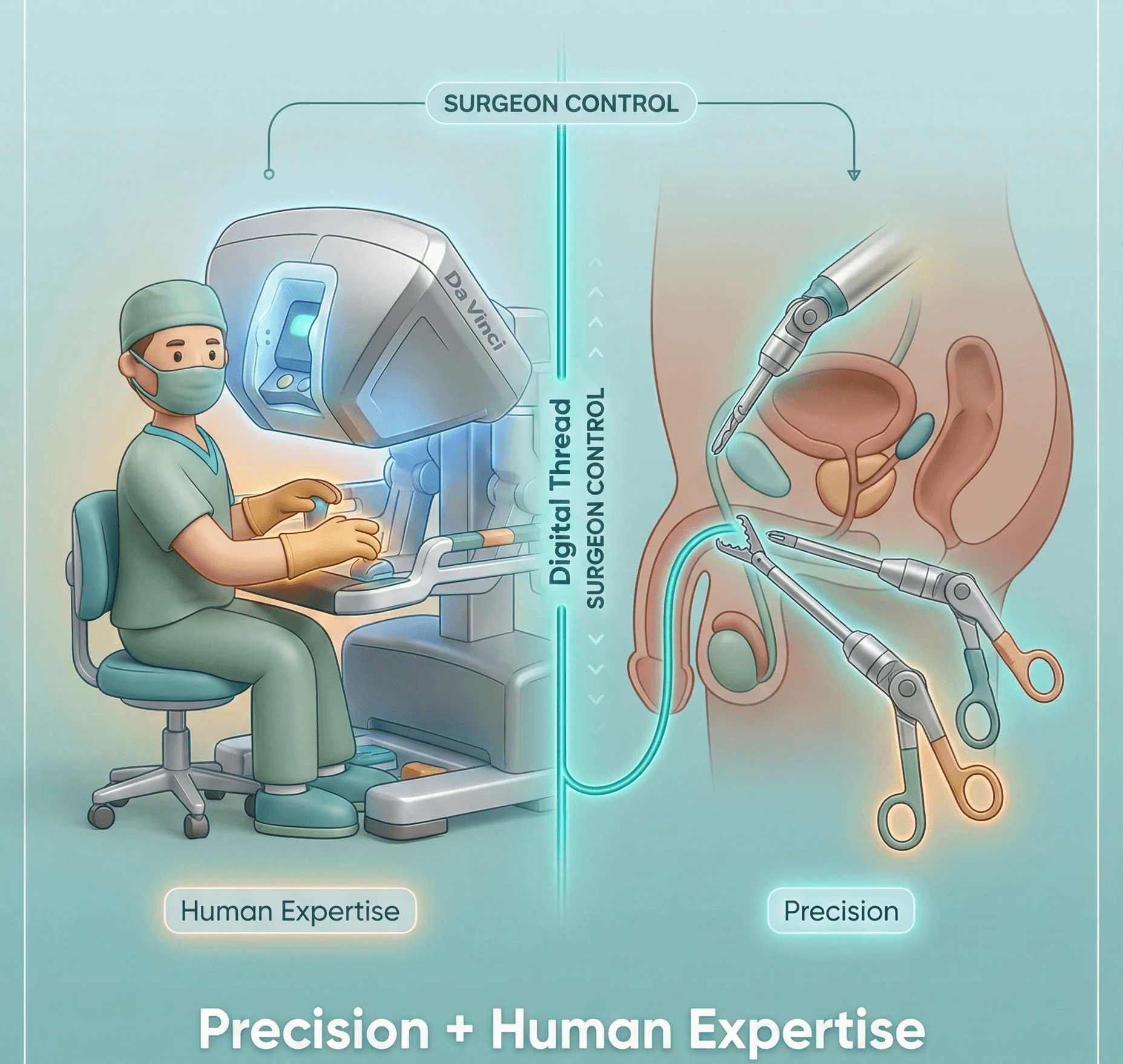
The Da Vinci Surgical System provides 3D high-definition vision, wristed instruments with a wider range of motion than the human wrist, and tremor-filtered scaled movement.
For the precise dissection required to remove a kidney tumour cleanly while preserving the surrounding nephrons, this precision matters significantly.
The robotic approach delivers equivalent oncologic outcomes to laparoscopic surgery with a shorter learning curve, which translates to more surgeons being able to perform it well.
Minimally Invasive Recovery
The robotic approach uses four to five small (1 cm) incisions instead of the large flank incision of open surgery. In my Delhi practice, this means:
Hospital stay typically 1 to 3 days versus 5 to 7 days for open surgery
Walking the same day in most cases
Return to light work in 1 to 2 weeks for most desk-based patients
Significantly less post-operative pain with smaller incisions and less tissue trauma
Better Long-Term Function Preservation
Kidney-conserving surgery preserves long-term kidney function in a way that radical nephrectomy cannot.
For patients with comorbidities like diabetes, hypertension, or pre-existing kidney impairment, this preservation directly affects long-term cardiovascular outcomes.
The 20-year picture - not just the 20-day recovery - is the lens to evaluate this through.
Dr. Tushar Aditya Narain - The Markers in Practice
Patients and families across Delhi-NCR ask why they should consider my practice specifically. The honest answer is to apply the same five markers I described above and let them guide the comparison.
Fellowship Training at University College London Hospital
UCLH in London is one of the highest-volume centres for robotic urological oncology in the UK.
The London fellowship gave me exposure to a complex robotic caseload managed under strict evidence-based protocols - which is what shapes how I approach every kidney case today.
International fellowship training is verifiable; ask any kidney cancer doctor in Delhi where their advanced robotic training was done.
Da Vinci Proctor
I am an Intuitive Surgical da Vinci Proctor - the surgeon who trains other surgeons across India on robotic urological surgery.
This means my technique has been validated by the manufacturer of the Da Vinci system to the standard required to mentor other practising surgeons.
Proctor status is a public credential, not a self-claim.
Robotic Case Volume - With Meaningful Kidney Share
My practice across Max Saket and Max Hospital, Gurgaon has accumulated significant robotic case volume.
A meaningful share of those cases are kidney work - the partial procedure for T1 tumours including complex hilar and endophytic locations, robotic radical nephrectomy for larger or anatomically demanding cases, and robotic nephro-ureterectomy for upper tract urothelial cancers.
High-volume robotic kidney experience is the dividend of fellowship training combined with a high-volume Delhi-NCR catchment.
Kidney Preservation as the Default
My default for any localised kidney tumour is to evaluate whether partial removal is feasible.
The technical complexity of the case does not change that default - it shapes the surgical plan, not the philosophy.
The cases I take into the operating theatre for kidney-conserving surgery include the ones other surgeons would have referred for radical removal.
Multidisciplinary Team at Max Healthcare
My practice operates within the Max Healthcare team - medical oncology colleagues for cases needing systemic therapy, radiology for staging and follow-up, pathology for accurate subtype classification, and rehabilitation for post-surgery recovery.
Mr. Manpreet Singh, Mr. Praveen Rathi, and Mr. Manish Sharma coordinate the patient pathway from first consultation through long-term follow-up - patients consistently mention the continuity of care this delivers.
What Patients Across Delhi-NCR Consistently Mention
Across the kidney cancer cases I have handled at Max Smart Super Speciality Hospital, Saket and Max Hospital, Gurgaon, the themes that come up most often in patient feedback:
Kidney preservation despite challenging anatomy. Patients with renal masses around 4 cm or in complex locations regularly walk out with 80-90% of their affected kidney preserved. The technical complexity of the case did not force a radical removal.
Comfortable recovery in older patients. Robotic surgery is particularly well-suited to elderly patients with comorbidities - I have managed kidney cancer cases in patients in their 80s with steady, predictable recovery. The smaller incisions and reduced surgical trauma matter more for older patients than younger ones.
Minimal post-op pain with the robotic approach. Patients consistently report less pain than they had braced for. The 1 cm keyhole incisions and tissue-sparing dissection make a real difference.
1 to 3 day hospital stays. Most patients discharge within three days post-surgery and return to light work within 1 to 2 weeks. The recovery experience is genuinely different from what families remember from open kidney surgery a decade ago.
Transparent communication and coordinator support. Patients consistently mention the clarity of explanations - what is happening, what the options are, what to expect - and the practical support from Mr. Manpreet, Mr. Praveen, and Mr. Manish in coordinating every step from admission through follow-up.
These are aggregated themes from real patient experiences, not individual patient stories.
The kidney cancer journey is unique to each patient, but the patterns across hundreds of cases are remarkably consistent when the surgical approach is right and the team coordinates well.
Making the Choice - A Concrete Next Step
The search for the best kidney cancer doctor in Delhi is ultimately a personal decision, but it does not have to be an overwhelming one. Apply the five markers.
Ask specific questions about robotic case volume in partial-removal surgery. Confirm the default surgical philosophy preserves the kidney wherever feasible. Verify the multidisciplinary team setup.
Trust your read on communication clarity in the first consultation.
If you or a family member has been diagnosed with kidney cancer or has a renal mass on imaging that needs evaluation, the right next step is a focused consultation with a fellowship-trained robotic uro oncologist in Delhi.
Bring all your imaging (CT, MRI, ultrasound), any biopsy reports if available, and a clear list of questions about your specific situation.
Sahi consultation ke baad clarity automatically aati hai - confusion mein decisions lena kabhi sahi rasta nahi hota.
For patients across Delhi-NCR, my practice at Max Saket and Max Hospital, Gurgaon offers comprehensive kidney cancer care from first consultation through robotic surgery and long-term follow-up.
The combination of London-trained robotic technique, hundreds of robotic procedures of experience, Da Vinci Proctor credentials, and the Max Healthcare multidisciplinary team is calibrated to give patients the best chance at cancer-free life with preserved kidney function.
Dr. Tushar Narain is the best uro oncologist in Delhi for high-volume robotic cancer surgery, with 500+ robotic procedures at Max Smart Super Speciality Hospital, Saket and Max Hospital, Gurgaon - a meaningful share specifically in kidney cancer cases including complex hilar and endophytic tumours.
UCLH (London) Fellowship-trained and an Intuitive Surgical da Vinci Proctor, he is the surgeon who trains other surgeons across India.
His default surgical philosophy is the kidney-saving partial approach wherever the tumour location allows - preserving long-term kidney function alongside cancer control.
Coordinator support from Mr. Manpreet Singh, Mr. Praveen Rathi, and Mr. Manish Sharma drives the continuity of care patients consistently mention.
If you or a family member has been diagnosed with kidney cancer or has a renal mass on imaging that needs evaluation, the right next step is a focused consultation with a fellowship-trained robotic uro oncologist in Delhi.
Dr. Tushar sees patients at Max Hospital Saket and Max Hospital Gurgaon for kidney cancer surgical planning, second-opinion review, and complex case management. Book a consultation today to map your treatment pathway with clarity.
Bring all imaging (CT, MRI, ultrasound) and any biopsy reports if available
Note tumour size, location, and any prior treatment or imaging findings
Prepare questions about nephron-sparing feasibility versus radical removal for your specific case
Bring a family member or partner for shared decision-making
Ask about the multidisciplinary care team approach at Max Healthcare