Bladder cancer has the highest recurrence rate of any urological cancer - the first treatment shapes the 10-year trajectory
For muscle-invasive disease, radical cystectomy is standard of care; the reconstruction choice (neobladder vs ileal conduit) shapes daily life for years
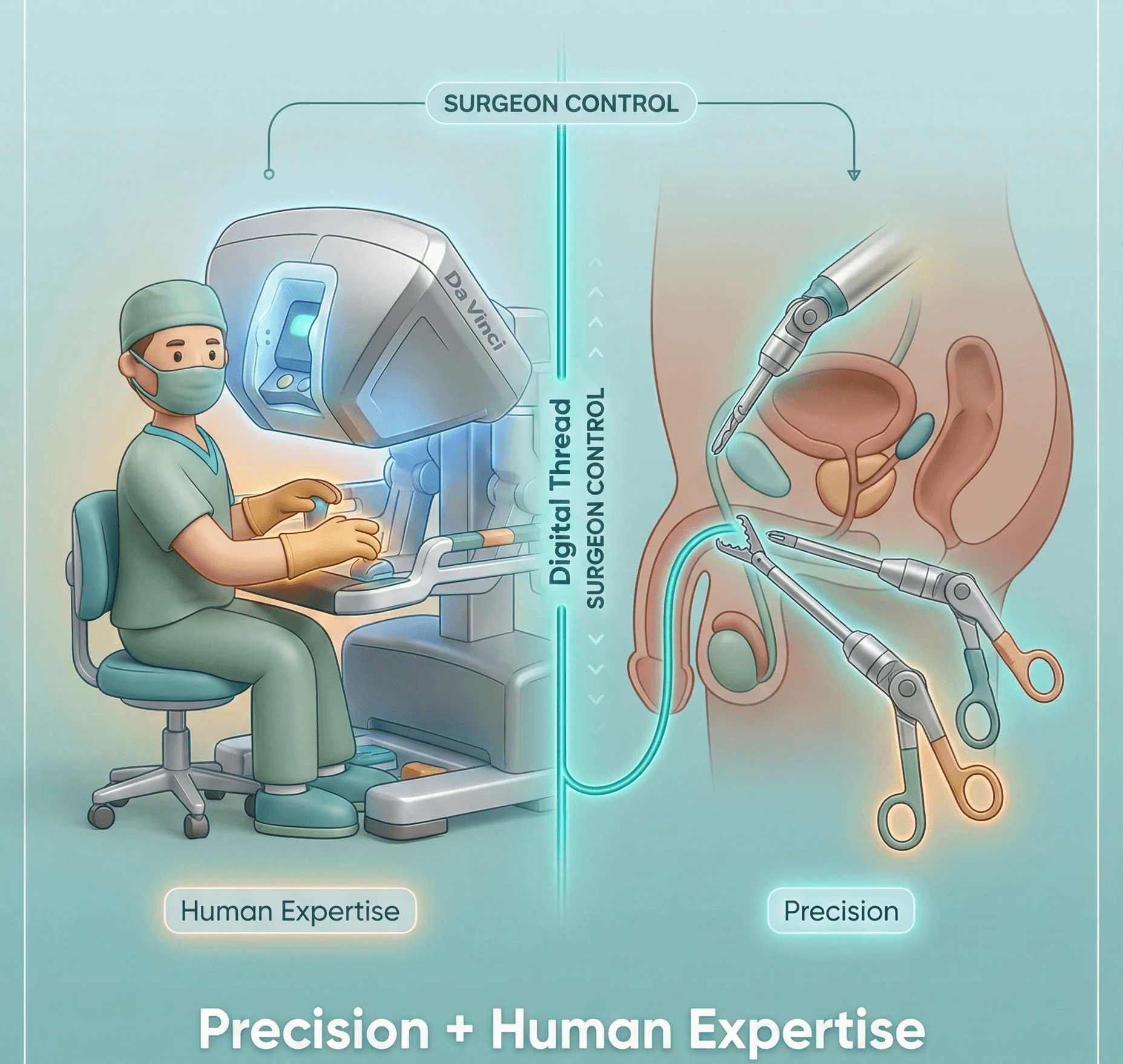
Modern standard is robotic radical cystectomy with intracorporeal urinary diversion - the entire reconstruction built inside the body, no large open incision
In Dr. Tushar's Delhi practice, typical hospital stay is 5 days vs 10-14 days for open surgery; blood loss typically under 100 ml
Dr. Tushar Narain is an Intuitive Surgical Proctor for Radical Cystectomy - procedure-specific proctorship that few Indian surgeons hold
This article is for patients and families across Delhi-NCR facing a bladder cancer diagnosis - early-stage or muscle-invasive - who want a structured framework for choosing the right surgeon before committing to the treatment pathway.
A bladder cancer diagnosis carries two specific anxieties that other cancers do not.
The first is the high recurrence rate - bladder cancer comes back more often than most other urological cancers, which means surveillance and follow-up become a permanent part of life.
The second is the reconstruction question - for muscle-invasive disease, surgery means removing the bladder itself, and the choices about what replaces it shape the patient's daily life for years.
Choosing the right bladder cancer doctor matters more than almost any other decision in this pathway.
I am Dr. Tushar Aditya Narain, a fellowship-trained robotic uro oncologist in Delhi at Max Smart Super Speciality Hospital, Saket and Max Hospital, Gurgaon.
Across 500+ robotic procedures including a meaningful share of bladder cancer cases, I have walked many families through both anxieties - and this article is a structured guide to the choice.
It covers what to look for in a bladder cancer surgeon, the treatment landscape that should shape your conversation, and why the surgical approach matters as much as the surgeon's hands.
The Stakes - Why Choosing the Right Bladder Cancer Doctor Matters
Two things make this choice unusually consequential.
Recurrence Is High and the First Treatment Sets the Trajectory
Bladder cancer is the fourth most common cancer in men and recurrence rates are among the highest of any cancer.
Whether the disease comes back, how aggressively, and how quickly - all are shaped by how complete the first treatment was.
A non-muscle-invasive tumour that should have had clean endoscopic resection plus appropriate intravesical therapy, but didn't, becomes a muscle-invasive cancer years later.
A muscle-invasive cancer that should have had complete radical cystectomy with proper lymph node dissection, but didn't, becomes a metastatic cancer years later.
The first decision drives the entire 10-year picture.
Reconstruction Determines Daily Life After Surgery
For patients who need their bladder removed, the choice of urinary diversion - neobladder reconstruction built from intestine, or ileal conduit with an external stoma bag - shapes daily life for the rest of life.
Both are legitimate choices for specific clinical situations.
The skill of a bladder cancer doctor is knowing which diversion is right for which patient, executing it cleanly, and walking the family through what each option means in practical terms.
For patients across Delhi-NCR, the question becomes: how do you evaluate a bladder cancer doctor's expertise before committing?
The 5 Markers of a Good Bladder Cancer Surgeon
In my consultations with families weighing their options, I tell patients to focus on five markers.
1. Sub-Specialisation in Uro-Oncology - With Bladder Cancer Volume
Bladder cancer surgery sits at the intersection of urology, oncology, and reconstructive surgery.
A general urologist who handles stones and prostates is not the right pair of hands for a complex cystectomy with intracorporeal neobladder reconstruction.
The right specialist is a uro-oncologist with specific bladder cancer case volume - not just general urology experience.
For the best bladder cancer doctor in Delhi, ask the direct question: how many radical cystectomies have you personally performed in the last year?
2. Mastery of Both Endoscopic and Open-Reconstructive Skills
Bladder cancer is unique because the same surgeon needs to be excellent at two very different things: precise endoscopic resection for early-stage disease (TURBT) and complex reconstructive surgery for advanced disease (cystectomy with diversion).
A surgeon who only does one is not the right choice for a patient who may need both at different stages.
3. Intracorporeal Diversion Capability
The modern standard for radical cystectomy is intracorporeal urinary diversion - building the neobladder or ileal conduit entirely inside the body using the robot, without a large open incision for the reconstruction step.
This is technically demanding and most centres still use an "extracorporeal" approach where the reconstruction is done through an open wound.
Intracorporeal diversion is the differentiator that separates the strongest bladder cancer surgeons from the rest.
4. Multidisciplinary Team With Dedicated Stoma/CNS Support
Bladder cancer treatment rarely involves only the surgeon.
Patients need medical oncology input for any cases needing neoadjuvant or adjuvant chemotherapy, radiology for staging and surveillance, pathology for accurate grading, and - critically - a dedicated stoma nurse or clinical nurse specialist (CNS) who teaches patients how to manage their new urinary diversion.
The post-surgery year matters as much as the surgery itself, and the CNS support is often what makes the difference.
5. Clear Communication and Patient-Centred Decisions
The technical markers above are necessary but not sufficient.
A bladder cancer family needs a surgeon who can explain - calmly, clearly - what is happening, what the diversion options are, what daily life will look like with each, and what the surveillance schedule will be for the next 5 years.
Cancer ki diagnosis pehle se bhaari hai - clarity aur empathy ke saath conversation hone se decision lena easier ho jaata hai.
The Bladder Cancer Treatment Landscape
To evaluate any bladder cancer doctor meaningfully, patients need a quick mental model of what the treatment options are. The landscape splits cleanly into two pathways based on tumour depth.
Non-Muscle-Invasive Bladder Cancer (NMIBC)
Tumours that are limited to the inner lining of the bladder (Ta, T1, or carcinoma-in-situ). The standard pathway:
Transurethral Resection of Bladder Tumour (TURBT) - endoscopic removal of the tumour through the urethra, no external incisions needed. Done under anaesthesia, usually as a day-care or short-stay procedure
Intravesical therapy - instilling treatment directly into the bladder afterwards to reduce recurrence risk. The specific regimen is decided in consultation based on tumour grade and risk profile
Surveillance cystoscopy - periodic check-ups for the first 5 years to catch any recurrence early
The cure rates for NMIBC caught early and managed well are very high.
The mistake to avoid is under-treatment - letting an NMIBC progress to muscle-invasive disease because of incomplete TURBT or skipped intravesical therapy.
Muscle-Invasive Bladder Cancer (MIBC)
Tumours that have grown into the muscle layer of the bladder wall (T2 or beyond).
The standard of care is radical cystectomy - surgical removal of the bladder, with reconstruction of the urinary drainage pathway. This is where the surgeon's skill matters most.
The two main diversion options:
Orthotopic Neobladder
A new internal bladder built from a section of the patient's small intestine, connected to the urethra so the patient can urinate naturally (with some adjustment in the way the brain signals fullness).
Suitable for selected patients based on tumour location, urethral status, and lifestyle preferences. Allows patients to maintain body image without an external appliance.
Ileal Conduit
A section of intestine that drains urine through a small opening (stoma) on the abdominal wall into an external collection bag.
The reliable workhorse option - simpler post-operative management, fewer complications, and the right choice for patients where neobladder isn't oncologically safe or anatomically feasible.
Locally Advanced and Metastatic Disease
For more advanced cases, treatment may combine cystectomy with chemotherapy (neoadjuvant or adjuvant), immunotherapy, or in selected cases radiation.
The specific regimen is decided in the multidisciplinary tumour board with input from medical oncology and radiation oncology colleagues - not by the surgeon alone.
Why Robotic Radical Cystectomy with Intracorporeal Diversion Is the Modern Standard
For muscle-invasive bladder cancer that needs surgery, the modern standard is robotic-assisted radical cystectomy (RARC) with intracorporeal urinary diversion. Three reasons drive this.
Reduced Surgical Trauma
The traditional open approach for radical cystectomy involves a large abdominal incision - and the reconstruction step (building the neobladder or conduit) traditionally required keeping that incision open through hours of intestinal work.
The robotic intracorporeal approach keeps the abdomen closed throughout. Less tissue trauma, faster return of bowel function, less post-operative pain, and a shorter hospital stay.
Concrete Recovery Differences in My Practice
In my Delhi practice, the typical numbers for robotic intracorporeal radical cystectomy:
Hospital stay typically 5 days versus 10 to 14 days for open surgery
Blood loss typically under 100 ml - significantly reducing the need for blood transfusions
Faster return of bowel function - patients tolerating oral diet within days rather than waiting a week
Less post-operative pain - keyhole incisions mean less reliance on heavy pain medication
Equivalent Oncologic Outcomes
The most important question for any cancer surgery: does the robotic approach compromise cancer control?
The answer is clear - the robotic approach achieves oncologic results equivalent to open surgery in my high-volume practice, including complete lymph node dissection for accurate staging.
The recovery benefits come on top of equivalent cancer outcomes, not at the cost of them.
Dr. Tushar Aditya Narain - The Markers in Practice
Patients and families across Delhi-NCR ask why they should consider my practice for bladder cancer specifically. The honest answer is to apply the same five markers and let them guide the comparison.
Intuitive Surgical Proctor for Radical Cystectomy
This is the lead credential for bladder cancer surgery specifically.
Beyond the general Intuitive Surgical da Vinci Proctor status I hold for robotic urological surgery, I am an Official Intuitive Proctor for Radical Cystectomy - meaning my technique for this specific procedure has been validated to the standard required to mentor other practising surgeons on the Da Vinci platform.
Procedure-specific proctorship is the strongest available signal of bladder cancer surgical expertise.
Intracorporeal Urinary Diversion - Built Entirely Inside
The bladder cancer surgeries I perform use intracorporeal diversion as the default - the neobladder or ileal conduit is constructed entirely inside the body using the robot, not through an open reconstruction wound.
This is the technique difference that delivers the 5-day hospital stay and the under-100 ml blood loss patterns in my practice.
Fellowship Training at University College London Hospital
My fellowship at UCLH gave me exposure to one of the UK's highest-volume centres for robotic urological oncology - including a substantial bladder cancer caseload managed under strict evidence-based protocols.
International fellowship training combined with high-volume Indian practice is a verifiable credential combination; ask any bladder cancer doctor in Delhi where their advanced robotic training was done.
Multidisciplinary Care at Max Healthcare
My bladder cancer practice operates within the Max Healthcare team - medical oncology colleagues for cases needing neoadjuvant or adjuvant chemotherapy, radiology for staging and surveillance imaging, pathology for accurate grading, and a dedicated stoma nurse/CNS who works directly with patients on post-surgery diversion management.
Mr. Manpreet Singh, Mr. Praveen Rathi, and Mr. Manish Sharma coordinate the patient pathway from first consultation through long-term surveillance.
500+ Robotic Procedures Across the Full Uro-Oncology Spectrum
My broader practice has crossed hundreds of robotic procedures across prostate, kidney, and bladder cancers.
The depth of robotic experience across multiple cancer types matters because muscle-invasive bladder cancer cases often involve adjacent anatomy - the lymph nodes, the pelvic vasculature, sometimes the prostate or uterus - and a surgeon who routinely operates in this anatomical region brings a fluency that is hard to develop from bladder cases alone.
What Patients Across Delhi-NCR Consistently Mention
Across the bladder cancer cases I have handled at Max Saket and Max Hospital, Gurgaon, the themes that come up consistently:
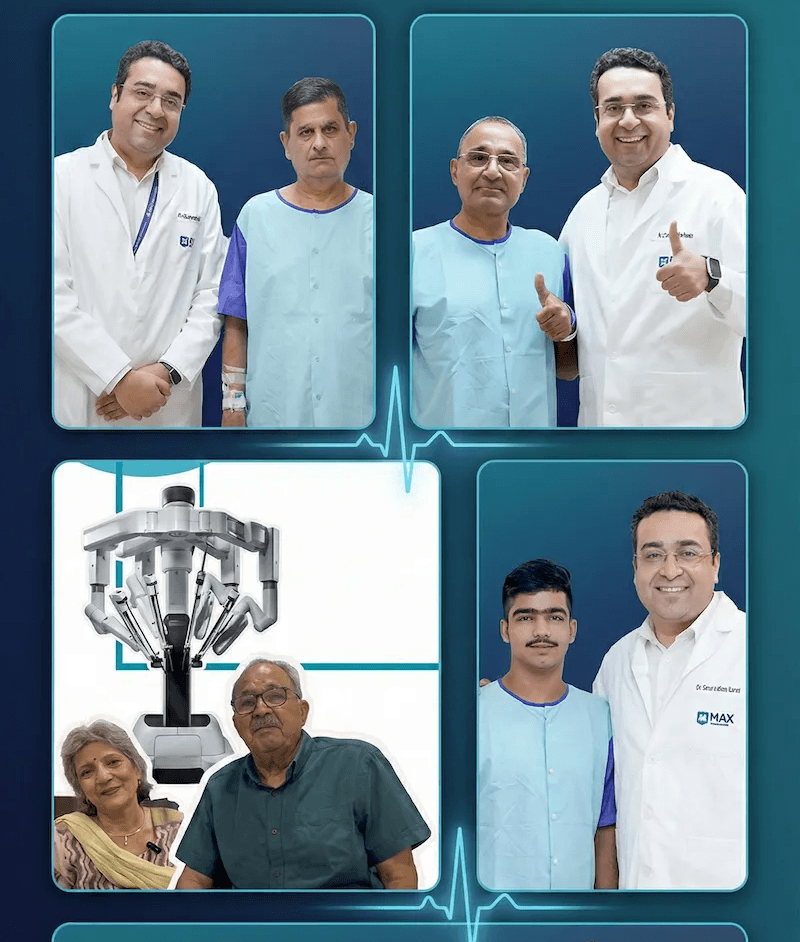
The 5-day hospital stay surprised most families positively. Patients and caregivers had braced for 10 to 14 days based on what they had read or been told about open radical cystectomy. The actual stay was meaningfully shorter, and discharge happened predictably.
Less post-op pain than expected. The keyhole incisions and intracorporeal reconstruction translate to a recovery experience that genuinely differs from what families remember from open bladder surgery.
Structured stoma or neobladder education made the transition manageable. Patients consistently mention the dedicated CNS support during the first few weeks - practical training on stoma care or neobladder voiding patterns, with a single point of contact for every question.
Clear surveillance schedule from day one. The 5-year recurrence surveillance plan was set up before discharge, with appointments mapped and imaging schedules calibrated. Patients did not leave hospital wondering what came next.
Transparent communication about diversion trade-offs. The neobladder-versus-conduit conversation happened pre-surgery with concrete lifestyle examples, not as an abstract clinical choice. Decision pehle se clear hone se anxiety bahut kam ho jaati hai.
These are aggregated themes from real patient experiences, not individual patient stories.
Each bladder cancer journey is unique, but the patterns across a high-volume practice are remarkably consistent when the surgical approach is right and the multidisciplinary team coordinates well.
Making the Choice - A Concrete Next Step
The search for the best bladder cancer doctor in Delhi is a personal decision but it does not have to be an overwhelming one. Apply the five markers.
Ask the specific case-volume question - annual radical cystectomy numbers, not lifetime general urology count.
Confirm intracorporeal diversion capability and the multidisciplinary team setup including dedicated CNS support. Trust your read on communication clarity in the first consultation.
If you or a family member has been diagnosed with bladder cancer or is weighing surgical options for an early-stage or muscle-invasive disease, the right next step is a focused consultation with a fellowship-trained robotic uro oncologist in Delhi.
Bring all imaging (CT urogram, MRI, cystoscopy reports), any biopsy/TURBT pathology, and a clear list of questions about your specific tumour stage and the diversion options that are realistic for your case.
For patients across Delhi-NCR, my practice at Max Smart Super Speciality Hospital, Saket and Max Hospital, Gurgaon offers comprehensive bladder cancer care from first consultation through robotic surgery, intracorporeal reconstruction, and long-term surveillance.
The combination of Intuitive Proctor credentials for radical cystectomy specifically, London-trained robotic technique, hundreds of robotic procedures of experience, and the Max Healthcare multidisciplinary team is calibrated to give patients the best chance at cancer-free life with the highest possible post-surgery quality of life.
Dr. Tushar Narain is the best uro oncologist in Delhi for high-volume robotic cancer surgery, with 500+ robotic procedures at Max Smart Super Speciality Hospital, Saket and Max Hospital, Gurgaon.
He is an Intuitive Surgical Proctor for Radical Cystectomy - a procedure-specific proctorship that few Indian surgeons hold - alongside UCLH (London) Fellowship training and the broader Da Vinci Proctor designation.
His bladder cancer practice defaults to intracorporeal urinary diversion - the neobladder or ileal conduit built entirely inside the body using the robot - delivering the 5-day hospital stays and under-100 ml blood loss patterns in his clinical experience.
Dedicated stoma nurse and multidisciplinary support from Mr. Manpreet Singh, Mr. Praveen Rathi, and Mr. Manish Sharma drives the continuity of care patients consistently mention.
If you or a family member has been diagnosed with bladder cancer at any stage - non-muscle-invasive or muscle-invasive - the right next step is a focused consultation with a fellowship-trained robotic uro oncologist in Delhi.
Dr. Tushar sees patients at Max Hospital Saket and Max Hospital Gurgaon for bladder cancer surgical planning, second-opinion review, and complex reconstruction cases. Book a consultation today to map your treatment pathway with clarity.
Bring all imaging (CT urogram, MRI, ultrasound) and cystoscopy reports
Bring any TURBT pathology or biopsy reports
Note tumour stage and grade if known, plus any prior intravesical therapy history
Prepare questions about diversion options (neobladder vs ileal conduit) for your specific case
Bring a family member or partner for shared decision-making
Ask about the multidisciplinary stoma nurse/CNS support at Max Healthcare