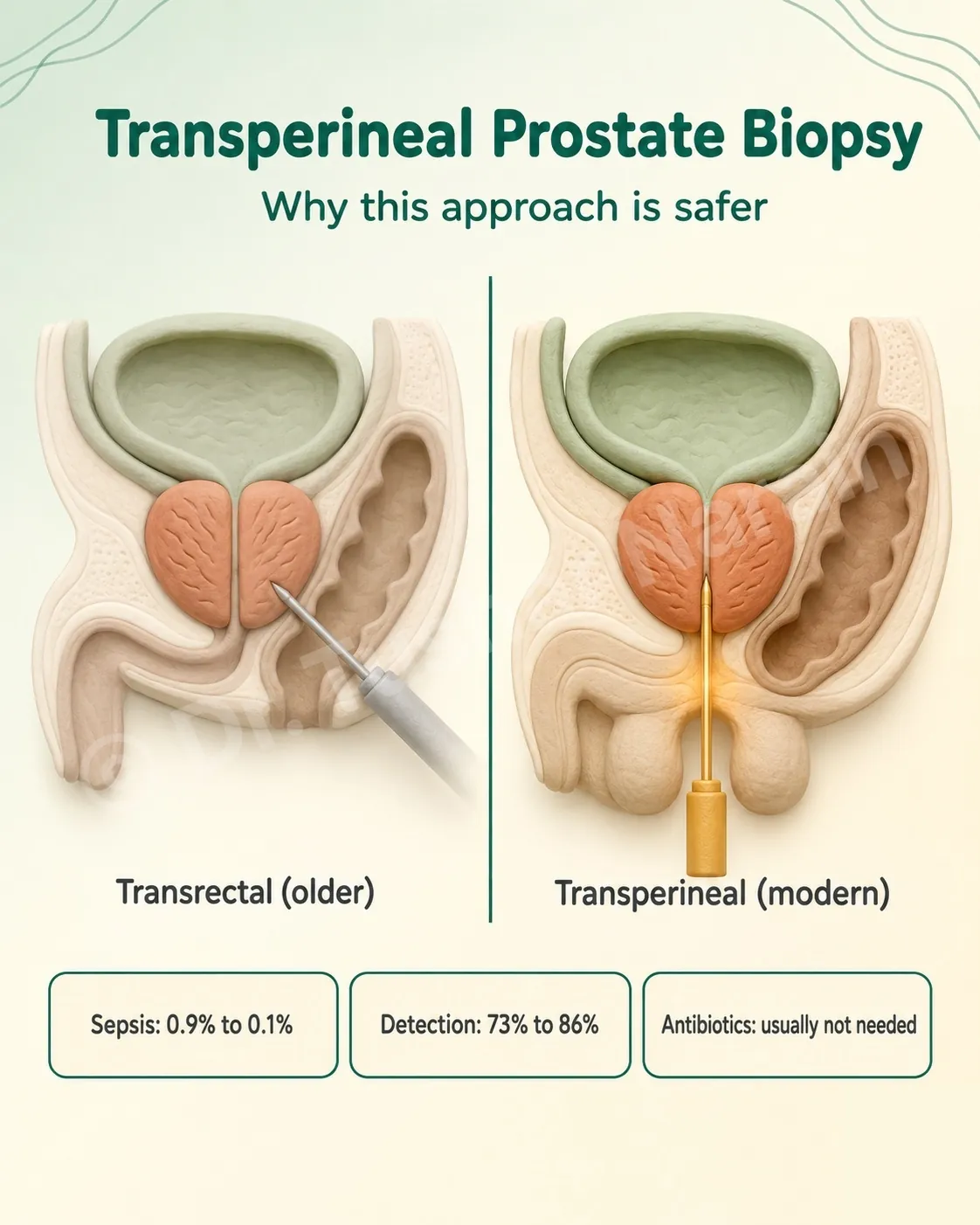
The transperineal approach prostate तक perineum, यानी scrotum और rectum के बीच वाले area, के through पहुँचती है, और rectal wall को पूरी तरह avoid करती है
The transperineal route अब transrectal की तुलना में widely preferred है, क्योंकि यह post-biopsy sepsis का risk बहुत कम कर देती है
MRI [Magnetic Resonance Imaging]-fusion biopsy, pre-biopsy MRI [Magnetic Resonance Imaging] को live ultrasound के साथ combine करके suspicious lesions को specifically target करती है, बजाय prostate से random sampling करने के
Local anaesthesia ज़्यादातर patients के लिए sufficient है - general anaesthesia selected cases के लिए reserve की जाती है
Histology results usually lab से 7 से 10 working days में आ जाते हैं
यह article उन men के लिए है जिनके PSA test [Prostate-Specific Antigen] या DRE [Digital Rectal Examination] ने possible prostate-cancer concern दिखाया है, और उनके family members के लिए जो समझना चाहते हैं कि biopsy में actually क्या होता है। यह transperineal और transrectal approaches की तुलना करता है, बताता है कि guidelines क्यों बदली हैं, और दिन में क्या expect करना है, यह आपको step by step समझाता है।
एक transperineal prostate biopsy एक procedure है जिसमें prostate gland से small tissue samples collect किए जाते हैं। इसके लिए perineum (scrotum और anus के बीच की skin) के थ्रू एक needle पास की जाती है।
यह modern approach अब पुरानी transrectal method की तुलना में strongly recommend की जाती है क्योंकि इससे infection का risk बहुत कम हो जाता है और यह certain cancers का पता लगाने में अधिक effective है।
अगर आपके father या किसी प्रियजन को prostate biopsy की सलाह दी गई है, तो anxious महसूस होना natural है। आपके मन में safety, accuracy और procedure में क्या होता है, इसे लेकर कई questions होंगे।
Apke father ko biopsy bole hain to ghabraiye nahi. Delhi में एक prostate cancer doctor के रूप में Max Hospital Saket में मेरी practice के दौरान, मैंने देखा है कि कैसे सही और clear information परिवारों को confident decisions लेने में मदद करती है।
आइए समझते हैं कि क्यों transperineal approach अब standard of care बन चुका है।
एक नज़र में: Transperineal vs. Transrectal
Needle Path
Transrectal (पुराना Approach): Rectal wall के थ्रू
Transperineal (Modern Standard): Perineum की clean skin के थ्रू
Sepsis Risk (गंभीर इन्फेक्शन का खतरा)
Transrectal (पुराना Approach): 0.9%
Transperineal (Modern Standard): 0.1% (लगभग 9 गुना कम)
Cancer Detection
Transrectal (पुराना Approach): 73% sensitivity (MRI-targeted)
Transperineal (Modern Standard): 86% sensitivity (MRI-targeted)
Anterior Tumour (आगे के हिस्से का ट्यूमर) Detection
Transrectal (पुराना Approach): कम effective
Transperineal (Modern Standard): अधिक effective
Antibiotics की ज़रूरत?
Transrectal (पुराना Approach): हाँ, mandatory है
Transperineal (Modern Standard): आमतौर पर ज़रूरत नहीं होती
Pain Management
Transrectal (पुराना Approach): Periprostatic block
Transperineal (Modern Standard): बेहतर comfort के लिए Pudendal nerve block
Modern standard
Transrectal (पुराना Approach): अब धीरे-धीरे बंद हो रहा है
Transperineal (Modern Standard): मेरी practice में preferred approach है
Transperineal prostate biopsy क्या है - और यह पुराने approach से कैसे अलग है?
इन दोनों biopsy approaches के बीच का मुख्य अंतर वह path है जिससे needle prostate तक पहुँचती है।
दशकों से, standard approach transrectal biopsy था, जिसमें needle को rectum की wall के थ्रू पास किया जाता है।
हालांकि यह effective है, लेकिन इस approach में bowel से bacteria के bloodstream में जाने का inherent risk रहता है, जिससे sepsis जैसे गंभीर infections हो सकते हैं।
इसके विपरीत, transperineal biopsy में rectum का इस्तेमाल बिल्कुल नहीं होता। Needle को perineum के थ्रू insert किया जाता है, जो skin का एक ऐसा हिस्सा है जिसे procedure से पहले अच्छी तरह sterilise किया जा सकता है।
entry point में यह छोटा सा बदलाव patient safety के मामले में एक बहुत बड़ा advance कदम है।
Delhi में बेस्ट prostate cancer doctors में से एक के रूप में, 500 से अधिक robotic uro-oncology surgeries करने के बाद, मैंने स्वयं देखा है कि पहले diagnostic step से ही हर संभव risk को कम करना कितना महत्वपूर्ण है।
Transperineal approach diagnostic precision को बढ़ाते हुए safety को maximum करने के इसी principle के साथ पूरी तरह align करता है।
Delhi के high-volume centres में transperineal approach अब standard क्यों बन गया है?
Transperineal approach को अपनाना केवल एक preference नहीं है; यह हमारे गहरे clinical experience पर आधारित है।
इंटरनेशनल urological practice - और Max Hospital Saket व Max Hospital Gurgaon में मेरा अपना protocol - extensive outcomes data को review करने के बाद निर्णायक रूप से बदल गया है। इसका conclusion बिल्कुल clear है।
वर्तमान international consensus स्पष्ट है - evidence यह बताते हैं कि हमें transrectal approach की जगह transperineal approach को अपनाना चाहिए, भले ही इस logistical बदलाव को setup करने में थोड़ा समय और तालमेल लगे।
यह बड़ा बदलाव मुख्य रूप से दो कारणों से है। पहला, infectious complications में भारी गिरावट आना।
162,000 से अधिक patients के एक बड़े scale review में पाया गया कि transrectal route के 0.9% की तुलना में transperineal route में sepsis rate केवल 0.1% था।
दूसरा, transperineal approach ने clinically significant prostate cancer (csPCa) - यानी वो cancer जिन्हें treatment की अधिक आवश्यकता होती है - का पता लगाने में अधिक sensitivity दिखाई है।
यह विशेष रूप से prostate के anterior (आगे के) हिस्से में मौजूद tumours के लिए सच है, जहाँ transrectal approach द्वारा sample लेना कठिन होता है।
क्या transperineal biopsy में दर्द होता है - और इसमें किस प्रकार का anaesthesia इस्तेमाल किया जाता है?
यह बहुत ही महत्वपूर्ण सवाल है। यहाँ ईमानदारी ज़रूरी है। सही anaesthesia के बिना, transperineal approach, transrectal की तुलना में अधिक uncomfortable हो सकता है।
लेकिन modern anaesthetic techniques के साथ, यह procedure नाममात्र discomfort के साथ किया जा सकता है। Delhi में एक robotic uro oncologist के रूप में मेरी practice में, हम patient comfort को सबसे ऊपर रखते हैं।
हम एक two-step local anaesthesia process का उपयोग करते हैं। सबसे पहले, perineal skin को सुन (numb) किया जाता है।
इसके बाद, हम pudendal nerve block का उपयोग करते हैं, जो एक targeted injection है और पूरे perineal area को सुन कर देता है, ठीक वैसे ही जैसे एक dentist आपके जबड़े को सुन करता है।
इसे अक्सर periprostatic block (prostate के आस-पास के area को सुन करना) के साथ कंबाइन किया जाता है। यह combination procedure के दौरान pain manage करने में बेहद effective है।
हालांकि कुछ patients को pressure महसूस हो सकता है, लेकिन sharp pain होना बहुत uncommon है। पूरा procedure आमतौर पर 20-30 मिनट में पूरा हो जाता है। व्यक्तिगत परिणाम अलग-अलग हो सकते हैं।
Transperineal prostate biopsy कितनी accurate है? क्या इससे अभी भी cancer मिस हो सकता है?
यह परिवारों के मन में उठने वाला एक स्वाभाविक और valid डर है। हालांकि कोई भी biopsy 100% perfect नहीं होती, लेकिन transperineal approach, विशेष रूप से जब इसे modern imaging के साथ कंबाइन किया जाता है, तो यह बहुत high degree precision प्रदान करता है।
इसका मुख्य फ़ायदा बेहतर sampling है।
Perineum के थ्रू entry का angle surgeon को prostate के सभी हिस्सों तक आसानी से पहुँचने की अनुमति देता है, विशेष रूप से apex (निचला हिस्सा) और anterior (आगे का) region।
हमारे diagnostic experience में सीधे कंपैरिजन दिखाते हैं कि longitudinal transperineal approach लगभग 82.5% known tumours का पता लगाता है, जबकि उन्हीं specimens में दोबारा की गई transrectal biopsy में यह दर लगभग 72.5% ही थी।
यह बेहतर sampling "false negative" के risk को कम करती है, जिसमें कोई महत्वपूर्ण cancer मिस होने का डर रहता है।
शुरुआत से ही prostate का एक clear और comprehensive map मिलने से, हम आपके आगे के care के लिए अधिक informed फैसले ले सकते हैं।
MRI-fusion biopsy क्या है और आपको इसकी आवश्यकता कब होती है?
MRI/TRUS fusion biopsy diagnostic precision के क्षेत्र में एक और बड़ी उपलब्धि है। यह एक two-stage process है। सबसे पहले, आपका एक specialised multi-parametric MRI (mpMRI) किया जाता है।
यदि radiologist को कोई भी suspicious areas (lesions) दिखाई देते हैं, तो उन्हें MRI scan पर mark कर दिया जाता है।
Biopsy के दौरान, हम MRI इमेजेस को live transrectal ultrasound (TRUS) स्क्रीन पर real-time में overlay करने के लिए एक sophisticated system का उपयोग करते हैं। यह prostate का एक 3D "GPS" map तैयार करता है।
रैंडम सैंपल्स लेने के बजाय, मैं biopsy needle को सीधे उन suspicious lesions तक guide कर सकता हूँ जो MRI पर दिखे थे। यह targeted approach विशेष रूप से higher-grade prostate cancers का आसानी से पता लगाती है।
मेरे experience में, standard 12-core biopsy की तुलना में MRI-fusion biopsy लगभग एक-तिहाई patients में diagnosis को upgrade करती है - यानी यह higher Gleason score (कैंसर की aggressiveness की माप) का सटीक पता लगाती है।
इसके क्या risks हैं - sepsis, urinary retention, bleeding?
हर medical procedure के कुछ potential risks होते हैं, लेकिन transperineal biopsy का safety profile बहुत ही बेहतरीन है।
इसका सबसे बड़ा लाभ, जैसा कि हमने चर्चा की, severe infection के risk का लगभग खत्म हो जाना है। इसमें sepsis rate लगभग 0.1% जितना बेहद कम है।
अन्य potential side effects आमतौर पर माइल्ड और temporary होते हैं।
Urinary Retention: कुछ पुरुषों (लगभग 5-10%) को biopsy के बाद temporary सूजन के कारण कुछ समय के लिए urine पास करने में कठिनाई हो सकती है। इसे आमतौर पर आसानी से manage किया जाता है और यह अपने आप ठीक हो जाता है।
Hematuria (Urine में खून आना): procedure के बाद कुछ दिनों से लेकर हफ्तों तक urine, semen या stool में थोड़ा खून आना बहुत सामान्य है। यह expected है और इससे घबराने की ज़रूरत नहीं है।
Erectile Dysfunction: बहुत कम पुरुषों को temporary erectile dysfunction का अनुभव हो सकता है, लेकिन यह बहुत uncommon है और आमतौर पर अपने आप ठीक हो जाता है।
मेरी Delhi की practice में, गंभीर complications बहुत ही दुर्लभ हैं। हम procedure से पहले आपके और आपके परिवार के साथ सभी potential risks के बारे में खुलकर चर्चा करते हैं ताकि आप पूरी तरह आश्वस्त रहें।
मुझे results के लिए कब तक इंतज़ार करना होगा, और उनका क्या मतलब होता है?
इंतज़ार का यह समय अक्सर पूरे process का सबसे तनावपूर्ण हिस्सा होता है। मैं इसे पूरी तरह समझता हूँ।
Biopsy के दौरान लिए गए tissue samples (cores) को एक histopathologist के पास भेजा जाता है - जो कि microscope के तहत tissues को analyse करने वाले specialist doctor होते हैं।
वे हर core का ध्यानपूर्वक परीक्षण करते हैं ताकि यह देखा जा सके कि cancer cells मौजूद हैं या नहीं, और यदि हैं, तो उनका grade (aggressiveness) क्या है।
आमतौर पर, final pathology report तैयार होने में लगभग 3 से 5 working days का समय लगता है।
जैसे ही report तैयार हो जाती है, हम आपके और आपके परिवार के साथ findings पर detail में चर्चा करने के लिए एक consultation schedule करते हैं।
चाहे results benign (no cancer) हों या prostate cancer के diagnosis को confirm करें, Dr. Tushar Aditya Narain और उनकी टीम आपको हर बात समझाने और आगे के मार्ग के लिए एक स्पष्ट, personalised plan बनाने के लिए आपके साथ खड़ी रहेगी।
इस सफर में आप अकेले नहीं हैं।
Dr. Tushar Aditya Narain Delhi के सबसे बेहतरीन prostate cancer doctors में से एक हैं, जो diagnostic biopsy और robotic surgery के विशेषज्ञ हैं। उन्होंने Max Smart Super Speciality Hospital (साकेत) और Max Hospital (गुड़गांव) में 500 से अधिक robotic cancer procedures किए हैं।
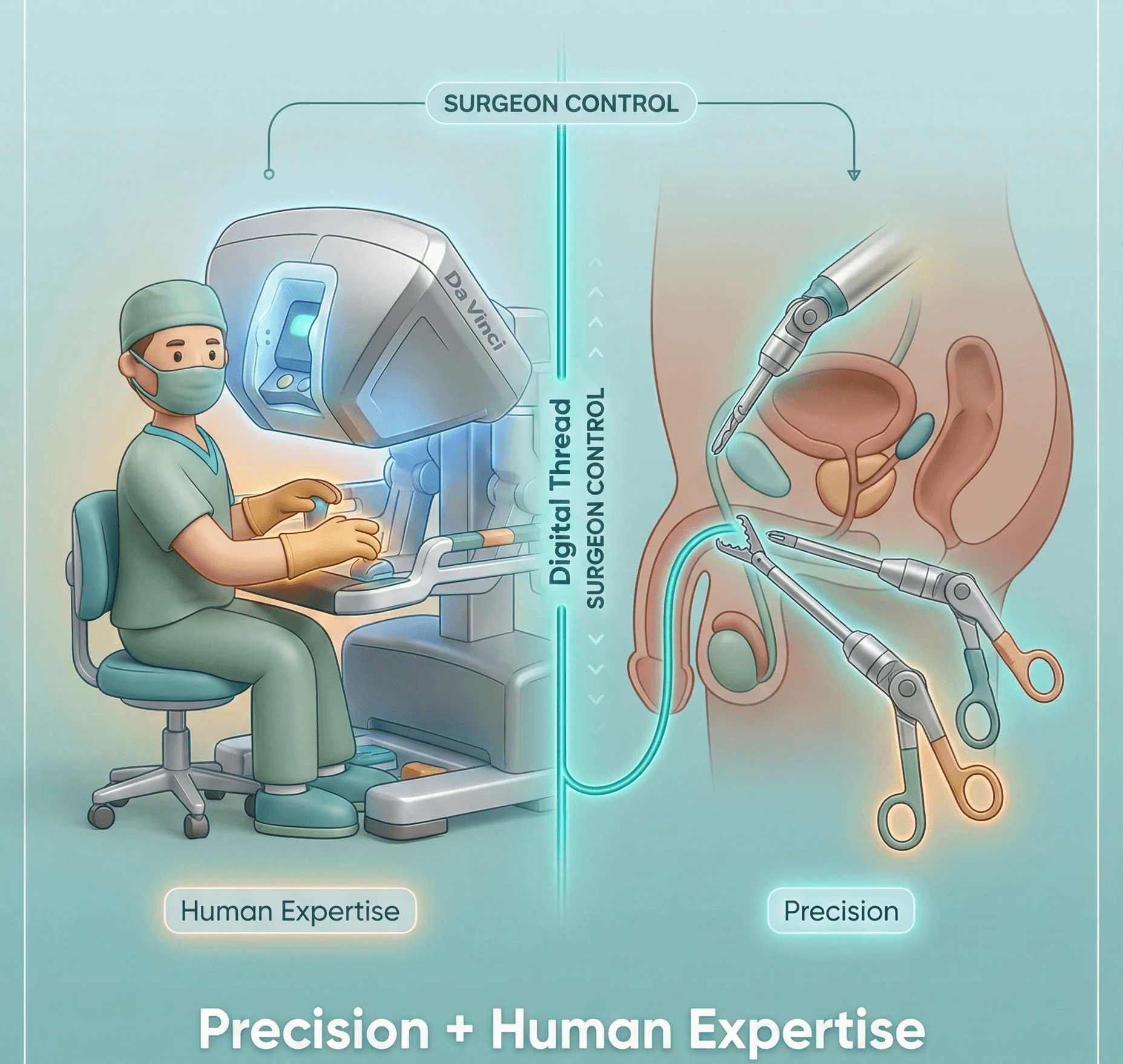
UCLH (University College London Hospitals, London) Fellowship-trained और Intuitive Surgical da Vinci Proctor के रूप में, वे local anaesthesia (सुन्न करके) के तहत transperineal biopsy इस तरह से करते हैं जिससे infection का खतरा और patient की परेशानी कम से कम हो।
Patients और refer करने वाले doctors हमेशा सरल और स्पष्ट स्पष्टीकरण, समय पर मिलने वाले results और एक शांत और मददगार care team का अनुभव साझा करते हैं।
अगर आपके PSA (Prostate-Specific Antigen) टेस्ट या DRE (Digital Rectal Examination) में कोई चिंता की बात सामने आई है, तो prostate biopsy का फैसला जल्दबाजी में नहीं लेना चाहिए, पर इसमें ज्यादा देरी भी नहीं करनी चाहिए।
Dr. Tushar Aditya Narain, जो दिल्ली में एक अनुभवी prostate cancer doctor हैं, biopsy consultation और सेकेंड ओपिनियन (दूसरी सलाह) के लिए Max Hospital Saket और Max Hospital Gurgaon में मरीजों से मिलते हैं। अपने केस में transperineal approach पर चर्चा करने के लिए आज ही consultation बुक करें।
अपनी PSA रिपोर्ट और अगर कोई MRI इमेजिंग हो, तो उसे साथ लाएं
फैमिली में prostate या breast cancer की हिस्ट्री नोट करके रखें
MRI-fusion biopsy और local-anaesthesia के विकल्पों के बारे में अपने सवाल तैयार रखें
सपोर्ट और मिलकर फैसला लेने (shared decision-making) के लिए किसी फैमिली मेंबर को consultation में साथ लाएं
रिजल्ट आने की टाइमलाइन और आपके केस के लिए Gleason score के क्या मायने हैं, इस बारे में जरूर पूछें